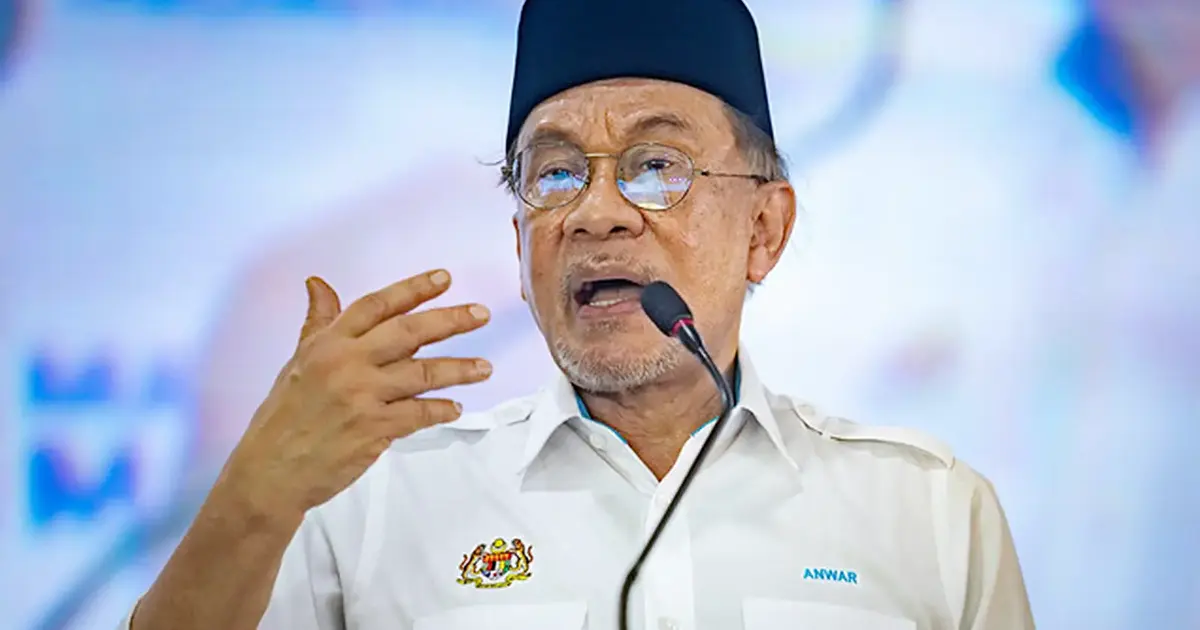
Prime Minister Anwar Ibrahim has issued a stern warning to government ministers not to undermine coalition partners during state-level electoral campaigns, signalling that maintaining the fragile unity government arrangement takes precedence over partisan electoral ambitions. The caution reflects deepening tensions within Malaysia's governing coalition as various state elections approach, where different political partners may have competing interests and endorsements.
Anwar's directive carries weight beyond mere guidance, as the prime minister explicitly stated that ministers found breaching this protocol could be asked to resign from their portfolios. This threat of removal represents a significant enforcement mechanism, underlining the government's determination to preserve coalition stability during what could be destabilizing electoral contests at the state level. The warning applies specifically to those in ministerial positions, suggesting that the government recognises how cabinet-rank officials wielding administrative resources and public platforms could disproportionately damage coalition unity if they campaigned aggressively against allies.
The unity government model that emerged following the 2022 elections has required constant balancing among competing parties with distinct electoral interests. Peninsular Malaysia's complex political landscape means that individual states often see different coalitions and configurations of parties competing for power. When national coalition partners find themselves on opposing sides in state contests, tensions inevitably arise. The prime minister's intervention suggests these tensions have already begun manifesting within the government itself, with ministers from various parties potentially viewing state elections as opportunities to strengthen their respective organisations at the expense of national coalition partners.
By specifically prohibiting ministers from attacking coalition allies, Anwar attempts to establish clear boundaries that separate electoral competition at the state level from the collaborative governance framework at the federal level. This distinction is crucial for preserving the unity government's functionality, as parliamentary arithmetic depends on maintaining sufficient coalition support. A breakdown in coalition discipline during state elections could have cascading consequences for federal stability if it creates lasting grievances or repositions politicians in ways that make future cooperation untenable.
The reference to misuse of government positions during campaigning highlights another concern: that ministers might leverage state machinery, patronage networks, or administrative resources to boost their preferred candidates or undermine opponents. In Malaysian politics, such practices have historically weakened democratic processes and created perceptions of unfair advantage. Anwar's emphasis on this issue suggests the government aims to establish ethical standards for how ministerial authority should be exercised during electoral periods, attempting to prevent a repetition of controversial practices that have plagued previous campaign cycles.
For Malaysian voters and observers, this warning indicates that state elections will test coalition unity in real time. The outcomes in various states could reshape political calculations ahead of future national elections, and how coalition members conduct themselves during these contests will signal whether the unity government represents a genuine commitment to collaborative governance or merely a pragmatic arrangement of convenience. Different regional outcomes might also affect minister positions or cabinet restructuring, creating incentives for ambitious politicians to prioritise their own political advancement.
The implicit recognition in Anwar's statement that coalition tensions exist at the ministerial level suggests deeper disagreements about electoral strategy, resource allocation, and the future direction of the government. Some coalition partners may view certain states as territories where they should pursue dominant positions, while others might expect reciprocal restraint. These differing expectations require explicit management from the prime minister's office to prevent escalation into open conflict that could undermine cabinet functioning.
Regionally, Malaysia's experience with coalition governments offers lessons relevant to other Southeast Asian democracies navigating multi-party governance arrangements. Indonesia's coalition governments and Thailand's recent coalition-building efforts similarly face challenges in maintaining unity while allowing coalition members to pursue distinct political interests. The Malaysian approach of explicitly demarcating boundaries between state-level and national-level competition, and establishing consequences for violations, represents a pragmatic governance tool worth observing.
The enforcement mechanism Anwar invoked—potential dismissal from ministerial positions—carries particular weight in Malaysia's context where cabinet appointments represent significant repositories of power, patronage, and prestige. Ministers control substantial budgets, can influence development projects in their constituencies, and gain visibility that supports their political bases. The threat of removing these privileges serves as meaningful deterrent against coalition-destabilising behaviour, at least among those ambitious for future positions or seeking to accumulate political capital beyond their current tenures.
Looking forward, the prime minister's warning establishes a precedent that the unity government will prioritise internal cohesion over electoral maximisation in state contests. Whether coalition members adhere to this principle will largely determine whether the unity government survives intact through multiple electoral cycles, or whether state-level competitions gradually erode the collaborative framework until it becomes unsustainable. The coming months will reveal whether ministers accept Anwar's parameters or whether electoral pressures prove sufficiently strong to override the prime minister's directive.

