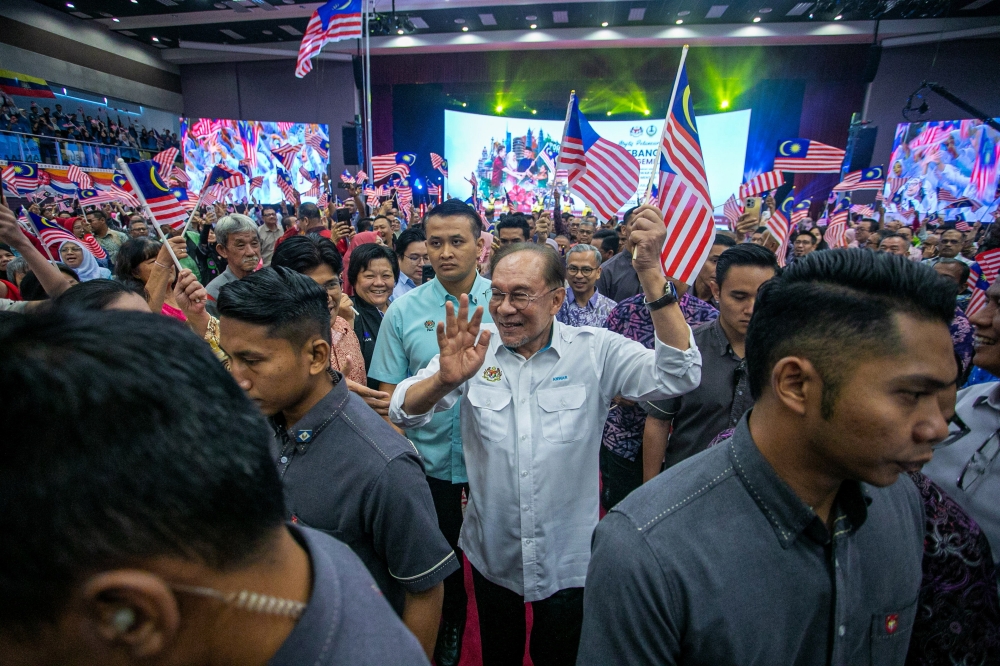
Prime Minister Datuk Seri Anwar Ibrahim delivered a carefully calibrated message to the nation's political establishment during a gathering in Ipoh on July 19, reminding government office-holders that their freedom to campaign for their parties comes with defined limits. Speaking to assembled ministers and state leaders, Anwar stressed the importance of maintaining appropriate conduct even as political competition intensifies, a nuanced stance that acknowledges both the realities of partisan politics and the responsibilities that accompany public office.
The Prime Minister's remarks reflect an ongoing tension within Malaysia's political system—the need to allow government officials legitimate participation in party activities while simultaneously preventing the machinery of state from being weaponised for partisan gain. Anwar's message appears designed to clarify where that boundary lies, implicitly cautioning his own cabinet members against using their governmental authority or resources to boost their political fortunes at the expense of democratic norms.
This guidance comes at a time when Malaysia's political landscape remains volatile, with competing coalitions and internal party dynamics continuing to shape governance at both federal and state levels. The cautionary tone suggests concerns within the Prime Minister's office about potential overreach by officials who might conflate their governmental duties with party political obligations. Such concerns are not unique to Malaysia; distinguishing between state resources and party machinery remains a persistent challenge in many democracies.
Anwar's emphasis on respecting boundaries without explicitly forbidding campaigning suggests an attempt to maintain morale within his coalition while simultaneously demonstrating commitment to political propriety. Officials who hold dual roles—as both government administrators and party members—face genuine pressures to advance their political fortunes, yet doing so in ways that compromise public institutions can undermine broader governance objectives and public trust.
The practical implications of Anwar's directive extend across Malaysia's federal and state governments. Ministers in sensitive portfolios, particularly those overseeing development projects, education, and resource allocation, occupy positions where the temptation to leverage state machinery for political benefit could be significant. By issuing this reminder publicly rather than in closed-door sessions, Anwar has signalled that adherence to these principles carries importance commensurate with other aspects of ministerial responsibility.
In the Malaysian context, where federal-state relations remain complex and coalition-building involves careful negotiations between different political entities, maintaining institutional integrity proves essential for governance stability. When government officials are perceived as using public resources or authority primarily to advance party interests, it creates friction not only within coalitions but also erodes public confidence in government institutions themselves. This concern likely motivated Anwar's intervention.
The Prime Minister's caution also reflects awareness that public perception matters significantly in Malaysian politics. Citizens frequently scrutinise whether their elected leaders prioritise public service or personal political advancement, and instances where officials appear to cross ethical lines can generate disproportionate political damage to the broader coalition. By preemptively establishing clear expectations, Anwar may be attempting to forestall the kinds of incidents that generate negative headlines and internal coalition tensions.
Anwar's reminder incorporates an implicit recognition that campaign activity by government officials is inevitable and, within limits, legitimate. Prohibiting government ministers from all political participation would be impractical and potentially undemocratic. Instead, his approach emphasises restraint and proper channels—allowing officials to support their parties while ensuring such activities remain separate from their governmental functions.
The distinction Anwar seeks to maintain reflects international best practices regarding the relationship between government and partisan politics. Many established democracies have developed mechanisms, ranging from civil service neutrality requirements to conflict-of-interest regulations, designed to prevent abuse of state machinery. Malaysia's approach, as articulated by Anwar, appears to rely heavily on professional judgment and institutional culture rather than rigid regulatory frameworks.
Looking forward, the effectiveness of Anwar's guidance depends substantially on institutional buy-in and political culture. If ministers genuinely respect the boundaries outlined, political competition can proceed without compromising public service delivery. Conversely, should officials interpret the guidance as merely symbolic, the underlying tensions between governmental and partisan roles will persist, potentially destabilising coalitions and weakening public institutions.
The situation also carries implications for Malaysia's international standing. Democracies worldwide face challenges in maintaining the integrity of government institutions amid intense political competition. How effectively Malaysia manages this balance—whether officials heed Anwar's cautionary words—will influence perceptions of the country's commitment to democratic governance among international observers and investors evaluating political stability.
Anwar's intervention ultimately reflects a leadership approach that acknowledges political realities while attempting to establish normative expectations for official conduct. Whether these expectations translate into genuine institutional change, however, depends on consistent reinforcement and willingness among officials to subordinate short-term political advantages to longer-term governance credibility.

