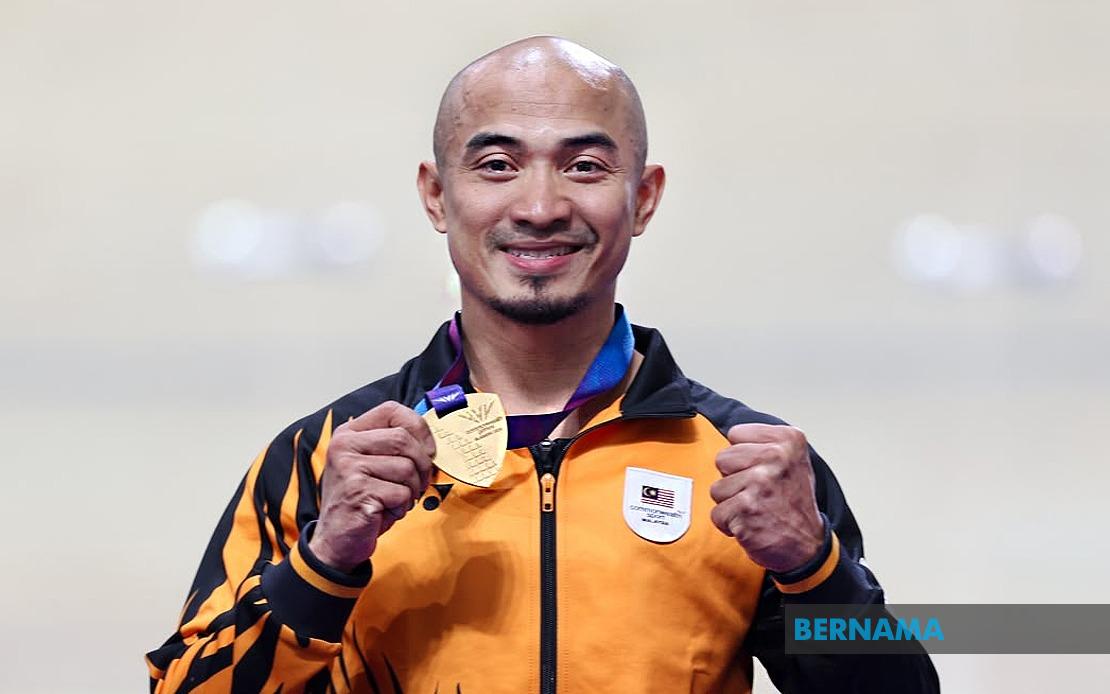
Prime Minister Datuk Seri Anwar Ibrahim has publicly commended national cycling champion Datuk Mohd Azizulhasni Awang following his triumph in the men's keirin at the Glasgow 2026 Commonwealth Games, marking a significant milestone in the athlete's storied career. The victory represents a watershed moment for Malaysian track cycling on the Commonwealth stage, with Anwar highlighting the cultural and patriotic significance of the achievement through a social media post that underscored the nation's international standing.
Mohd Azizulhasni, affectionately known as "The Pocket Rocketman" throughout the cycling world, has finally crowned decades of competitive excellence with a Commonwealth Games men's keirin title. The feat terminates a 16-year stretch without capturing the prestige of this particular championship honour, a prolonged gap that speaks to both the intensity of global competition in track cycling and the athlete's remarkable longevity at the highest levels of the sport. His victory at the Sir Chris Hoy Velodrome in Glasgow came after an impressive display that saw him cross the line ahead of Australia's Leigh Hoffman and England's Harry Ledingham-Horn, who settled for silver and bronze respectively.
The Prime Minister's recognition of this achievement carries particular resonance in Malaysia's sporting narrative. In his statement, Anwar characterised the victory as a product of singular determination, relentless perseverance, and an indomitable competitive spirit. These attributes, he suggested, transcend individual sporting accomplishment and serve as a broader inspiration to the Malaysian population, reinforcing the nation's capacity to excel on global platforms. The medal represents tangible proof of Malaysian athletic capability and training excellence, elements that domestic sports development programs continually strive to cultivate.
Azizulhasni's path to this Glasgow success reveals the perseverance required to reach cycling's apex. The Tokyo 2020 Olympic silver medallist, who has now competed in four Commonwealth Games tournaments, previously secured bronze medals in both the team sprint at the 2010 New Delhi Games and the keirin event at the 2014 Glasgow Games. That earlier bronze in the same venue and discipline over a decade ago illustrates how meaningful contexts can shift dramatically between competitions. The progression from bronze to gold across these intervening years reflects both personal athletic development and the evolving competitive dynamics within Commonwealth cycling.
Beyond individual recognition, Azizulhasni's Glasgow triumph carries substantial implications for Malaysia's cycling program and broader medal tally at these Games. The victory marked Malaysia's seventh gold medal at Glasgow 2026, positioning the nation competitively among Commonwealth nations. Equally significant, this achievement constituted the track cycling team's inaugural gold medal of the current Games edition, breaking through a psychological barrier and potentially catalysing additional medal opportunities for teammates competing in remaining events.
Companion cyclist Muhammad Shah Firdaus Sahrom also featured in the men's keirin competition, though he finished seventh in what represented a creditable showing against international rivals. The presence of multiple Malaysian competitors in the same event underscores the depth developing within the national program. Track cycling, which demands specialised facilities, technical expertise, and sustained funding commitments, has emerged as a genuine strength within Malaysian athletics, contributing disproportionately to the nation's medal counts at major international competitions.
The keirin event itself deserves contextual understanding for Malaysian audiences less familiar with track cycling's technical disciplines. Originating in Japan, the keirin combines explosive sprinting power with tactical acumen and bike-handling precision. Competitors must navigate several rounds of heat races before the final, where a motorised pacer vehicle gradually accelerates the field before withdrawing to enable the final sprint to the line. This format rewards not merely raw speed but also tactical positioning, mental fortitude under pressure, and the ability to execute race strategies across extended competition schedules.
Azizulhasni's sustained excellence across multiple Olympic and Commonwealth cycles positions him among Malaysia's most decorated track athletes. His Olympic silver from Tokyo represents one of the nation's highest individual cycling achievements, while his progression through Commonwealth competitions demonstrates consistency across varying competitive environments and opposition. For developing cycling nations across Southeast Asia, his pathway and success illustrate the viability of establishing world-class programs through focused investment and athlete development.
The Prime Minister's public recognition reflects Malaysia's broader commitment to celebrating sporting achievements and leveraging them for national morale and international image enhancement. Government acknowledgment of athletic accomplishments, particularly through senior leadership, reinforces the cultural valuation of sporting excellence and potentially influences youth participation in cycling and related disciplines. Such symbolic endorsements from political leadership contribute to sustainability of sporting programs through periods when immediate tangible results may remain elusive.
Looking forward, Azizulhasni's Glasgow success positions him as a potential medal prospect in remaining Commonwealth Games events, while simultaneously establishing a benchmark for Malaysian track cycling aspirants. The psychological momentum generated by breaking a 16-year championship drought extends beyond individual prestige to influence perceptions of what Malaysian cyclists can achieve internationally. Future Commonwealth Games, Olympic cycles, and world championship campaigns will unfold within this newly established context of demonstrated competitive capability at the highest levels.
The Glasgow 2026 Commonwealth Games therefore marks an inflection point in Malaysian track cycling's contemporary trajectory. Azizulhasni's keirin gold, publicly celebrated by the nation's political leadership, validates long-term investments in cycling infrastructure, coaching, and athlete development. This success provides Malaysian sports policymakers and program administrators with tangible evidence of program effectiveness, potentially facilitating sustained or expanded resource allocation to track cycling during subsequent budget cycles.
Regionally, Malaysian cycling success at Commonwealth Games carries implications for Southeast Asian sporting competitiveness and development benchmarking. Neighbouring nations observing Malaysia's achievements in track cycling may reassess their own sporting investment priorities and facility development strategies. The visibility and international credibility of Malaysian cyclists influence how regional sporting audiences perceive capability and competitive possibility across their own athletic populations, creating broader ripple effects throughout Southeast Asian sports systems.

