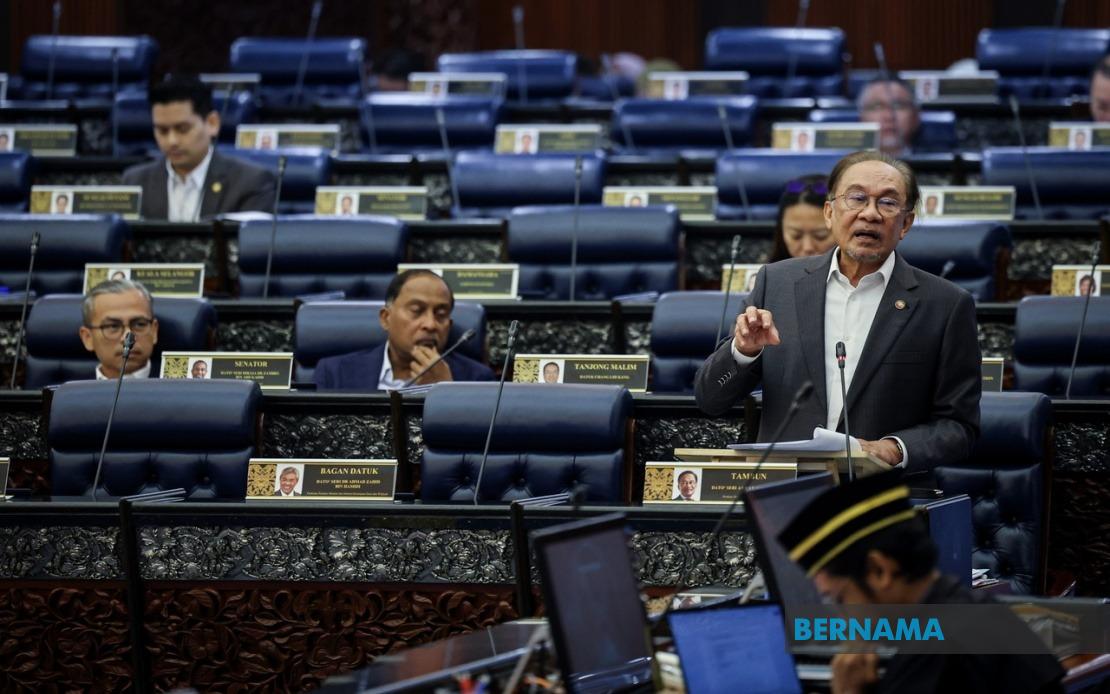
Prime Minister Datuk Seri Anwar Ibrahim moved to defuse political controversy on July 7 by distinguishing between his personal observations about election scheduling and any formal interference in the Election Commission's authority to set polling dates. Speaking during Minister's Question Time in Parliament, Anwar acknowledged the EC's statutory independence while explaining the reasoning behind his earlier remarks during campaigning, when he had suggested that Sunday voting would better accommodate Malaysian workers employed across the Causeway.
The genesis of the clarification lay in media coverage of Anwar's campaign-trail comments, in which he proposed that shifting the Johor state election from Saturday to Sunday would provide logistical advantages for the estimated number of Malaysians commuting daily to Singapore for employment. His observation centred on a practical reality: many cross-border workers maintain weekend routines that would allow them greater flexibility to return home and fulfil their civic duty if voting occurred on a Sunday rather than the scheduled Saturday. This distinction between identifying a potential convenience and attempting to dictate EC policy became the cornerstone of his parliamentary response.
During questioning by Ahmad Fadhli Shaari of Pasir Mas, representing Perikatan Nasional, Anwar reiterated that the EC remained the sole arbiter of electoral administration and that any perception his words carried prescriptive weight would be mischaracteristic. He underscored the institutional separation between executive commentary and the independent commission's decision-making authority, effectively drawing a line between offering an opinion and overstepping constitutional boundaries. The Prime Minister's intervention in parliament thus functioned as both clarification and recalibration, acknowledging legitimate questions about executive propriety in electoral matters while preserving his right to express views during public discourse.
The cross-border employment phenomenon Anwar referenced reflects a significant demographic reality shaping Malaysian politics. Estimates suggest tens of thousands of citizens work regularly in Singapore, contributing substantially to household incomes in border regions while maintaining voting rights in Malaysian constituencies. Election scheduling decisions therefore carry practical implications for voter accessibility that extend beyond domestic consideration, particularly in Johor where the Singapore-Malaysia labour corridor remains economically vital. By framing his position around this workforce dynamic, Anwar simultaneously explained his rationale and anchored it in socioeconomic fact rather than partisan calculation.
Parliamentary colleague Mohd Sany Hamzan from Hulu Langat pressed the matter further, suggesting that Malaysia might formally engage Singapore to facilitate the logistics of workers returning for elections. This approach would have required diplomatic coordination and potentially formal requests to a neighbouring government. Anwar firmly rejected this path, insisting that Malaysia would respect the principle of electoral non-interference and that such matters constituted purely internal affairs requiring no external facilitation. His response emphasised the government's commitment to bilateral diplomatic norms, even when practical coordination might ease administrative burdens.
The Prime Minister did acknowledge, however, that private sector engagement with Malaysian employees working in Singapore had proceeded on an informal basis. He noted that companies operating across the border had simply been made aware that Malaysian staff would require accommodation to participate in voting exercises whenever elections were scheduled. This distinction between private-sector courtesy and formal government-to-government coordination proved important: businesses could voluntarily adjust working arrangements without Malaysia requesting Singapore's official cooperation, thereby preserving both nations' commitment to electoral sovereignty.
Anwar's clarification also implicitly addressed concerns about executive overreach in electoral administration, a sensitive constitutional matter in Malaysia. The EC's independence constitutes a foundational principle of democratic governance, and questions about whether political leaders might subtly pressure or influence commissioners merit serious examination. By explicitly acknowledging the commission's autonomy and disavowing any intent to determine polling dates, the Prime Minister effectively defused suggestions that his campaign remarks represented something more deliberate. His framing of personal opinion versus official direction provided political oxygen for those concerned about institutional boundaries.
The episode reflects broader tensions in Malaysian politics around how elected leaders should engage with technical, administratively independent bodies. While political commentary on policy preferences remains legitimate in democratic systems, the line between advocacy and interference becomes contested when constitutional guardians like the EC stand at the intersection of politics and administration. Anwar's parliamentary intervention sought to clarify that side of the boundary he occupied, emphasising opinion rather than instruction, suggestion rather than direction, rational argument rather than executive pressure.
For Malaysian voters, particularly cross-border workers whose electoral participation depends partly on practical accessibility, the episode highlighted how voting logistics can intersect with international labour mobility. Whether the underlying issue—that Saturday voting creates genuine hardship for some legitimate voters—receives future attention remains uncertain, but Anwar's remarks ensured it entered the public record and official discourse. His framing suggested sympathy for the accessibility question even as he respected the EC's ultimate authority to respond or disregard such observations.
The political significance extended to Southeast Asian considerations of how governments navigate relationships with close neighbours regarding sensitive matters like elections. Malaysia's relationship with Singapore rests on carefully calibrated mutual respect and non-interference principles, particularly given historical sensitivities and ongoing cross-border cooperation in trade, security, and labour mobility. Anwar's explicit rejection of any diplomatic overture on electoral matters—despite his personal relationship with Singapore Prime Minister Lawrence Wong—reinforced the formal architecture of bilateral restraint, even when informal cooperation through private channels might provide mutual convenience.

