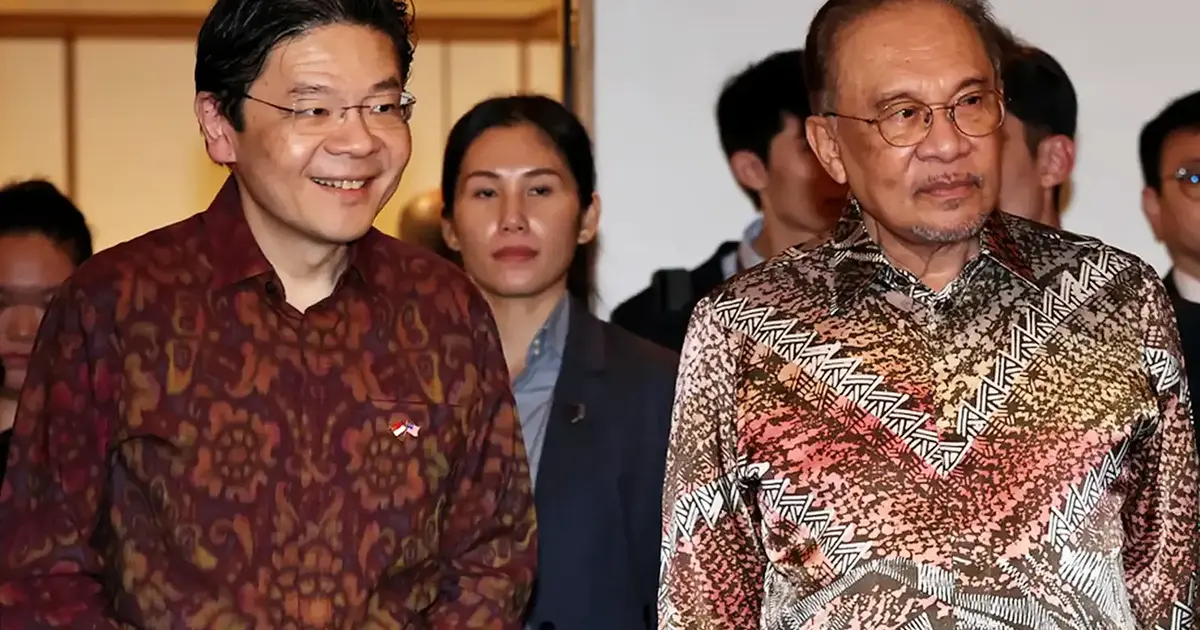
Prime Minister Anwar Ibrahim has moved to dispel speculation about diplomatic overtures to Singapore regarding voting arrangements for Malaysians in the republic during the forthcoming Johor state election. When pressed on whether he intended to reach out to his Singaporean counterpart to secure permission for Malaysian citizens working across the causeway to return home and cast their ballots, Anwar made clear that no such request had been lodged or was contemplated.
The question itself highlights an enduring tension in Malaysian electoral politics: the substantial number of workers, professionals, and their families based in Singapore who maintain voting rights in their home states. For Johor in particular, this constituency is especially significant given the state's geographic proximity to Singapore and the deep economic integration between the two territories. Thousands of Johorians commute daily to jobs in Singapore or have relocated there permanently for employment opportunities, yet retain their voting registration across the causeway.
During elections, the issue of absentee voters becomes a recurring point of discussion among political strategists and analysts. Parties calculate potential gains or losses based on voting patterns of Malaysians abroad, and logistical questions about how these voters can participate in the democratic process invariably surface. Some have suggested that formal diplomatic channels could be used to negotiate temporary leave arrangements or special voting provisions, though such proposals remain controversial and largely impractical given the nature of bilateral relations and sovereignty considerations.
Anwar's response suggests that the government is proceeding without anticipating special accommodations from Singapore. This pragmatic stance reflects the reality that Singapore, as a sovereign nation, would unlikely implement special electoral arrangements for foreign nationals, regardless of how many of its residents happen to be Malaysian citizens. The Republic has historically maintained a clear distinction between permanent residents and citizens in terms of privileges and participation in public affairs, a principle unlikely to be compromised even for neighbouring Malaysia.
The broader context involves understanding how Malaysian electoral participation works for citizens residing abroad. Currently, Malaysians overseas can vote if they physically return to their constituencies on polling day, a requirement that effectively disenfranchises many who cannot take leave or afford the travel costs. This structural reality means that working professionals in Singapore face a genuine practical barrier to participation, regardless of political will or diplomatic negotiations. The financial and time commitments involved in crossing the causeway specifically to vote are substantial for individuals with commitments in Singapore.
Johor's electoral significance amplifies these questions about voter participation. As one of Malaysia's most populous and economically dynamic states, Johor elections carry major implications for national politics and the balance of power within BN coalitions and the opposition. Every vote potentially matters in determining the state government's composition and policy direction. Politicians understand this calculus, which is why questions about maximising turnout among all eligible voters—including those abroad—periodically emerge during campaign seasons.
From a broader Southeast Asian perspective, the question also touches on contemporary migration patterns and the political integration challenges they create. The region hosts millions of cross-border workers, many of whom maintain civic ties to their home countries while building lives in host nations. How different countries balance the political rights of their citizens abroad with the practical realities of governance remains an evolving question without easy answers.
Anwar's clarification essentially indicates that Malaysia's government will not pursue diplomatic channels to address voting accessibility for Singaporean-based Malaysians. This decision likely reflects recognition that such overtures would be diplomatically awkward and practically futile. Instead, the expectation remains that interested voters must make their own arrangements to return home, just as Malaysian voters residing in other countries must do. The constitutional framework and electoral commission procedures remain unchanged, and no special mechanisms are being created to facilitate participation by those working abroad.
For the Johor election specifically, this approach means that Malaysian workers in Singapore will face the same participation barriers as those in other countries. They can vote only if they physically return to their constituencies on polling day, arrange leave from employment, and manage the associated travel and logistics independently. This reality may suppress turnout among this group, though the actual electoral impact remains difficult to quantify without detailed demographic data on voting patterns among overseas Malaysians.
The issue also reflects deeper questions about electoral participation and democratic representation in an increasingly mobile society. As more citizens work and live across borders, the tension between residency-based voting systems and citizenship-based electoral rights becomes more pronounced. Few countries have resolved these tensions satisfactorily, and Malaysia appears content to maintain its current framework without special provisions for citizens abroad, whether in Singapore or elsewhere.

