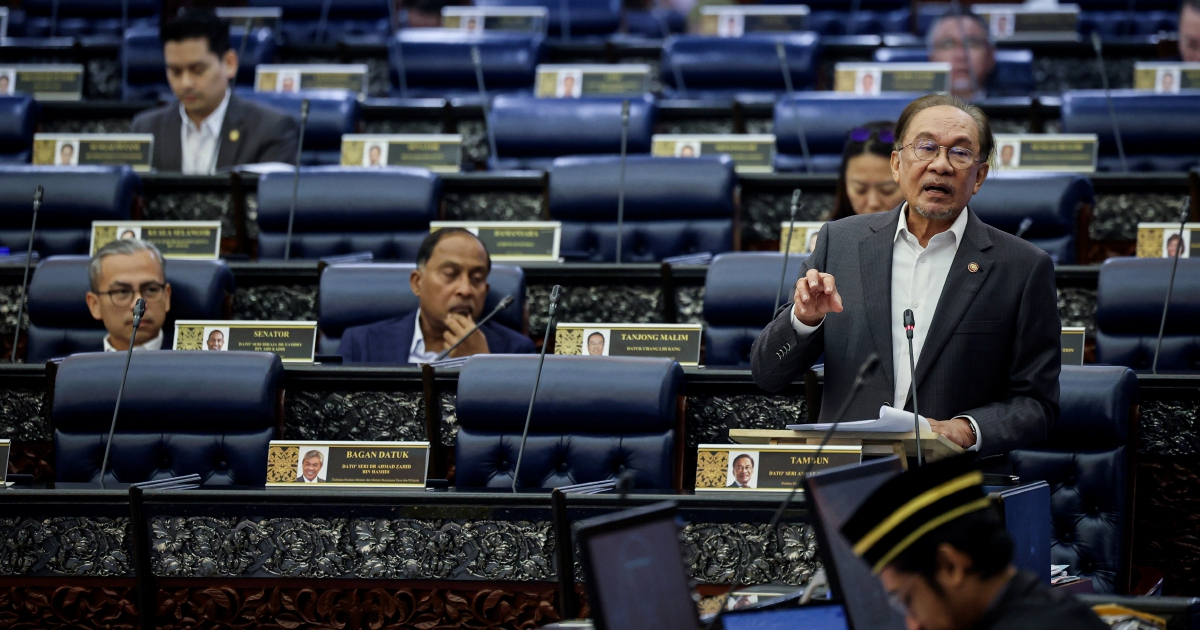
Prime Minister Datuk Seri Anwar Ibrahim has reaffirmed the government's commitment to protecting journalists and registered media organisations from arbitrary enforcement action, marking a significant statement on press freedoms during a period of heightened scrutiny over media regulation in Malaysia.
The Prime Minister's remarks underscore ongoing tensions between maintaining public order and upholding democratic principles. His position suggests the administration recognises the essential role of a functioning fourth estate in democratic governance, whilst simultaneously acknowledging legitimate regulatory frameworks that govern media conduct in the country.
This declaration carries particular weight given Malaysia's complex media landscape, where concerns about press freedom have periodically surfaced in international assessments. The statement provides reassurance to newsrooms grappling with regulatory uncertainty and reinforces that any enforcement decisions against journalists or news organisations should rest on clear legal grounds and transparent processes rather than discretionary application.
The protection of journalists from arbitrary action remains crucial in Southeast Asia's broader media ecosystem. In a region where press freedoms vary considerably across nations, Malaysia's commitment to principled enforcement—rather than ad hoc measures—can serve as a stabilising influence for media practitioners operating across borders and reporting on transnational issues affecting the region.
Anwar's emphasis on protecting registered media organisations suggests recognition that formal journalistic institutions, with established editorial standards and accountability mechanisms, contribute differently to public discourse than unregulated digital actors. This distinction matters for policy formulation, as regulatory frameworks can be calibrated to distinguish between legitimate news organisations operating under professional codes and other communications that may warrant different treatment.
The practical implications of such safeguards extend beyond individual journalists to editorial independence. When enforcement becomes arbitrary, newsrooms self-censor to avoid unpredictable consequences, ultimately weakening investigative journalism and public interest reporting. Anwar's stance signals that transparency in regulatory application serves both democratic accountability and public information needs.
However, the statement also reflects broader global debates about balancing press freedom with other public interests. Governments worldwide grapple with genuine regulatory challenges—from managing disinformation to preventing incitement—whilst protecting legitimate journalism. Malaysia's approach appears oriented toward rule-based frameworks where journalists and editors can reasonably anticipate consequences of their actions rather than facing capricious action.
For Malaysian media organisations, particularly those reporting on sensitive issues from governance to economic policy, clearer guardrails against arbitrary action create an environment where rigorous journalism can flourish. This benefits readers and viewers who depend on quality reporting to understand complex policy decisions and hold institutions accountable.
Regionally, Malaysia's positioning on press protection influences broader standards across Southeast Asia. Several nations in the bloc continue wrestling with balancing development priorities against media openness. When a government as significant as Malaysia's explicitly commits to non-arbitrary enforcement, it contributes to conversations about sustainable media governance that other countries monitor carefully.
The emphasis on process and transparency in enforcement also addresses a longstanding concern among international media advocacy organisations, which frequently raise questions about how regulations are applied to journalists in developing democracies. Clear commitments to predictable, rule-based enforcement can improve Malaysia's standing in global press freedom assessments and attract quality journalism practitioners to operate in the country.
Enforcement mechanisms also require examination. Without clear guidelines detailing what constitutes problematic conduct, journalists cannot reliably distinguish lawful reporting from prohibited activity. Anwar's position logically suggests accompanying policy clarity—whether through updated regulations, prosecutorial guidelines, or formal enforcement protocols—that operationalises the commitment to non-arbitrary action in practice.
Moving forward, translating this principle into institutional practice represents the true test. Media organisations will assess whether regulatory bodies and law enforcement agencies align enforcement decisions with stated principles of transparency and proportionality. Consistent application over time, particularly in politically sensitive cases, will determine whether this represents genuine policy reform or rhetorical positioning.

