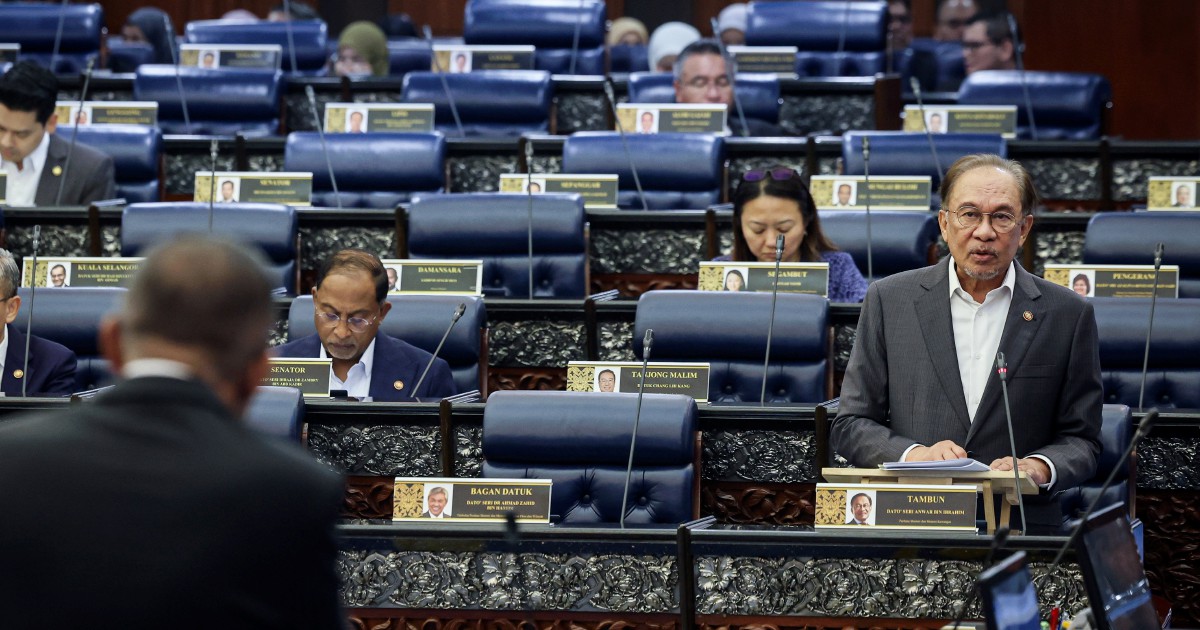
Prime Minister Datuk Seri Anwar Ibrahim has committed to correcting the improper use of Radio Televisyen Malaysia's logo on promotional materials for a Pakatan Harapan political event, should such usage be confirmed. The undertaking was made during parliamentary proceedings in the Dewan Rakyat, signalling the government's willingness to address potential breaches of the state broadcaster's branding protocols.
The incident touches on a longstanding protocol governing how public institutions' identities may be deployed in political contexts. RTM, as Malaysia's national broadcasting service, maintains strict guidelines on logo usage to preserve institutional neutrality and prevent the perception of state media endorsement of any particular political movement. The appearance of the broadcaster's branding on materials associated with a ruling coalition event raises questions about compliance with these established conventions and oversight mechanisms.
Anwar's measured response reflects an acknowledgment that if the allegation holds merit, the matter warrants immediate remedial action. This approach suggests the Prime Minister is taking concerns about institutional propriety seriously, particularly given Malaysia's historical sensitivity around the perceived politicisation of state bodies. The willingness to correct course publicly underscores an effort to demonstrate accountability, which carries weight in Malaysian political discourse where institutional independence remains contentious.
The incident occurs within a broader context of heightened scrutiny over the operations of government-linked entities under the current administration. Pakatan Harapan's governance model since returning to power has faced periodic questions about the boundaries between ruling coalition activities and state institutional functions. This specific case exemplifies the fine line between legitimate government communication and overreach into spaces that should remain apolitical.
For RTM itself, the matter highlights the ongoing challenge faced by state media in balancing operational relationships with ruling governments while maintaining editorial and institutional independence. The national broadcaster operates under frameworks designed to serve the public interest, yet works within structures ultimately accountable to political authority. Incidents such as this create tension within those frameworks and prompt recalibration of enforcement mechanisms.
Parliamentary oversight proved instrumental in bringing this matter to public attention, with lawmakers evidently raising the issue with sufficient prominence to warrant Prime Ministerial response during legislative sessions. This demonstrates that parliamentary mechanisms can function as effective checks on executive action, though the reactive nature of such scrutiny—addressing issues after they occur rather than preventing them—underscores the importance of proactive institutional governance.
The implications extend beyond a single event to considerations of systemic accountability within Malaysia's political apparatus. How coalition parties, state bodies, and administrative machinery interact requires clear delineation of responsibilities and authority. When boundaries blur, as appears to have occurred here, correction mechanisms must be transparent and swift to restore public confidence in institutional integrity.
Regionally, Malaysia's experience reflects challenges common across Southeast Asia, where state media and political structures often intersect in ways that complicate questions of independence and neutrality. Other ASEAN nations similarly grapple with defining appropriate boundaries between state institutions and ruling parties, making Malaysia's handling of such incidents instructive for the broader region's governance frameworks.
The government's commitment to remediation, whether through removing problematic materials, clarifying protocols with event organisers, or reinforcing guidelines with relevant departments, will be scrutinised as an indicator of institutional discipline. Implementation matters as much as the commitment itself; how thoroughly the correction is pursued will signal the seriousness with which the administration treats such breaches.
Moving forward, the incident may catalyse a broader review of logo usage protocols across government-linked entities and political structures. Clearer communication, training programmes, and oversight mechanisms could prevent similar instances, protecting both institutional credibility and the ruling coalition's political standing. The Prime Minister's willingness to address the issue provides an opportunity to strengthen rather than merely repair.
The broader significance lies in reinforcing the principle that state institutions, however integrated with political governance, must maintain sufficient independence to serve the national interest rather than factional interests. Malaysia's approach to this particular instance will contribute to ongoing definitions of appropriate institutional behaviour and set precedents for how similar situations are handled in future.

