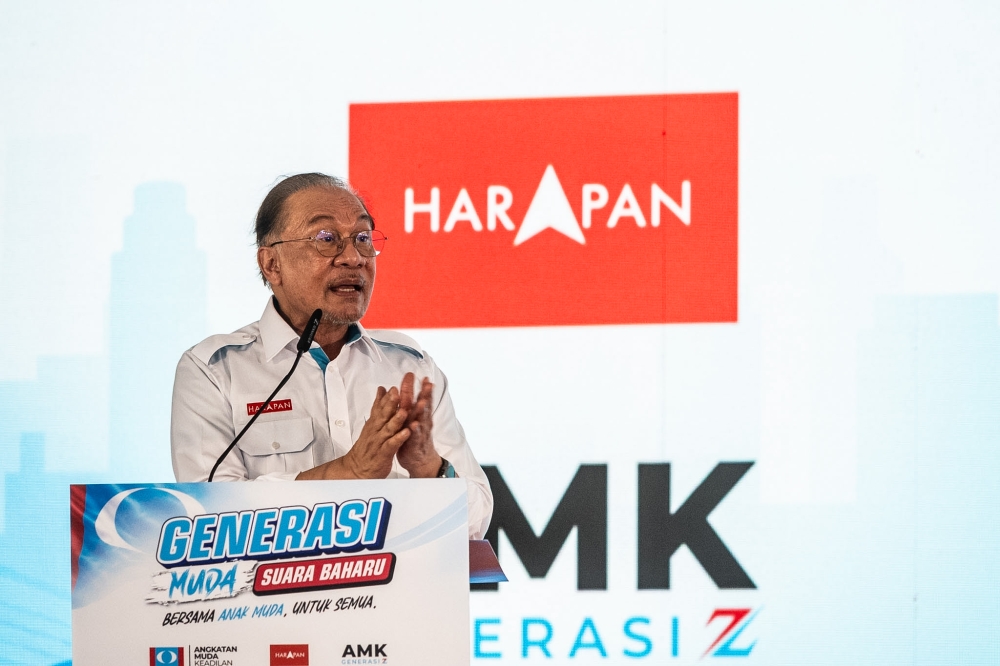
Prime Minister Datuk Seri Anwar Ibrahim has clarified that federal development resources designated for Petaling Jaya and Subang have not been withdrawn, even as he draws a distinction between supportive and critical members of parliament regarding budget distribution mechanisms. The assertion comes amid ongoing tensions within Malaysia's political landscape, where alignment with the ruling coalition increasingly appears to determine access to developmental infrastructure funding at the federal level.
Speaking in Petaling Jaya on July 24, Anwar explained that the funds allocated for these constituencies remain part of the government's fiscal planning. However, his framing introduces a crucial qualification: parliamentary representatives who maintain an oppositional stance toward the administration will not serve as the conduits through which these resources flow. This approach represents a notable shift in how developmental funds have traditionally been distributed, moving away from a system where allocated monies reached constituents primarily through their elected MPs regardless of party affiliation.
The distinction Anwar draws reflects broader changes in Malaysia's political economy following the formation of the current government. Rather than adopting a purely punitive approach that would eliminate funding for opposition-held constituencies, the Prime Minister's statement suggests a more sophisticated mechanism. Development projects and allocations would proceed, but through alternative channels that bypass opposition representatives—potentially through federal agencies, state governments aligned with Kuala Lumpur, or directly administered programmes.
For residents of Petaling Jaya and Subang, this arrangement carries significant implications. These constituencies have historically received federal development attention commensurate with their urban status and economic importance. Petaling Jaya, one of Malaysia's oldest planned townships, hosts significant commercial and residential developments requiring ongoing infrastructure investment. Subang, encompassing areas like Shah Alam and the Subang Airport vicinity, similarly requires sustained federal support for transport connectivity and urban renewal initiatives.
The approach mirrors patterns observed in other democracies where governing coalitions have sought to direct resources toward politically sympathetic representatives and regions. However, in the Malaysian context, where ethnic and religious demographics intersect complexly with electoral politics, such mechanisms carry particular weight. The constituencies in question contain substantial middle-class populations and ethnically diverse communities where developmental outcomes directly influence voter behaviour and political stability.
Opposition MPs in these areas face a genuinely constrained position under this arrangement. While they retain formal parliamentary representation and the ability to voice constituent grievances, their capacity to facilitate the infrastructure projects and public works that typically cement electoral bonds becomes substantially diminished. Constituents seeking roads, drainage improvements, community centres, or other developmental amenities may find their MP's advocacy capacity limited by the government's routing of funds through parallel mechanisms.
This strategy also carries implications for the broader credibility of Malaysia's parliamentary system. Traditionally, the principle that all constituencies receive equitable treatment regardless of political representation has undergone challenge before, but rarely with such explicit articulation by a sitting Prime Minister. The statement essentially acknowledges that resource distribution now operates on a political rather than purely administrative or needs-based foundation.
From a Southeast Asian perspective, Malaysia's experience offers instructive lessons regarding democratic institutional erosion. While the country maintains democratic structures and parliamentary processes, the increasingly conditional nature of resource distribution based on political alignment suggests a gradual recalibration of how state power translates into practical governance outcomes. This pattern merits attention from other regional democracies navigating similar pressures between electoral competition and executive resource control.
The implementation of such a system also raises practical questions about efficiency and equity. Routing funds through parallel mechanisms rather than elected representatives may create administrative redundancies or opacity regarding how resources ultimately reach beneficiaries. Additionally, the message that development becomes contingent upon political support could potentially alienate voters who value principled opposition or cross-party pragmatism in local governance.
Anwar's clarification appears designed to reassure residents of these constituencies that development has not ceased, while simultaneously signalling to governing coalition partners that the administration retains sophisticated tools for rewarding political loyalty. However, the long-term sustainability of such arrangements depends significantly on whether opposition MPs can preserve constituent satisfaction through alternative advocacy channels, or whether developmental disadvantage eventually translates into electoral consequences.
The statement also reflects the continued salience of infrastructural politics in Malaysian governance. Despite economic modernisation and urbanisation, federal developmental funding remains a primary mechanism through which political relationships translate into tangible benefits. Anwar's remarks underscore that controlling such distribution channels represents a core element of executive power and coalition maintenance in contemporary Malaysia.
Moving forward, how these constituencies experience infrastructural development over the coming years will serve as a practical test of whether the government's parallel funding mechanisms prove effective alternatives to traditional MP-mediated channels. The outcome will likely influence electoral dynamics in these demographically significant constituencies and set precedent for how subsequent administrations approach resource distribution in opposition-held areas.

