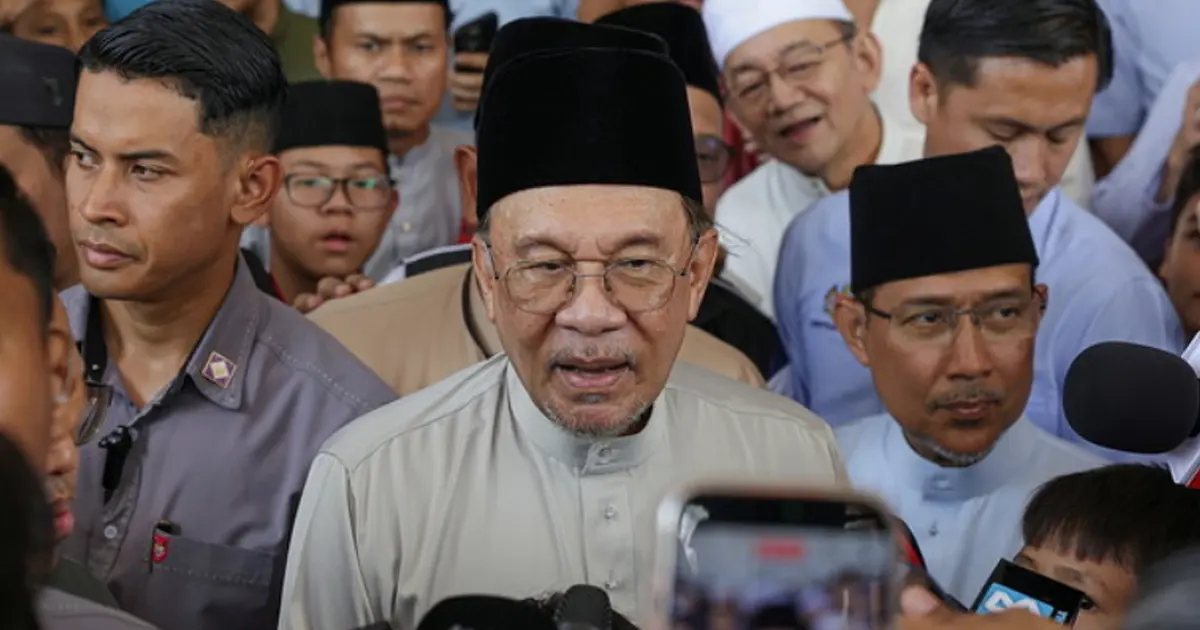
Prime Minister Anwar Ibrahim has moved to dispel concerns about transparency surrounding the Royal Commission of Inquiry report on Tabung Haji, asserting that the document has been made publicly available without any editorial changes or suppression of its contents. His statement carries particular significance given the heightened scrutiny surrounding governance issues at the Islamic financial institution and the public appetite for accountability in handling pilgrims' savings.
The confirmation that no modifications were made to the report represents a departure from historical patterns in Malaysia where sensitive government inquiries have sometimes faced delayed releases or selective publication of findings. By explicitly stating that no censorship occurred, Anwar has attempted to reinforce the administration's commitment to governance reform and accountability—a cornerstone of his political messaging since assuming office. This transparency approach responds to sustained public interest in Tabung Haji's management and the circumstances that led to the establishment of the RCI in the first place.
Tabung Haji, officially known as Lembaga Tabung Haji, manages savings and pilgrimage arrangements for millions of Malaysian Muslims seeking to perform the Hajj. The institution has faced mounting scrutiny over investment decisions, management practices, and the financial wellbeing of contributors' funds. The decision to establish a Royal Commission of Inquiry reflected the government's recognition that substantive questions required rigorous independent examination. Public trust in the organisation's stewardship had deteriorated following various controversies, making the RCI investigation a necessary institutional response.
The release of the complete RCI findings allows stakeholders—including Tabung Haji members, opposition politicians, civil society organisations, and financial analysts—to conduct independent assessments of the inquiry's conclusions and recommendations. This comprehensive availability of information facilitates informed public discourse about the institution's operational framework and governance improvements. Without such transparency, speculation and competing narratives would likely dominate discussions about the report's contents and implications, undermining confidence in both the inquiry process and institutional reform efforts.
The prime minister's statement must be understood within Malaysia's broader reform agenda. Since taking office, Anwar's administration has signalled its intention to tackle entrenched governance challenges and institutional corruption. The handling of the Tabung Haji RCI report serves as a test case for whether this commitment extends to high-profile inquiries with potential political ramifications. Senior government officials and religious authorities have significant stakes in the report's findings, making the decision to release findings without modification a notable signal about institutional independence.
For Malaysian pilgrims and their families, the availability of the complete RCI report provides direct access to findings that directly affect their financial interests and religious journey arrangements. Millions of Malaysians maintain savings accounts with Tabung Haji as part of their Hajj preparations, making the institution's financial health and management practices matters of genuine personal concern. The report's unredacted release enables members to understand institutional weaknesses and reform measures with greater clarity, potentially informing their decisions about fund management and trust in the organisation.
The implications for Tabung Haji's future operations depend significantly on the RCI's recommendations and the government's willingness to implement suggested reforms. Whether the report identifies systemic management failures, inadequate investment oversight, or procedural deficiencies will shape the nature and extent of institutional restructuring. The completeness of the report's release suggests that officials are prepared to confront whatever criticisms or shortcomings the RCI has documented, rather than attempting to manage the narrative through selective publication.
From a regional perspective, Malaysia's approach to publishing the Tabung Haji RCI report reflects broader governance trends across Southeast Asia. Many countries in the region have strengthened emphasis on transparency and accountability in managing state institutions and public funds. The full release of such reports contributes to Malaysia's position within international governance frameworks and demonstrates responsiveness to demands for institutional integrity. For foreign investors and international observers, transparent handling of regulatory inquiries signals institutional maturity and commitment to best practices in financial governance.
The statement from Anwar also carries domestic political significance. Opposition parties and civil society organisations have historically criticised government inquiries for selective disclosure or suppressed findings. By publicly confirming that the Tabung Haji RCI report underwent no editorial changes, the prime minister has preempted accusations of censorship and positioned the government as the transparent actor in the reform narrative. Should any party subsequently attempt to suggest that information was withheld or altered, Anwar's explicit confirmation establishes a clear factual record against such claims.
Looking forward, the availability of the complete RCI report on Tabung Haji creates expectations for similar transparency regarding other government inquiries and institutional investigations. If this approach becomes the standard practice rather than an exception, it would represent meaningful progress in Malaysia's governance reform trajectory. However, observers will monitor whether this commitment to transparency extends consistently across other sensitive institutional and political inquiries, or whether the Tabung Haji case represents a selective application of transparency principles.
The prime minister's confirmation ultimately reflects recognition that institutional credibility depends on transparency and stakeholder confidence. For Tabung Haji members, the unredacted release of RCI findings removes speculation about withheld information and enables direct engagement with the inquiry's conclusions. For the broader Malaysian governance system, the approach demonstrates that serious inquiries into institutional performance can proceed without political interference or editorial filtering of inconvenient truths. Whether this establishes a durable norm for Malaysian governance or remains an isolated instance will become clearer through examination of how other significant inquiries are handled going forward.

