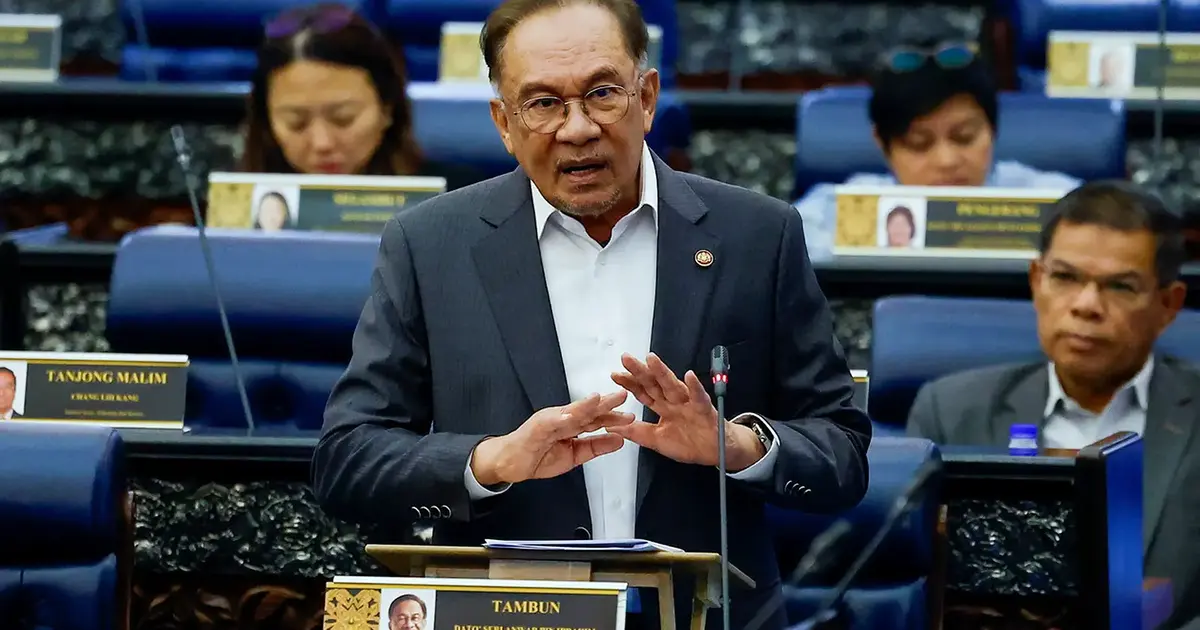
Prime Minister Anwar Ibrahim has clarified that the previous state government in Sabah, under the Warisan party, had formally agreed to the graduated increases in special grant allocations now being disbursed to the East Malaysian state. The remarks come amid ongoing discussions about federal funding arrangements and development priorities for Sabah, a state that has long sought greater financial support from Kuala Lumpur to address its infrastructure and economic development needs.
According to Anwar's statement, the financial commitment spans a multi-year progression in which Sabah received RM53.4 million annually during both 2020 and 2021. This baseline figure represented a significant sum dedicated specifically to address Sabah's particular fiscal requirements and was apparently determined through discussions between the state administration and the federal government during the Warisan tenure. The sums involved reflect the complexity of managing federal-state fiscal relations in Malaysia, where special circumstances and historical considerations often shape resource allocation across different regions.
The trajectory of these grants demonstrates a policy of gradual enhancement rather than sudden jumps in funding. By 2024, the annual allocation had increased substantially to RM106.8 million, effectively doubling the earlier commitment within a four-year window. This progression suggests a structured approach to addressing Sabah's financial needs while maintaining fiscal responsibility at the federal level. The doubling represents a significant commitment from the federal government to the state's development agenda, though the amounts must be contextualised against Sabah's broader budget requirements and the scale of infrastructure projects across the state.
Anwar's explicit confirmation that the previous Warisan administration had endorsed these rate increases carries political significance. The statement appears designed to demonstrate continuity in federal-state relations across different political administrations and to suggest that current federal funding arrangements are built upon agreements made under previous governance structures. This continuity narrative is important in Malaysian politics, where changes in state or federal leadership often lead to disputes over inherited agreements and commitments.
For Malaysian observers, particularly those in Sabah, the clarification addresses potential questions about the legitimacy and historical origins of current special grant allocations. Sabah's governance has witnessed significant political turbulence in recent years, with shifts in state leadership affecting relationships with federal authorities. By anchoring current arrangements to agreements made under the previous administration, Anwar's comments seek to depoliticise the funding discussions and position the grants as the outcome of objective assessment rather than partisan preference.
The special grant mechanism itself reflects the federal government's recognition that certain states face distinctive economic and developmental challenges requiring targeted financial intervention. Sabah, as one of Malaysia's less developed states relative to the Klang Valley or Selangor, has consistently advocated for enhanced federal support. The special grants represent one mechanism through which the federal government addresses these disparities, though debate continues about whether such allocations are sufficient to narrow development gaps across Malaysia's regions.
The increase from RM53.4 million to RM106.8 million over four years, while substantial, must be examined against Sabah's total budget and the quantum of development projects requiring funding. State governments in Malaysia juggle responsibilities across education, healthcare, infrastructure, and local government financing, often finding that even enhanced federal allocations fall short of identified needs. The special grants therefore represent one component of a broader financial framework, rather than a comprehensive solution to the state's fiscal challenges.
Anwar's statement also underscores the role of institutional memory and documentation in Malaysian federalism. Agreements reached between different administrations should ideally remain binding, yet transitions in political leadership sometimes create complications in honouring inherited commitments. By publicly confirming that the Warisan government had approved these escalating rates, the Prime Minister establishes a factual record that may insulate the arrangements from future political challenge. This approach reflects best practices in intergovernmental relations, where clarity about historical commitments reduces subsequent disputes.
The timing and context of Anwar's comments deserve attention as well. Statements about federal funding for Sabah often feature prominently in managing the state's political dynamics and demonstrating federal commitment to its development. Sabah's strategic importance within Malaysia's broader political framework, combined with its history of governance challenges and economic vulnerabilities, means that clear communication about federal support carries messaging significance beyond the technical fiscal dimensions.
Moving forward, the confirmation that special grant increases were previously approved provides a foundation for planning at the state level. State policymakers can make medium-term developmental decisions with greater confidence regarding available resources, though they must still contend with the reality that competition for federal funds is intense and Sabah faces ongoing constraints in delivering services across its sprawling geography and dispersed population centres.
For the broader Southeast Asian region, Sabah's experience reflects broader patterns in developing federal systems, where wealthier regions and less developed areas navigate complex relationships around resource distribution. Malaysia's approach of using special grants alongside other mechanisms represents one model among several adopted by federal states seeking to balance equity with fiscal efficiency.

