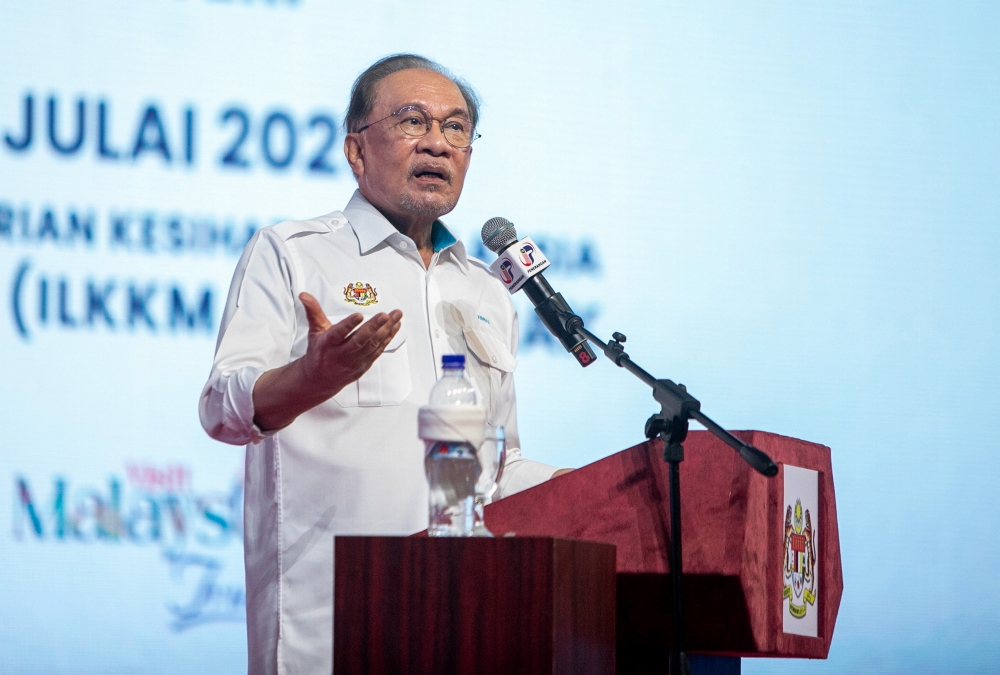
Prime Minister Datuk Seri Anwar Ibrahim has mounted a robust defence of the government's approach to fuel pricing, emphasizing that any substantial adjustment to current subsidies must be considered within the broader context of Malaysia's fiscal constraints and debt sustainability. Speaking in Kajang, Anwar articulated a delicate balancing act that reflects the administration's ongoing challenge of managing energy costs while preserving budgetary discipline—a tension that has long defined energy policy debates across Southeast Asia.
Anwar's remarks underscore the philosophical divide within government circles regarding the appropriate role of subsidies in managing cost-of-living pressures. Rather than framing the fuel subsidy question purely as an economic efficiency matter, the Prime Minister has recast it as a question of fiscal responsibility. His position suggests that while maintaining affordable fuel prices responds to legitimate public expectations, the government cannot indefinitely absorb the costs through borrowing without triggering broader macroeconomic consequences that would ultimately harm Malaysian citizens more severely.
The timing of Anwar's defence of current fuel policy is significant given Malaysia's persistent struggle with public debt levels. The nation carries one of the highest debt-to-GDP ratios in Southeast Asia, a legacy of both the pandemic-era spending and structural fiscal imbalances predating COVID-19. In this context, Anwar's invocation of debt concerns represents more than rhetorical positioning—it reflects genuine constraints on policy flexibility. Malaysia lacks the fiscal space that oil-rich Gulf states enjoy, and unlike developed nations with established sovereign wealth funds, the country must justify every ringgit of public expenditure against competing demands.
The fuel subsidy debate in Malaysia intersects with several interconnected policy challenges. Energy subsidies implicitly represent a transfer from the national budget to consumers, with the burden ultimately borne by taxpayers. Anwar's framing—"who will pay for it?"—thus articulates the fundamental equity question: Should urban commuters and middle-class motorists benefit from subsidized fuel at the expense of education, healthcare, and infrastructure spending that might benefit the broader population more equitably? This logic has animated subsidy reform discussions throughout the developing world, though implementation remains politically fraught.
From a regional perspective, Malaysia's fuel policy represents a middle path between starkly different approaches taken by neighbours. Singapore maintains minimal energy subsidies, relying on market pricing and transit-oriented development. Indonesia, despite being a net oil exporter, continues significant fuel subsidies that consume substantial budget allocations. Thailand's approach similarly involves periodic adjustments to maintain affordability while limiting fiscal damage. Malaysia's current model reflects an attempt to thread this needle, maintaining subsidies at a level deemed politically sustainable while gradually reducing their scope through targeted approaches such as differential pricing for commercial users.
The government's resistance to rapid subsidy removal also reflects awareness of inflation dynamics. Following the global commodity price surge in 2022 and the subsequent economic adjustment, removing or drastically curtailing fuel subsidies would immediately transmit into transport costs, food prices, and broader consumer price inflation. For a government already managing public expectations around cost-of-living challenges, the political and social costs of engineered price shocks remain unpalatable, even when economically rational from a long-term efficiency standpoint.
Anwar's emphasis on debt sustainability reflects lessons drawn from global economic history. Countries that have attempted maintaining unsustainable fiscal positions—particularly through subsidies and transfers that lack dedicated revenue sources—have often experienced abrupt adjustment crises. Malaysia witnessed such pressures during the 1997-98 Asian financial crisis, an experience that continues to influence policy-maker psychology. The cautionary tale Anwar implicitly invokes is that while subsidies provide immediate relief, financing them through debt accumulation creates systemic vulnerabilities that eventually necessitate far more painful adjustments than gradual, planned reforms.
The political economy of fuel pricing in Malaysia also reflects the government's relationship with rural and lower-income constituencies that disproportionately depend on road transport. Unlike developed nations where public transit provides viable alternatives, Malaysia's spatial structure and infrastructure patterns mean that rural populations, small-business operators, and lower-income urban workers remain heavily dependent on affordable fuel access. This structural reality constrains policy options and explains why fuel subsidies retain political salience despite their recognized fiscal costs.
Looking forward, Anwar's defence of current policy while simultaneously warning against debt accumulation suggests the government favours managed, incremental adjustment over sharp breaks with existing arrangements. This approach acknowledges that subsidy reform, to be politically durable, typically requires parallel investments in public transport, targeted cash transfers, or other compensation mechanisms. A sudden removal of fuel subsidies without mitigating measures would impose concentrated costs on transportation-dependent populations, generating political backlash and potentially undermining broader reform efforts.
The Prime Minister's framing also carries implications for Malaysia's engagement with international financial institutions and bond markets. The International Monetary Fund and World Bank have long recommended Malaysian subsidy reduction as part of broader fiscal consolidation. Anwar's public emphasis on fiscal discipline and debt concerns signals awareness of these external pressures while simultaneously positioning reform as a gradual process responsive to domestic constraints rather than external diktat. This rhetorical positioning matters for maintaining policy credibility with both domestic constituencies and international creditors.
Ultimately, Anwar's defence of fuel policy represents an acknowledgment that energy affordability and fiscal sustainability represent competing imperatives requiring navigation rather than decisive resolution. The question "who will pay for it?" that animates the Prime Minister's argument extends beyond fuel to encompass broader debates about resource allocation, intergenerational equity, and the appropriate boundaries of state intervention in market pricing. Malaysia's resolution of this tension will significantly influence the country's trajectory toward fiscal stability or potential debt crisis in the decade ahead.

