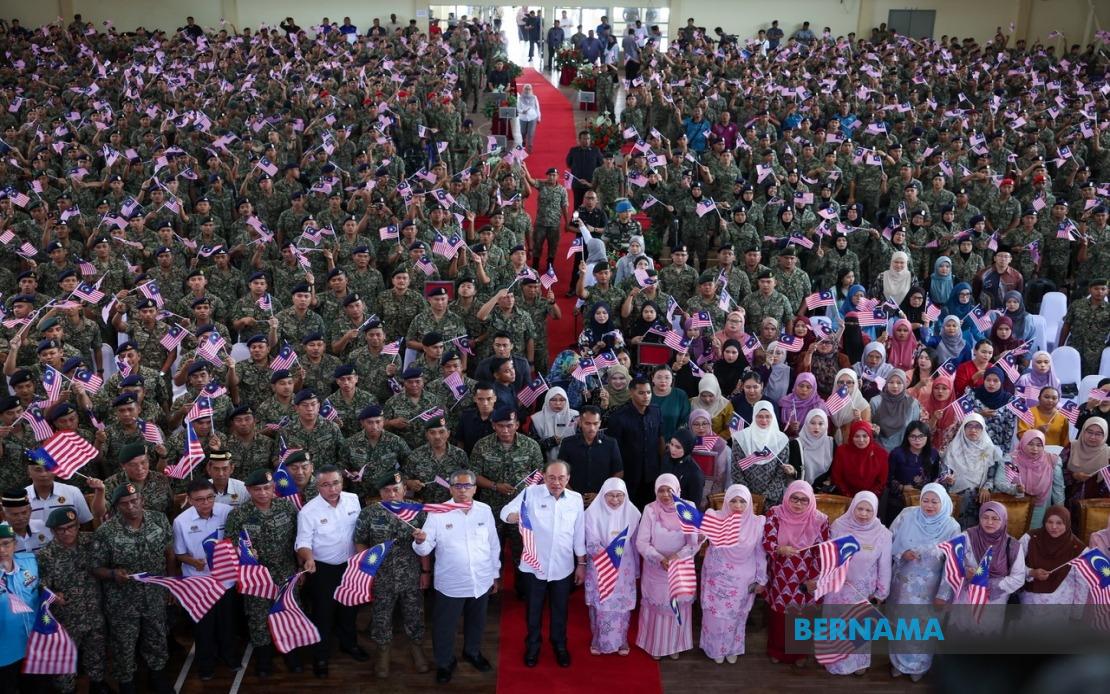
Prime Minister Datuk Seri Anwar Ibrahim has firmly pushed back against suggestions that his administration is overlooking the welfare of the Bumiputera community, particularly the Malays. Speaking in Tampin on July 27, he underscored the government's commitment through concrete action, specifically the creation of new Malay reserve land in the nation's capital—a development he characterised as historically significant and emblematic of the MADANI Government's priorities.
The centrepiece of Anwar's defence is the reclamation and redesignation of the Bandar Malaysia site, a sprawling 480-acre property that had previously been held by a Chinese entity and a private company. After assuming office in 2022, Anwar identified irregularities in how the land was being managed and moved to bring it back under public control. The decision underscores his assertion that the administration takes seriously its obligation to safeguard and expand Bumiputera landholdings, particularly in urban centres where such assets have historically been diminishing.
The historical context makes this move noteworthy. Since Malaysia's independence in 1957, no new Malay reserve land had been established in Kuala Lumpur, despite the city's role as the nation's economic and political heartland. Instead, existing reserves had been progressively sold off or converted to other uses. This erosion of Bumiputera landholdings in the capital has long been a point of concern among Malay-Muslim constituencies, and Anwar's assertion that the situation demanded intervention reflects an acknowledgment of this underlying tension.
From the reclaimed Bandar Malaysia site, the government carved out 50 acres specifically as Malay reserve land—a designation that carries both symbolic and material weight. These 50 acres, Anwar emphasised, comprise some of the most valuable real estate in Kuala Lumpur, suggesting that the allocation is not merely a token gesture but a genuine transfer of high-value assets. The placement of the broader site under the stewardship of Petronas and Khazanah Nasional, entities Anwar identified as Malay-controlled, further reinforces the narrative that these assets will remain within the hands of Bumiputera-linked institutions.
A noteworthy aspect of Anwar's account is his claim that the proposal encountered no resistance within the Cabinet. He specifically mentioned that DAP Secretary-General Anthony Loke, representing one of the key non-Malay components of the government coalition, did not object to the measure. According to Anwar, Loke merely requested clarification, which the Prime Minister provided by explaining the demographic and economic pressures driving the erosion of Malay landholdings in urban areas. This framing suggests that the allocation was presented not as a divisive measure but as a corrective response to a legitimate policy concern—one that the multi-ethnic Cabinet could collectively endorse.
For Malaysian readers, and particularly those within Bumiputera communities, this announcement carries tactical political significance. Perceptions of inequitable resource distribution have periodically destabilised coalition politics at both federal and state levels. By highlighting this tangible allocation of prime urban real estate to Malay reserves, Anwar is attempting to demonstrate responsiveness to Bumiputera anxieties without requiring the dismantling of the broader multi-ethnic governing consensus. The move signals that the government can accommodate Bumiputera interests while maintaining coalition cohesion—a delicate balance the administration has struggled to maintain since taking office.
The timing of these remarks is also significant. Political narratives around Bumiputera policy and communal equity remain perpetually sensitive in Malaysian discourse. Opposition parties and interest groups periodically challenge the government's commitment to these constituencies, particularly when infrastructure, land, or economic opportunity allocations appear unbalanced. By proactively addressing these critiques and offering concrete evidence of policy action, Anwar is seeking to neutralise potential criticism and demonstrate administrative competence on an issue of intense communal concern.
From a broader Southeast Asian perspective, Malaysia's approach to Bumiputera policy and ethnic economic arrangements continues to distinguish it within the region. While other nations grapple with similar questions of indigenous or majority-community economic rights, Malaysia's constitutional framework and historical settlement place these protections at the constitutional core. Anwar's emphasis on upholding and expanding these arrangements reflects both constitutional obligation and political necessity—a combination that shapes governance priorities.
The designation of these 50 acres also carries implications for Kuala Lumpur's urban development trajectory. Land use decisions in the capital city attract scrutiny from multiple stakeholders, including commercial interests, environmental advocates, and community organisations. The conversion of previously contested or externally-held territory into Malay reserves will likely shape future development planning and may influence how remaining high-value central locations are deployed. For property investors, development firms, and urban planners, such policy decisions carry material consequences that ripple through market expectations and investment strategies.
Anwar's invocation of the reclamation process—his reference to regulations having been violated by previous arrangements—adds a layer of legal and administrative justification to the realignment. This framing positions the government's action not as preferential but as corrective, restoring proper stewardship of assets that had been improperly held or managed. Such arguments resonate within constituencies predisposed to accept Bumiputera-protective measures but may face scrutiny from those questioning the legal grounds or administrative process underlying the reclamation decision.
Looking forward, this allocation establishes a precedent that the government is prepared to take affirmative steps to halt the decline of Bumiputera landholdings in urban centres. Whether similar initiatives follow in other major cities, and how future administrations treat the reserves created under this arrangement, will determine whether this move proves to be a significant reorientation of policy or a more modest response to immediate political pressures. For now, it represents an attempt to demonstrate governmental responsiveness to a constituency whose concerns about resource distribution remain a persistent undercurrent in Malaysian political life.

