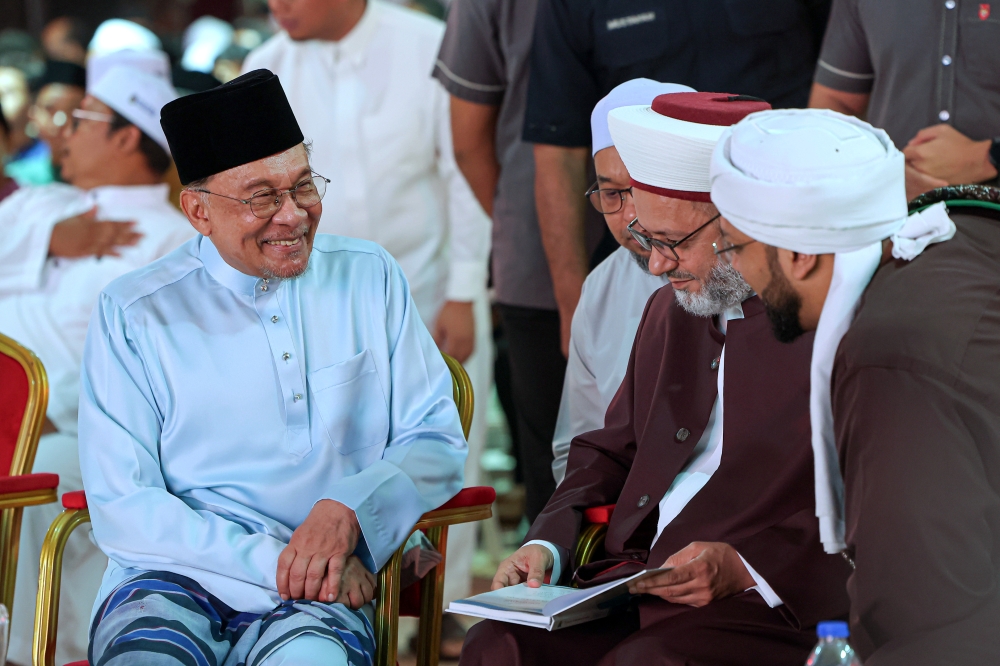
Prime Minister Datuk Seri Anwar Ibrahim has stepped forward to defend the government's controversial decision to release the Tabung Haji Royal Commission of Inquiry report to the public, arguing that the transparency measure reflects a fundamental commitment to democratic accountability rather than partisan political advantage. Speaking in Port Dickson on July 31, Anwar positioned the disclosure as a natural extension of the administration's broader agenda to strengthen institutional trust and demonstrate that Malaysia's governance framework operates according to rule of law rather than selective institutional capture.
The release of the RCI findings represents a significant departure from Malaysia's historical practice of keeping sensitive inquiry reports confidential, particularly those concerning state-linked religious and social welfare institutions. Tabung Haji, which manages pilgrimage funds and religious endowments for Malaysian Muslims, operates at the intersection of religious affairs and public finance—making the institution inherently sensitive to both government and community scrutiny. The decision to publicise the commission's findings signals a shift in how the current administration conceptualises public accountability, suggesting that withholding findings would undermine rather than protect institutional legitimacy.
Anwar's framing of the decision as a matter of "trust, not politics" carries particular weight given the historical politicisation of religious institutions in Malaysia's governance landscape. Previous administrations have often managed Tabung Haji controversies through restricted information flows and internal remedial actions, avoiding public disclosure that might generate headlines or undermine confidence in the institution. By contrast, Anwar's approach suggests that institutional credibility in a modern democracy depends on transparent acknowledgment of problems and corrective measures rather than reputational management through information control. This represents a notable philosophical divergence in how leadership understands the relationship between transparency and public confidence.
The Prime Minister's emphasis on trust as the operative principle rather than political calculation reflects an implicit recognition that the Tabung Haji situation carries explosive political potential. Any sense that the government was selectively hiding unflattering findings would almost certainly fuel opposition narratives about continued institutional capture and unequal accountability standards. By proactively releasing the report and framing transparency as a governmental principle, Anwar attempts to neutralise such criticism by ceding control of the narrative to institutional process rather than retaining it within executive discretion. This strategy gambles that comprehensive disclosure, even when findings are unflattering, generates greater long-term legitimacy than selective information management.
For Malaysian readers and broader Southeast Asian observers, Anwar's position carries implications extending well beyond Tabung Haji itself. The decision establishes a precedent regarding how sensitive institutional inquiries will be handled under the current administration, potentially influencing expectations around disclosure of future RCI reports and government investigation outcomes. Religious institutions throughout Southeast Asia often operate with limited public transparency, justified through cultural or doctrinal reasoning. The Malaysian government's move toward greater openness regarding Tabung Haji may inspire similar demands for transparency in other religious and quasi-governmental bodies across the region.
The RCI inquiry itself had examined allegations of financial mismanagement, governance failures, and potential conflicts of interest within Tabung Haji's operational structure. The institution manages substantial assets and handles funds with deep religious and personal significance for Malaysian Muslim pilgrims, making governance quality a matter of genuine public concern rather than purely technical interest. Previous controversies surrounding Tabung Haji's investments and administrative practices had generated community frustration and raised questions about whether the institution adequately protected beneficiary interests. The commission's work thus addressed legitimate public anxieties rather than obscure administrative matters.
Anwar's rhetorical strategy distinguishing "trust" from "politics" implicitly acknowledges criticism that the release might itself be perceived as politically motivated—calculated to demonstrate reform credentials or to embarrass political opponents implicated in historical governance failures. By insisting the decision rests on principle rather than tactical advantage, the Prime Minister attempts to elevate the decision above partisan calculation and anchor it instead to institutional values. Whether such framing succeeds depends substantially on how opposition figures and civil society organisations interpret the released findings and the government's response to any identified problems.
The decision also reflects broader international trends toward government transparency and institutional accountability, particularly in Southeast Asia where anti-corruption and good governance movements have gained momentum following transitions toward more competitive electoral politics. Malaysia's move to release the Tabung Haji RCI report aligns with similar transparency initiatives in other regional democracies and may reflect pressure from civil society organisations and international governance observers who increasingly scrutinise financial accountability in religious institutions.
For Malaysian stakeholders—particularly Tabung Haji contributors and the broader Muslim community relying on the institution for pilgrimage support—the transparency move signals that institutional governance will receive serious scrutiny and that problematic practices identified in the report will presumably trigger remedial action. The credibility of this signal depends on concrete follow-up measures and demonstrable reforms emerging from the RCI's recommendations. If the released report simply documents problems without prompting substantive institutional change, transparency without accountability would undermine rather than strengthen Anwar's framing of the decision as trust-building.
Moving forward, the government faces the challenge of implementing whatever reforms the RCI identified while maintaining the confidence of Tabung Haji contributors and the broader Muslim community. Anwar's defence of the disclosure decision thus represents merely the opening move in a longer process of institutional reform and public accountability. The ultimate test of whether transparency genuinely serves trust-building, rather than merely creating superficial appearances of openness, will emerge through the quality and comprehensiveness of reforms that follow the report's release.

