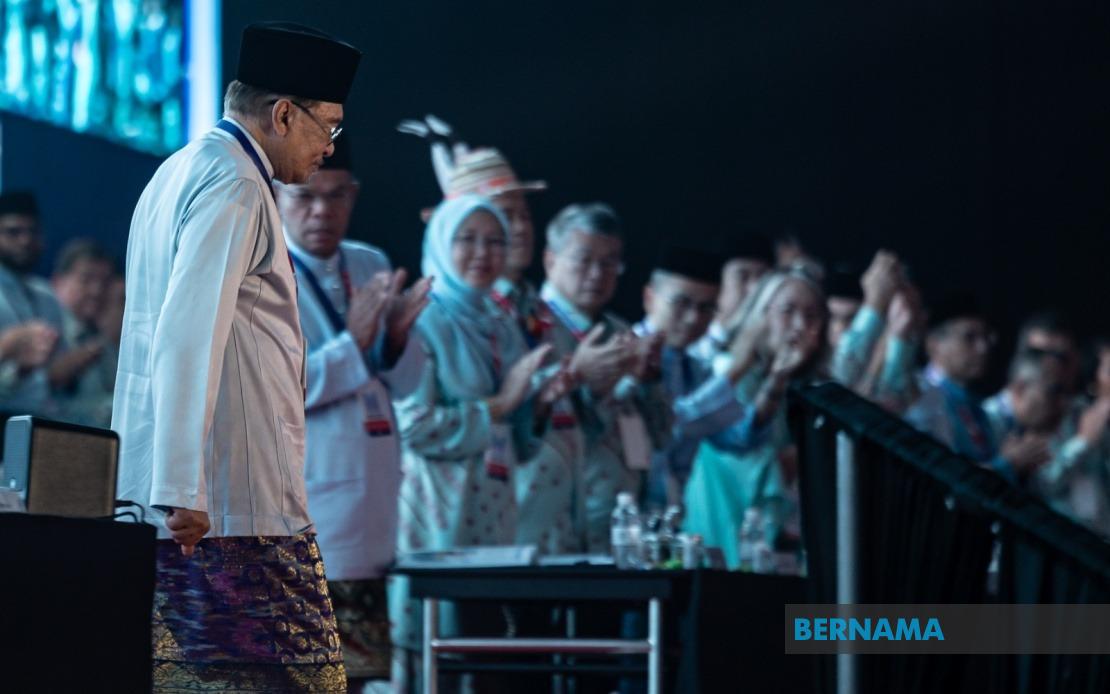
Prime Minister Datuk Seri Anwar Ibrahim mounted a robust defence of his administration's reform credentials on August 15, telling the PKR National Congress in Melaka that meaningful institutional changes—long overdue—have begun taking root despite ongoing demands for faster progress. Speaking at the Melaka International Trade Centre, Anwar acknowledged the tension between reform achievements and the public appetite for additional change, cautioning supporters to recognise the ground already covered while remaining realistic about the complexity of structural transformation.
The fundamental argument underpinning Anwar's message centres on a historical comparison: six decades of governance preceded his administration without implementing critical reforms now unfolding. This framing attempts to contextualize the pace of change within the MADANI framework, positioning even modest progress as a reversal of long-standing institutional inertia. Anwar specifically highlighted legislative victories including amendments to the Audit Act 1957, revisions to the Parliamentary Service Act, passage of the Public Finance and Fiscal Responsibility Act 2023, and the establishment of the Special Task Force on Agency Reform. Additionally, his government enacted the Consumer Credit Act and introduced legislation safeguarding gig workers—all accomplished within roughly three years of his taking office.
Yet the Prime Minister's remarks also betrayed an underlying tension within Malaysia's current political landscape. As both PKR president and Pakatan Harapan chairman, Anwar must balance his coalition's historic push for institutional accountability with the compromises necessitated by the Unity Government formed after the 2022 general election. Coalition governance with Barisan Nasional and other partners has required negotiation and concession on reform sequencing, limiting the pace and scope of change that a purely Pakatan administration might pursue. This political reality constrains even a reformist premier's ability to execute a comprehensive transformation agenda.
Anwar's acknowledgement that implementation challenges remain real and that not all government actions have proved flawless demonstrates pragmatic leadership messaging. Rather than glossing over difficulties, he framed reform as an iterative process requiring institutional learning and careful foundation-building. This approach contrasts sharply with rhetoric promising wholesale overnight change, instead positioning gradual, sequenced reform as more durable and effective than rushed comprehensive restructuring. The distinction matters for Malaysian governance: hasty institutional overhaul often produces unintended consequences and administrative dysfunction, whereas carefully phased implementation allows bureaucratic systems to adapt and embed changes.
The political context surrounding these remarks also carries regional significance. Southeast Asia has witnessed multiple reform movements succeed and fail based partly on implementation methodology. Thailand's repeated constitutional rewrites demonstrate the perils of attempting comprehensive simultaneous transformation, whereas Vietnam's incremental economic liberalisation shows benefits of staged approach. Malaysia's position in this spectrum—attempting meaningful reform within a complex multi-ethnic federation and constrained coalition environment—requires precisely the kind of measured strategic patience Anwar articulated, even as critics elsewhere in the region argue for accelerated change.
Anwar's invocation of the Unity Government's necessity as a constraint on reform velocity reflects deeper political mathematics. The 2022 general election produced no single decisive majority, forcing Pakatan into coalition with Barisan Nasional despite their historical antagonism. This arrangement, while stabilising Malaysian governance after months of instability, required PKR and its coalition partners to subordinate some reform priorities to coalition cohesion. Anwar must navigate competing pressures from his own party's reform-minded base, coalition partners with different institutional interests, and the requirement to maintain parliamentary majorities. This tightrope-walking inherently limits reform scope and speed.
For Malaysian readers, the practical implications of this reform trajectory warrant careful consideration. The legislative achievements Anwar enumerated—particularly the Audit Act amendments and Public Finance legislation—carry genuine institutional significance for financial transparency and governance accountability. The gig worker protections and consumer credit safeguards address contemporary economic challenges arising from Malaysia's evolving labour market. Yet scepticism about reform enthusiasm remains justified; legislative passage differs substantially from implementation effectiveness, and administrative agencies often resist change despite statutory obligations. Monitoring how thoroughly and faithfully these reforms translate into altered governmental practice constitutes a key accountability measure beyond passage dates.
The generational dimension of reform expectations also merits attention. Younger Malaysian voters, particularly urban voters in Kuala Lumpur and other major centres, entered electoral politics expecting transformative institutional change. Anwar's argument that meaningful reform requires staged implementation may struggle to satisfy this constituency, particularly if visible progress slows or implementation falters. Conversely, older voters and opposition parties may view staged reform as sufficient or even preferable to more disruptive approaches. This demographic tension will likely shape electoral calculations and political contestation through the 2025 and 2026 parliamentary cycles.
Regional observers watching Malaysia's reform experiment also take note of Anwar's methodological approach. Indonesia's reform agenda since 1998 has proceeded unevenly, with significant institutional gains coexisting alongside persistent corruption and dysfunction. The Philippines' recurring reform movements have foundered repeatedly on implementation and political resistance. Malaysia's attempt to combine serious institutional reform with coalition governance stability offers either a template for managed transformation or a cautionary tale of reforms constrained by political necessity. The coming years will determine which narrative ultimately prevails.
Anwar's call for supporters to acknowledge achieved reforms while maintaining pressure for further change essentially attempts to split the difference between satisfaction and urgency. This rhetorical posture may prove difficult to sustain indefinitely. Without visible acceleration of remaining agenda items and demonstrable effectiveness of implemented reforms in improving governance practice, the government risks satisfying neither reformers demanding faster progress nor conservatives content with the status quo. The Prime Minister's challenge lies in converting legislative achievements into palpable institutional improvements that vindicate his staged reform philosophy while preparing the ground for more ambitious structural changes.

