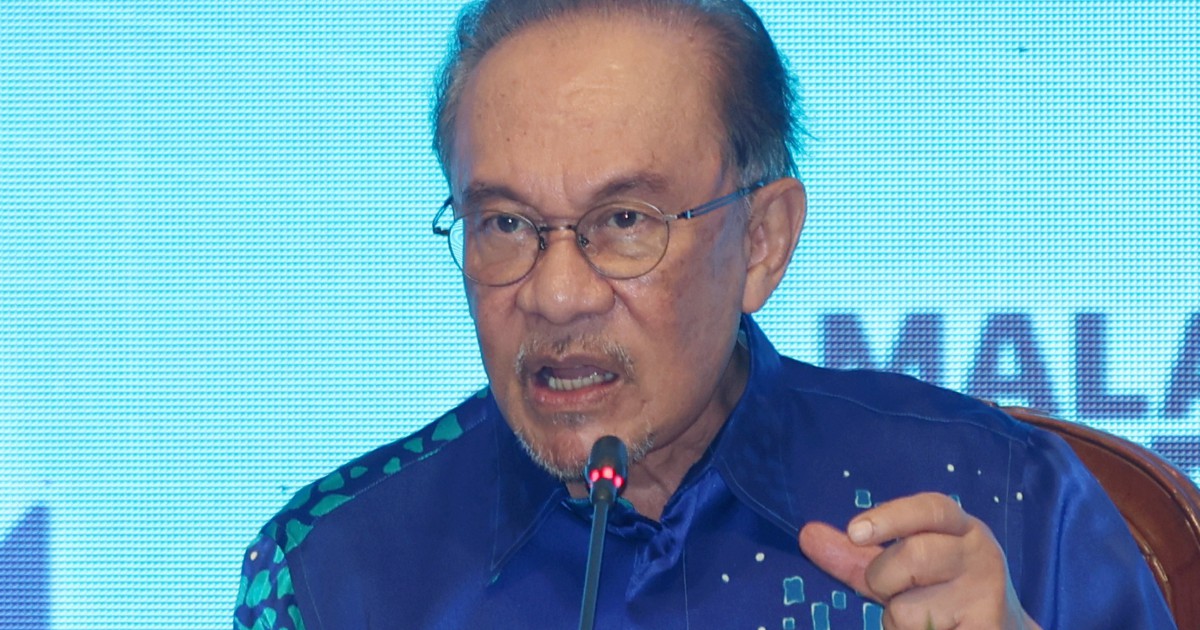
Prime Minister Datuk Seri Anwar Ibrahim has moved to justify the government's controversial decision to dramatically scale back the number of special lottery draws permitted annually, reducing the frequency from 22 to just eight. Speaking in his parliamentary constituency of Permatang Pauh, Anwar emphasised that the reduction reflects a broader policy position against gambling, signalling a tighter stance on the lottery industry under his administration.
The policy shift represents a significant intervention in Malaysia's lottery ecosystem, which has long been dominated by state-level operators and special draws coordinated through the Sports Ministry. The move to halve the number of authorised draws suggests the government intends to curb what it views as excessive gambling opportunities, particularly through sanctioned channels. This approach aligns with conservative moral and religious frameworks that have historically shaped Malaysian gambling policy, though such measures also carry implications for state revenues that have traditionally benefited from licensing fees and contributions to public spending.
Anwar's personal opposition to gambling has been a consistent feature of his public positioning for decades, rooted partly in Islamic principles that discourage such activities. By articulating this stance at a constituency level, the Prime Minister was reinforcing the philosophical underpinnings of the policy adjustment to everyday Malaysians. Such statements serve a dual purpose: they signal moral clarity to voters concerned about social welfare while also explaining the rationale behind decisions that might otherwise appear economically counterintuitive, given gambling's historical role in filling government coffers.
The reduction in special draws carries practical consequences across multiple sectors. Sports bodies and charitable organisations that have relied on revenue from these draws for funding face potential shortfalls. Provinces including Selangor, Perak, and Sabah, which operate their own lottery systems alongside federal authorisations, may experience reduced licensing opportunities and related income. The timing of this announcement reflects the broader governance approach of Anwar's administration, which has prioritised what officials frame as moral and ethical governance alongside economic restructuring.
Malaysia's lottery sector has long occupied an ambiguous space in the nation's regulatory framework. While gambling is prohibited under Islamic law and various state-level religious ordinances, lotteries have been granted exemptions as tools for revenue generation and social funding. The special draws—typically promoted around major festivals, sporting events, and charitable causes—have become culturally embedded despite their gambling nature. By reducing these draws, the government is effectively narrowing one of the few legal channels through which Malaysians can engage in structured lottery activities.
Comparable Southeast Asian countries take varying approaches to lottery regulation. Thailand, for instance, maintains a tightly controlled state lottery system that generates substantial revenue while limiting gambling options. Singapore's approach similarly balances revenue considerations with social policy concerns. Malaysia's trajectory now appears to be moving toward greater restriction, suggesting a recalibration of how policymakers weigh economic benefits against perceived social harms associated with gambling expansion.
The announcement also intersects with broader discussions about Malaysia's position relative to regional gambling hubs. With Singapore and other neighbours maintaining active lottery and gaming sectors, Malaysia's tightening restrictions may redirect consumer demand across borders, potentially affecting state revenues from licences and creating enforcement challenges at maritime and land borders. This cross-border dynamic is particularly relevant for Perlis, Kedah, and other northern states in close proximity to Thailand.
For state governments, the policy creates administrative complexity. Several states have existing frameworks for special draws that may now require recalibration to align with federal guidelines. Selangor, which operates Malaysia's largest state lottery, could face questions about harmonising its licensing practices with the new ceiling. This federal-state coordination challenge underscores the delicate balance in Malaysia's federalised system, where economic policy frequently involves negotiation between Putrajaya and state administrations with their own financial imperatives.
Anwar's emphasis on principled opposition to gambling also speaks to a wider conversation about how Malaysia positions itself religiously and ethically on the international stage. The reduction in lottery draws can be positioned as demonstrating commitment to Islamic principles within a plural democracy, appealing to constituencies for whom such alignment matters politically and spiritually. This framing helps contextualise the policy beyond mere revenue considerations, grounding it instead in values-based governance.
The charitable and sporting organisations affected by the restrictions now face the practical challenge of identifying alternative revenue sources. Sports councils, community centres, and religious institutions that have historically benefited from draws and donations funded through lottery revenues must explore direct fundraising, grants, or public appropriations. This transition period could create funding gaps for programmes deemed socially beneficial, though the government may argue that reduced gambling activity aligns with broader welfare priorities.
Moving forward, implementation of the eight-draw ceiling will require coordination across multiple agencies including the Sports Ministry, Finance Ministry, and state authorities. The policy's success in achieving Anwar's stated objectives—reducing gambling prevalence while maintaining essential funding streams—will become apparent only after the restrictions are fully operationalised. The government will need to demonstrate that alternative funding mechanisms compensate for lost lottery revenues, particularly for deserving charitable and sporting causes.

