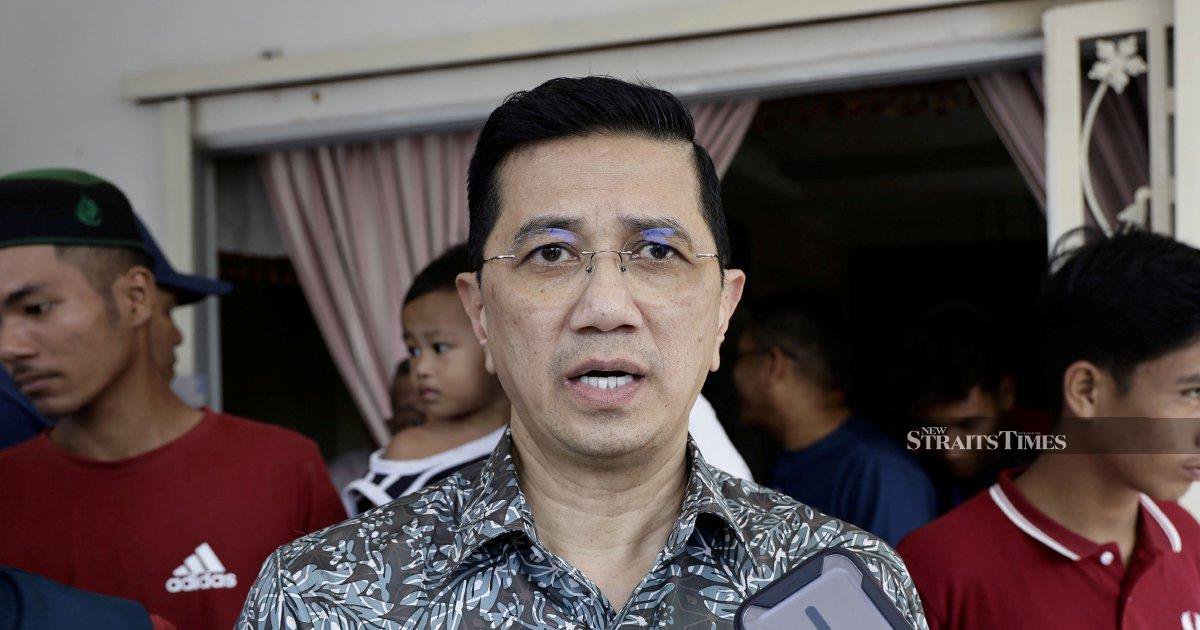
Prime Minister Datuk Seri Anwar Ibrahim has responded with evident scepticism to Azmin Ali's recent announcement that he will not rejoin PKR, publicly questioning whether the former deputy president had actually been invited back to the party in the first place. The exchange, which unfolded in Kuala Lumpur, underscores the lingering tensions between the two figures and the complex factional dynamics that continue to shape Malaysian politics at the highest levels.
Azmin Ali, who served as PKR's deputy president before his departure from the party, had made clear his position that returning to the organisation was not part of his plans. However, rather than accepting this statement at face value, Anwar took the opportunity to cast doubt on the underlying premise of Azmin's announcement. The Prime Minister's response suggests that far from being a rejection of an open invitation, Azmin's stance may simply reflect the reality that no such invitation existed.
The tension between these two prominent figures reflects a broader pattern of political realignment that has characterised Malaysian politics over the past several years. Azmin Ali's journey through the political landscape has been marked by significant shifts in allegiances and party affiliations, moves that have often generated controversy and debate about the nature of political loyalty and commitment to stated ideological principles.
Azmin's departure from PKR represented a significant moment in the party's recent history, occurring against a backdrop of internal disputes and competing visions for the organisation's direction. His subsequent political movements have kept him at the centre of national attention, with his influence and positioning regularly analysed by political observers seeking to understand the shifting coalitional arrangements that underpin government formation in Malaysia.
For Malaysian readers and regional observers, this exchange carries implications beyond the immediate personalities involved. It highlights how personal relationships and historical grievances continue to shape institutional politics in the country, with party structures and policy frameworks sometimes taking a secondary role to questions of individual status and past conflicts. The interaction between Anwar and Azmin serves as a window into the complex calculations that drive Malaysian political decision-making.
The question of Azmin's potential return to PKR—or lack thereof—also reflects broader considerations about party discipline and the conditions under which political figures can move between organisations. In Malaysia's fluid political environment, where coalition arrangements frequently shift and individual politicians often change party affiliations, the standards for accepting returning members remain somewhat ambiguous. What constitutes sufficient grounds for reacceptance, and who ultimately makes such determinations, remains contested terrain.
Anwar's dismissive tone suggests that from the Prime Minister's perspective, the matter is relatively settled. By questioning whether Azmin was even invited back, Anwar has implicitly established that PKR, under his leadership, has not pursued Azmin's return and does not view his continued absence as problematic. This positioning serves multiple purposes: it reinforces Anwar's authority over party affairs, establishes clear boundaries around who is welcome within PKR's fold, and sends signals to other members about the costs of departing from the organisation.
For PKR as an institution, the clarification that there is no open door for Azmin represents a consolidation of internal unity around the current leadership structure. It removes ambiguity that might otherwise create expectations or speculation about future reconciliations, instead establishing a definitive stance on the matter. This can help the party focus on its current membership and forward-looking agenda rather than being drawn into repeated discussions about who may or may not be permitted to rejoin.
The broader context matters significantly here. Malaysian politics has witnessed numerous instances of political figures moving between parties, sometimes being welcomed back by their original organisations and sometimes remaining permanently estranged. The rules governing such movements vary depending on circumstances, relationships, and the political calculations of those in power. Anwar's comments suggest that in Azmin's case, the political calculation is that his continued absence is preferable to his return.
Regional observers watching Malaysian politics will note that such exchanges, while appearing to focus on personality and past grievances, often contain important information about institutional health and leadership confidence. When a Prime Minister takes time to publicly dismiss questions about a rival's return to a political party, it can indicate either genuine confidence that the matter is settled or, alternatively, a felt need to reinforce the message that certain doors remain firmly closed.
The incident also reflects how Malaysia's political culture continues to grapple with questions of redemption, reintegration, and the criteria for restoring trust after conflicts or departures. Unlike systems where party discipline enforces strict boundaries and departures are treated as relatively permanent, Malaysian politics maintains a more fluid character—though not entirely fluid, as Anwar's comments suggest. The conditions under which politicians can move between parties, return to former organisations, or rebuild relationships with former allies remain subject to individual calculation and shifting political contexts.
Looking forward, this exchange between Anwar and Azmin is unlikely to produce dramatic immediate consequences, but it does serve to establish clear parameters for institutional behaviour and personal relationships within PKR. For the broader Malaysian political ecosystem, it provides another data point in the ongoing story of how power is distributed, consolidated, and defended at the apex of the country's political system.

