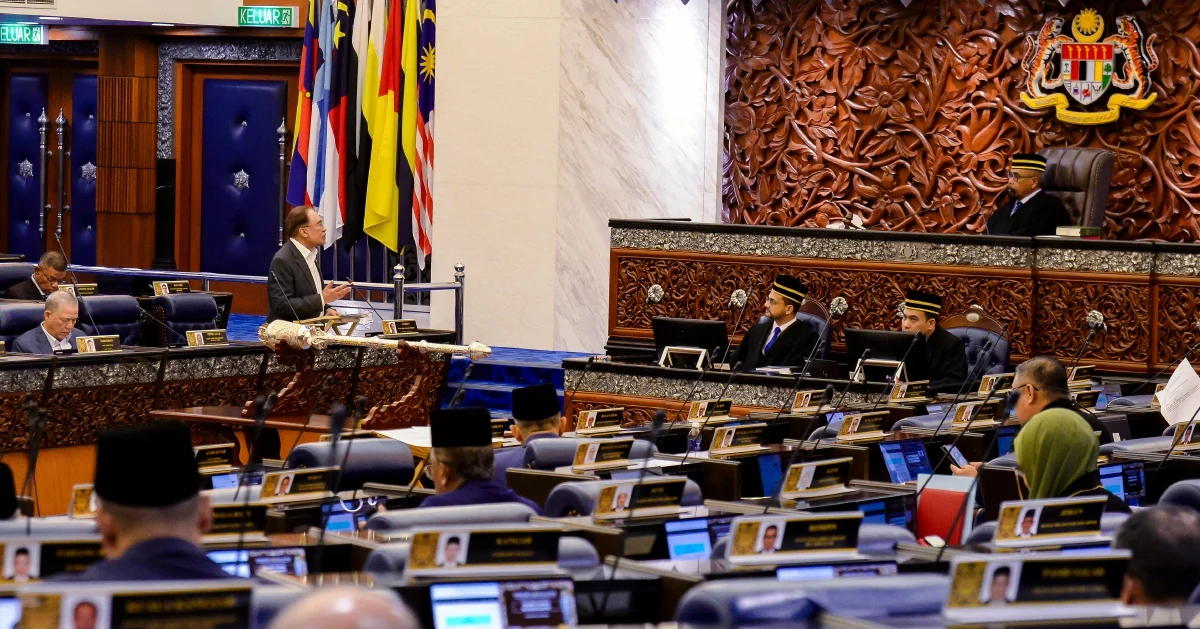
Prime Minister Datuk Seri Anwar Ibrahim has pushed back against the assumption that Kuala Lumpur should automatically absorb additional expenses generated by state-level policy choices, drawing a distinction between federal obligations and decisions made within state jurisdictions. His remarks signal an effort to establish clearer boundaries around fiscal accountability at different levels of Malaysia's governance structure, particularly as states grapple with their own budget constraints and policy initiatives.
The statement reflects growing tensions within Malaysia's federal system regarding how costs should be distributed when state governments make decisions that carry financial implications extending beyond their immediate coffers. In recent years, several states have launched policies or programmes that either require federal support or create unforeseen expenses, prompting questions about whether Putrajaya bears ultimate responsibility for funding gaps. Anwar's position suggests the cabinet will scrutinise such matters more carefully rather than providing blanket funding automatically.
This stance carries particular weight given Malaysia's complex intergovernmental fiscal architecture. States derive much of their revenue from federal allocations—including shared taxes, grants, and development funds—creating inherent dependency on central government resources. The Prime Minister's comments indicate that while federal financial transfers will continue, they will be structured around demonstrated needs and prior agreement rather than ad-hoc subsidisation of state initiatives. Such clarity could reshape how state governments approach capital investments and policy rollouts, encouraging greater fiscal prudence at the state level.
The timing of Anwar's remarks is significant. Several Malaysian states have faced budget pressures following economic uncertainties and shifts in revenue collection during recent years. Some states have simultaneously pursued infrastructure projects and social programmes without full cost accounting, potentially creating implicit expectations that Putrajaya would eventually step in. By making this position explicit, the Prime Minister is signalling that states must demonstrate financial viability and secure commitments before embarking on major spending initiatives.
For state administrators, the message implies a need for more rigorous internal financial planning and clearer consultation with federal authorities before launching policies with significant cost implications. States that wish to pursue distinctive policy agendas will need to either identify dedicated revenue sources or make their case to federal ministries well in advance. This could lead to tighter coordination between Putrajaya and state governments, potentially reducing unilateral state actions that carry unforeseen federal costs.
The principle Anwar articulated aligns with practices in federal systems worldwide, where constituent regions bear primary responsibility for costs arising from their own policy choices. Australia, India, and Canada all operate on frameworks where states or provinces must justify federal support rather than assuming automatic funding. Malaysia's clarification may position the country more consistently with international federal governance norms and improve overall budget predictability at the national level.
However, the statement also raises practical questions about how such boundaries will be enforced. Certain state decisions—particularly those affecting social welfare, public health, or critical infrastructure—carry national implications that may justify federal involvement regardless of where initial decisions originated. Distinguishing between genuinely local consequences and spillover effects that affect the broader economy or national stability will require careful judgment from federal authorities.
The approach could also have implications for development parity across Malaysia. Wealthier states with stronger internal revenue bases can afford autonomous policy decisions, while less developed states might struggle to fund programmes without federal support. Anwar's framework may inadvertently create incentives for more developed states to pursue expansive policies while constraining less affluent states, unless federal funding for capacity-building is maintained or enhanced.
Industry observers suggest the Prime Minister's position reflects attempts to impose fiscal discipline across government levels as Malaysia continues managing debt and meeting medium-term economic targets. Federal finances remain stretched by commitments to infrastructure, social programmes, and debt servicing. Reducing unanticipated costs from state decisions provides some budgetary relief and creates space for nationally prioritised investments that align with development plans.
Looking ahead, states are likely to adopt more cautious approaches to new spending initiatives, potentially delaying infrastructure projects or narrowing policy ambitions until funding arrangements are explicitly confirmed with federal authorities. This could slow some aspects of state-level development but might ultimately produce better-coordinated national development outcomes if central planning becomes tighter.
Anwar's statement also reflects broader governance philosophy emphasising accountability and transparent fiscal relationships across administrative tiers. Clear rules about cost responsibility help prevent disputes and ensure that budget pressures do not cascade unpredictably through the system. As Malaysia modernises its federal financial architecture, such clarifications become increasingly important for effective resource allocation and sustainable fiscal management across all government levels.

