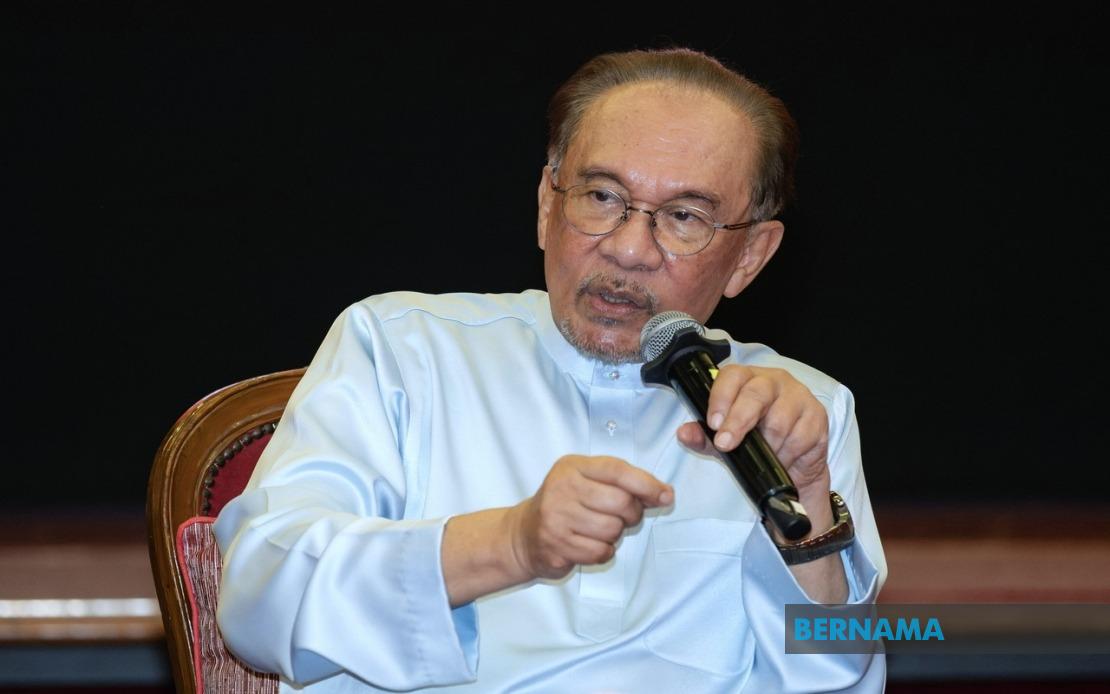
Prime Minister Datuk Seri Anwar Ibrahim has taken the unusual step of writing directly to Indonesian President Prabowo Subianto to secure high-level attention for the Federal Land Development Authority's increasingly precarious financial position tied to its investment in PT Eagle High Plantations Tbk, a move signalling the scale of concern at the highest levels of government over the potential loss of RM2.5 billion of Malaysian public funds. The decision to escalate the matter through presidential channels reflects the gravity of what officials describe as a legacy problem inherited from previous management decisions, with the agency now facing the prospect of recovering merely RM200 million of its original investment.
The investment dispute remains mired in Indonesian court proceedings, with EHP continuing to contest claims in the local legal system. Anwar disclosed the scope of the challenge during a meeting with Felda's senior leadership team and operational managers at Hotel Tenera in Bangi, where he sought to ensure that staff across all levels comprehended the magnitude of the institutional crisis. The gathering included Felda chairman Tan Sri Ahmad Badri Mohd Zahir and director-general Datuk Dr Suzana Idayu Wati Osman, who have been tasked with shepherding the agency through its recovery phase.
Anwar articulated a fundamental concern about accountability and institutional awareness, stressing that Felda personnel at every tier must fully grasp the challenges the organisation confronts rather than operating under incomplete or sanitised versions of events. He acknowledged that line managers scattered across states such as Pahah and Johor bear no responsibility for the strategic failures that precipitated the crisis, yet all staff members must contend with the consequences of decisions made at the apex of the organisation. This acknowledgement signals an attempt to maintain morale and prevent widespread despondency among the workforce whilst simultaneously ensuring transparency about institutional failings.
The prime minister's approach distinguishes between separate domains of responsibility—investigation, enforcement and litigation—and the broader imperative for managerial understanding of governance weaknesses. By framing the disclosure as an educational rather than punitive exercise, Anwar seeks to foster institutional learning and resilience without demoralising personnel who played no role in the original investment decisions. He explicitly cautioned against the circulation of narratives that downplay governance issues or offer false reassurance about the magnitude of challenges ahead.
Indonesia's complex legal landscape presents significant obstacles to Malaysian efforts to retrieve funds. The involvement of local courts means that resolution timelines remain uncertain, and diplomatic channels become crucial in ensuring that Indonesian authorities prioritise Malaysian interests in any settlement discussions. Prabowo's recent assumption of the presidency creates both opportunities and uncertainties; his receptiveness to Anwar's entreaty could prove decisive, but Indonesian domestic politics and the commercial interests involved in EHP's operations may complicate direct presidential intervention.
The RM2.5 billion exposure represents a catastrophic sum relative to Felda's operational budget and underscores why the agency has struggled with its financial sustainability in recent years. The mathematics of the situation—investing billions in hopes of recovering merely RM200 million—demonstrates the severity of the original misjudgement and the compounding losses that have accumulated through years of litigation. For Malaysian taxpayers and settler communities who depend on Felda services, the implications are profound, potentially constraining the agency's capacity to fund welfare projects and agricultural development initiatives.
Government commitment to accelerating welfare initiatives represents an attempt to demonstrate that despite the legacy crisis, Felda remains focused on its core mission. Anwar pledged that funds would be mobilised ahead of the regular budgetary cycle to repair homes belonging to managers and settlers, signalling that institutional renewal will not be indefinitely postponed pending resolution of the Indonesian investment dispute. This dual approach—simultaneously confronting governance failures whilst maintaining service delivery—aims to preserve public confidence in the institution.
The emphasis on governance, integrity and accountability that Anwar articulated extends beyond the EHP case and reflects broader concerns about institutional standards across Malaysia's public sector. His insistence that scrutiny of Felda's management is not directed at individuals but at safeguarding public trust suggests an awareness of tensions between accountability and cohesion within governmental organisations. This framing seeks to depoliticise governance reform by anchoring it to institutional interests rather than factional advantage.
For the broader Southeast Asian context, the Felda case illustrates the cross-border investment risks that regional enterprises and government-linked entities encounter. Malaysian entities operating in Indonesia face navigating distinct legal systems, potential disputes over contract interpretation, and the challenge of securing recourse when disagreements arise. The decision to approach the Indonesian president reflects recognition that commercial disputes of this magnitude may require governmental diplomacy to resolve, particularly when litigation alone has failed to yield satisfactory outcomes over extended periods.
The investment's evolution from strategic opportunity to financial nightmare reflects broader trends in agricultural commodity investments across Southeast Asia, where large-scale plantations frequently encounter operational, environmental, and commercial challenges. Felda's experience serves as cautionary evidence that public sector entities require robust due diligence and governance frameworks when deploying capital internationally, particularly in ventures where management control and information asymmetries create conditions for substantial losses.
Moving forward, the resolution of the EHP dispute will likely depend on the interplay between Malaysian diplomatic efforts, Indonesian legal processes, and commercial negotiations between the parties. Anwar's direct engagement with Prabowo signals Malaysia's determination to pursue every available channel to mitigate losses, yet the uncertain timeline for court proceedings and the complexity of cross-border investment disputes suggest that full recovery remains improbable. For Felda's stakeholders and Malaysia's public finances, the episode underscores the enduring consequences of investment decisions made years earlier and the institutional toll of managing large-scale financial losses.

