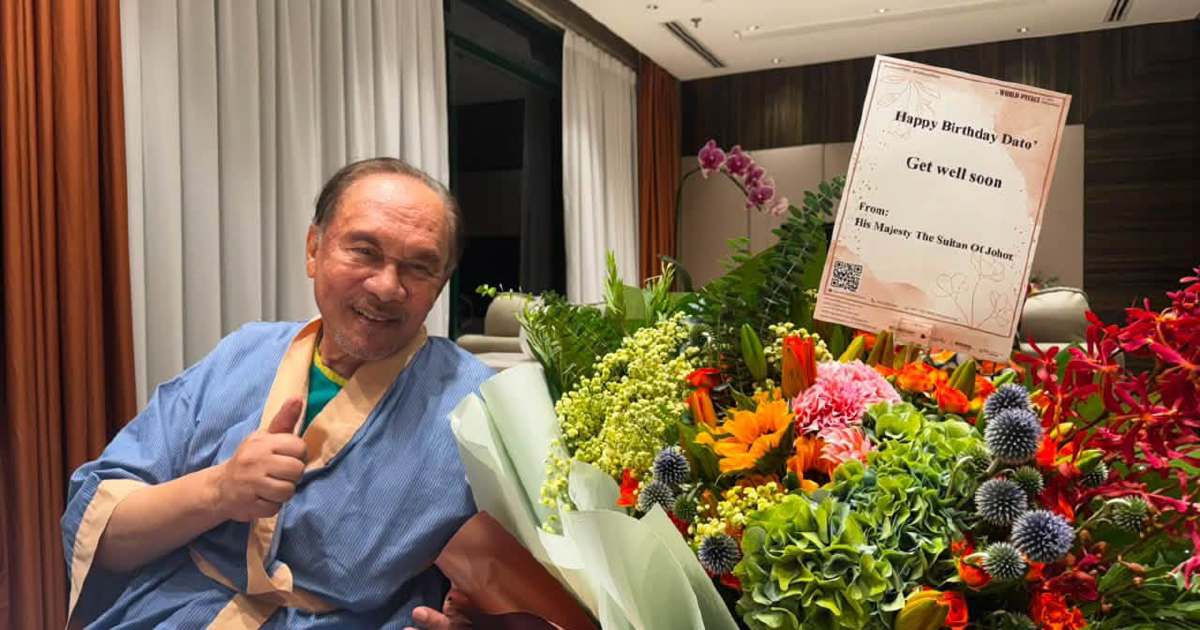
Prime Minister Datuk Seri Anwar Ibrahim has extended his formal thanks to His Majesty Sultan Ibrahim, King of Malaysia, and Her Majesty Raja Zarith Sofiah, Queen of Malaysia, for extending birthday wishes and offering prayers for his continued good health and speedy recovery. The gesture reflects the established protocol of courtesies exchanged between the nation's top political leadership and the constitutional monarchy at formal occasions.
The Prime Minister's acknowledgement of the royal couple's birthday remembrance comes at a time when his health status remains a matter of public interest. Anwar Ibrahim, who has faced various health challenges in recent years, has sought to maintain visibility in his official duties while managing his wellbeing. The exchange of well-wishes between the head of government and the head of state represents a routine yet significant ceremonial aspect of Malaysian governance, where the monarchy plays a ceremonial and constitutional role distinct from executive functions.
Malaysia's constitutional arrangement places particular emphasis on the reciprocal respect and protocol between elected leadership and the institution of the monarchy. The Yang di-Pertuan Agong, as Sultan Ibrahim is titled in his role as King, holds symbolic significance as the supreme head of state, while the Prime Minister exercises executive authority. These ceremonial exchanges, though seemingly routine, carry weight in maintaining the formal structures that underpin Malaysia's constitutional monarchy system.
Queen Raja Zarith Sofiah's participation in extending birthday wishes highlights the role of the Queen Consort in official state functions and public relations. The royal couple has been actively engaged in various state functions and charitable endeavours throughout their tenure, and such personal gestures toward national leaders reflect the monarchy's continued engagement with the country's political establishment.
The acknowledgement by Anwar Ibrahim of these well-wishes demonstrates his adherence to protocol and respect for the institution of the monarchy, a position that carries particular importance given Malaysia's historical relationship between political leaders and royal authority. The constitutional framework has evolved significantly over the decades, and maintaining cordial relations between the executive and the monarchy remains a cornerstone of political stability.
For Malaysian citizens and observers of Southeast Asian politics, such exchanges offer insight into the functioning of the country's institutional relationships. Unlike presidential systems, Malaysia's constitutional monarchy requires careful navigation of ceremonial responsibilities, constitutional prerogatives, and executive decision-making. The public acknowledgement of royal gestures by the Prime Minister reinforces these established protocols.
The timing of these birthday wishes coincides with Anwar Ibrahim's continued tenure as Prime Minister since his assumption of office in November 2022, following a period marked by significant political turbulence. His recovery and continued involvement in governance have been matters of concern and interest to observers tracking Malaysia's political trajectory during a period of substantial economic and social challenges.
The reference to prayers for recovery suggests ongoing health concerns that remain relevant to public discourse. In Southeast Asian context, where respect for health and well-being is deeply rooted in cultural values, such expressions of support carry particular resonance. The Prime Minister's willingness to publicly acknowledge these prayers demonstrates an appreciation for both the formal gesture and the underlying sentiment of goodwill.
From a broader perspective, these ceremonial exchanges between political and royal institutions serve important functions in democratic governance. They reinforce institutional separation while maintaining mutual respect, demonstrate continuity in constitutional practice, and provide reassurance to citizens that established protocols and relationships remain stable even during periods of political or health-related challenges.
The acknowledgement also reflects contemporary expectations of digital-age governance where public figures routinely express gratitude through official channels. Anwar Ibrahim's statement represents part of a broader pattern of increased transparency and direct communication between government officials and the public, mediated through traditional media and social platforms.
Looking forward, the maintenance of strong ceremonial relationships between executive and monarchy remains crucial for Malaysia's political stability as the nation navigates economic pressures and social developments. The Anwar Ibrahim administration faces substantial policy challenges across multiple sectors, and the continued stability of constitutional relationships provides an important foundation for governance effectiveness.
The exchange between the Prime Minister and the royal couple, while ceremonial in nature, carries practical significance in reassuring the public that institutional relationships remain intact and functional. In the context of Malaysian governance, such visible demonstrations of protocol adherence and mutual respect contribute to broader confidence in the stability of the political system during a period marked by significant reforms and policy challenges.

