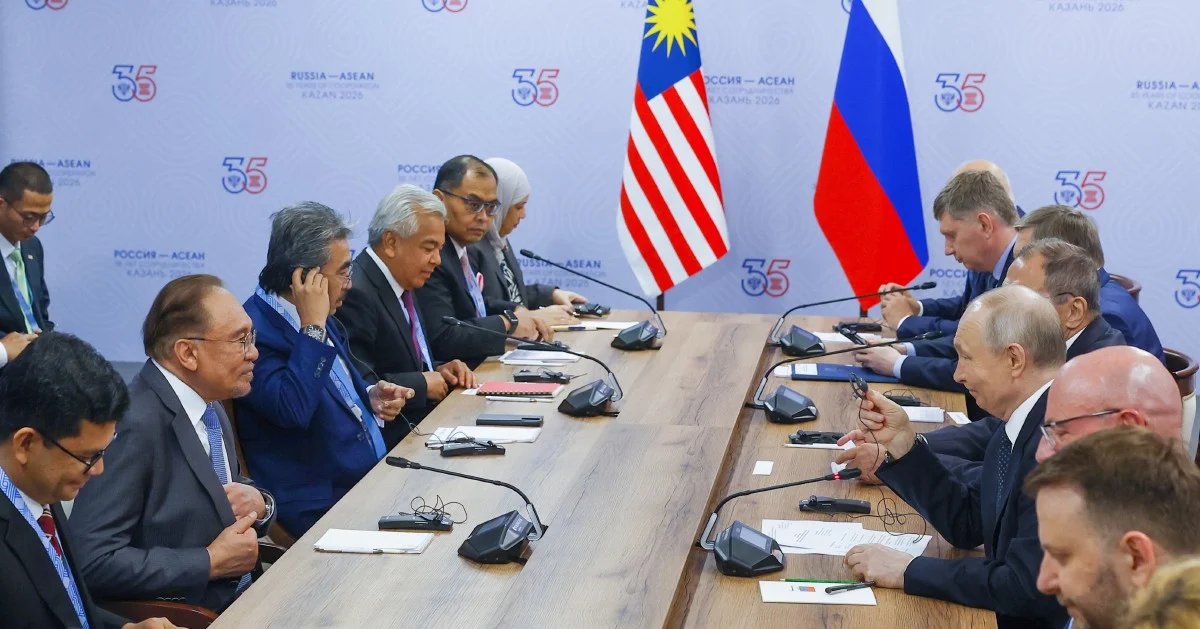
Prime Minister Datuk Seri Anwar Ibrahim has expressed his gratitude to Russian President Vladimir Putin for supporting Malaysia's efforts to fortify bilateral energy partnerships, particularly through Petroliam Nasional Bhd (Petronas). The acknowledgement comes amid intensifying diplomatic engagement between Kuala Lumpur and Moscow on strategic economic matters.
The remarks underscore Malaysia's broader strategy to diversify its energy relationships in an increasingly complex geopolitical landscape. As regional demand for fossil fuels remains substantial despite global renewable energy transitions, Malaysia has been actively cultivating partnerships with major energy producers to secure long-term supply stability and investment opportunities for its national champion, Petronas. Russia's endorsement of these cooperation frameworks carries significant weight, particularly given Moscow's position as one of the world's largest energy exporters and its influence in global energy markets.
Energy cooperation between Malaysia and Russia extends beyond simple trade arrangements. The two nations have been exploring deeper integration in upstream and downstream petroleum activities, joint exploration ventures, and technology transfer initiatives. Petronas, as Malaysia's integrated oil and gas company, operates globally and seeks partnerships that enhance its competitive positioning while securing returns for Malaysian shareholders. Russian support for these endeavours suggests both parties see mutual benefit in closer engagement, whether through joint projects in third markets, shared research initiatives, or enhanced investment flows.
The timing of Anwar's appreciation is noteworthy, occurring as Malaysia navigates shifting international alignments. Southeast Asian nations, including Malaysia, have historically maintained non-aligned stances while engaging pragmatically with major powers. The acknowledgement of Russian backing reflects this balancing approach, where Malaysia pursues relationships based on economic and strategic interests rather than ideological considerations. This posture allows Kuala Lumpur to benefit from partnerships with diverse global actors while managing complex geopolitical tensions.
From a regional perspective, Malaysia's strengthened energy cooperation with Russia carries implications for Southeast Asia's broader energy security architecture. The Association of Southeast Asian Nations remains energy-diverse, with members pursuing varied strategies regarding fossil fuels and renewables. Malaysia's continued engagement with traditional energy producers like Russia demonstrates the region's sustained reliance on conventional hydrocarbon sources for economic growth and industrial development, even as climate pressures mount. This reality shapes regional infrastructure investments, trade patterns, and diplomatic priorities across ASEAN member states.
Petronas itself has become increasingly important to Malaysia's international positioning. The company ranks among Asia's largest energy corporations and operates across multiple continents, making its strategic partnerships matters of national consequence. Enhanced cooperation with Russian entities, whether state-backed or private sector operators, expands Petronas's access to capital, expertise, and opportunities. Such relationships also generate employment and attract investment to Malaysia, benefiting the broader economy beyond the energy sector itself.
The energy sector remains critical to Malaysia's fiscal health and development prospects. Oil and gas revenues continue contributing substantially to government finances, though diversification remains an ongoing priority. Russian partnership developments therefore warrant attention from policymakers concerned with Malaysia's medium-term economic trajectory. Stable, growing energy partnerships abroad translate to enhanced revenues, strengthened industrial capabilities, and improved negotiating positions in global energy forums where Malaysia seeks to protect its interests.
Beyond commercial considerations, the bilateral energy engagement reflects diplomatic coordination on broader international issues. Energy partnerships frequently serve as anchors for wider cooperation frameworks encompassing security, trade, and cultural exchanges. The signalling of Russian support for Malaysian energy initiatives suggests both Moscow and Kuala Lumpur view their relationship as mutually valuable and worthy of institutional development. Such foundations can facilitate cooperation on other matters, from regional stability to multilateral negotiations on global challenges.
The announcement also reflects Petronas's evolving role as an instrument of Malaysian foreign policy and economic statecraft. State-owned energy companies frequently operate at the intersection of commerce and diplomacy, requiring careful navigation of both profit maximisation and national interest considerations. By securing high-level acknowledgement of international support for Petronas-related ventures, Malaysia strengthens the company's institutional position and signals government commitment to energy sector advancement at home and abroad.
Looking forward, the deepened Russia-Malaysia energy cooperation suggests both nations anticipate sustained demand for fossil fuels and mutual advantages in coordinating energy strategies. While global energy transitions accelerate, petroleum and natural gas will remain essential to economic functioning across Asia and beyond for decades. Malaysia's engagement with Russia on these fronts reflects pragmatic recognition of this reality while maintaining flexibility for eventual transitions toward cleaner energy sources.
The expression of gratitude from Anwar toward Putin ultimately encapsulates Malaysia's approach to international relations: pragmatic, relationship-focused, and oriented toward maximising national economic interests through careful diplomatic engagement. As energy markets evolve and geopolitical complexities mount, such partnerships become increasingly valuable to smaller nations seeking to leverage their resource endowments and strategic locations for sustained prosperity and influence.