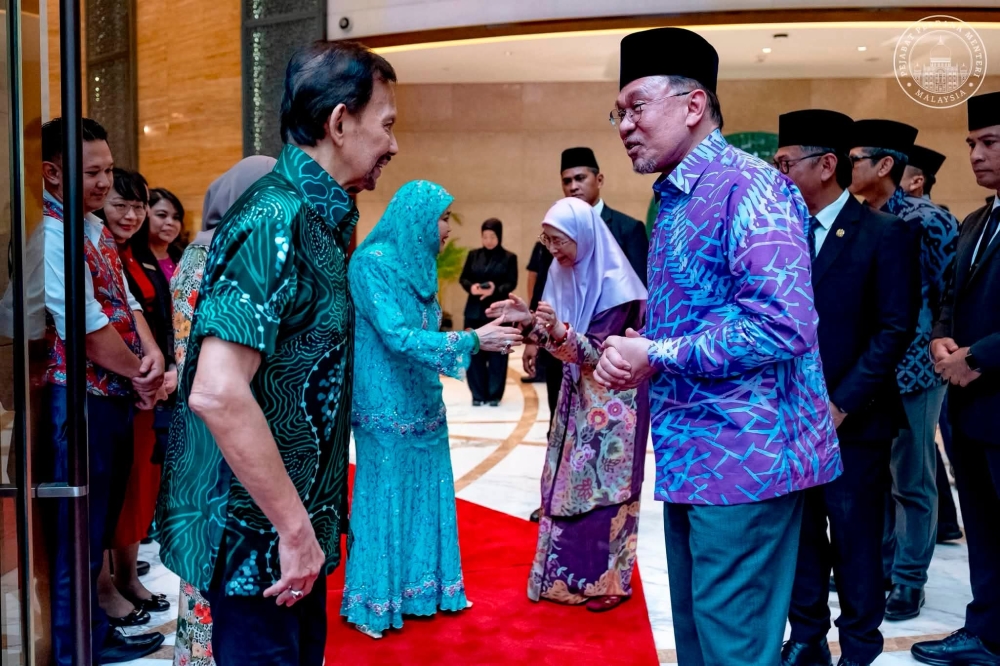
Prime Minister Datuk Seri Anwar Ibrahim has sent birthday congratulations to Brunei's Sultan Hassanal Bolkiah, marking the diplomatic gesture as part of Malaysia's broader efforts to deepen bilateral engagement with the sultanate. The greeting, conveyed through official channels, reflects the warm relations maintained between Kuala Lumpur and Bandar Seri Begawan despite occasional policy differences and historical complexities that characterise relationships within Southeast Asia's smaller nations.
The timing of such courtesies serves a larger purpose within Malaysia's regional diplomacy. As a country surrounded by neighbours with whom it shares maritime boundaries, cultural heritage, and economic interests, Malaysia has long prioritised maintaining stable and cordial ties with Brunei. These personal gestures from senior political leaders carry symbolic weight, particularly in Muslim-majority Southeast Asia where monarchical figures occupy positions of significant cultural and political importance. The exchange reinforces the personal dimension of state-to-state relations, often serving as a foundation upon which substantive cooperation is built.
Malaysia and Brunei have engaged in various forms of collaboration spanning trade, defence, education, and religious affairs. Both nations are members of the Association of Southeast Asian Nations, which provides an institutional framework for regional cooperation, though bilateral channels often prove more effective for addressing specific concerns. The two countries share historical ties dating back centuries, with overlapping populations and cultural similarities that predate modern statehood. This shared heritage creates a natural foundation for partnership, even as contemporary geopolitical and economic interests may occasionally diverge.
Anwar's message likely reinforced Malaysia's position as a responsible neighbour committed to peaceful coexistence and mutual development. In the context of broader Southeast Asian dynamics, maintaining strong bonds with smaller nations like Brunei demonstrates Malaysia's commitment to the principle of equal respect among ASEAN members, regardless of size or economic capacity. This approach contrasts with historical patterns where larger nations sometimes dominated regional discourse, and instead aligns with the contemporary consensus that inclusive dialogue benefits all parties.
The gesture also carries implications for Malaysia's standing within ASEAN and the wider region. By extending personalised greetings to fellow leaders, Anwar continues a diplomatic tradition established by his predecessors, signalling continuity in Malaysia's foreign policy even as domestic political circumstances have shifted significantly in recent years. Such consistency reassures neighbouring countries that changes in Malaysia's internal politics do not translate into unpredictability in regional relations—a critical concern for small nations like Brunei that depend on stable partnerships for security and economic prosperity.
Bilateral trade between Malaysia and Brunei remains modest compared to their interactions with larger partners, yet carries symbolic and strategic importance. Both nations have invested in educational exchanges, with many Bruneian students studying at Malaysian institutions and vice versa. These people-to-people connections foster understanding and create networks that facilitate future cooperation. Defence and security cooperation has also expanded, with both countries participating in joint exercises and intelligence sharing through ASEAN frameworks designed to address transnational challenges including terrorism, human trafficking, and maritime piracy.
For Malaysian readers, understanding the importance of maintaining ties with Brunei reflects broader foreign policy principles that affect the country's prosperity and security. A stable, friendly Brunei contributes to regional stability, reduces the likelihood of territorial disputes escalating into conflicts, and ensures that maritime zones in the South China Sea remain subject to peaceful governance. The sultanate's wealth, derived largely from oil and gas reserves, also creates trade opportunities and potential investment partnerships that benefit Malaysian businesses and workers.
Anwar's diplomatic outreach also demonstrates Malaysia's commitment to strengthening ASEAN's internal cohesion at a time when external powers increasingly seek influence across Southeast Asia. By actively engaging with fellow member states through both formal and informal channels, Malaysia reinforces regional unity and collective decision-making capacity. This is particularly important as geopolitical competition between major powers intensifies, with nations competing for strategic advantage across the region. A unified ASEAN that maintains robust internal relationships presents a stronger negotiating position when dealing with external actors.
The congratulatory message, while seemingly ceremonial, reflects deeper strategic thinking about Malaysia's regional role. As a country with significant economic and demographic weight, Malaysia has both the capacity and responsibility to nurture relationships that benefit the entire region. This involves recognizing the legitimate interests of smaller neighbours and demonstrating that Malaysia's approach to regional affairs prioritises consensus and mutual respect over dominance. Such conduct contributes to the trust necessary for addressing shared challenges including climate change, pandemic response, and economic recovery from global disruptions.
Looking forward, Malaysia and Brunei have opportunities to expand cooperation in emerging areas such as renewable energy, digital economy development, and cultural preservation. Both nations possess Islamic heritage and institutions that could collaborate on religious education and interfaith dialogue initiatives. Additionally, joint ventures in tourism, particularly eco-tourism and heritage preservation, could generate economic benefits while strengthening people-to-people connections. These forward-looking initiatives build upon the foundation of goodwill that diplomatic gestures help maintain.
The exchange between Anwar and Sultan Hassanal Bolkiah exemplifies how modern diplomacy functions across multiple registers simultaneously. Formal protocols and ceremonial gestures provide the framework within which substantive negotiations occur. For Malaysia, a country conscious of its role as a bridge between different regional and global communities, maintaining warm relations with all neighbours remains essential to its strategic interests and its vision of a prosperous, stable Southeast Asia.

