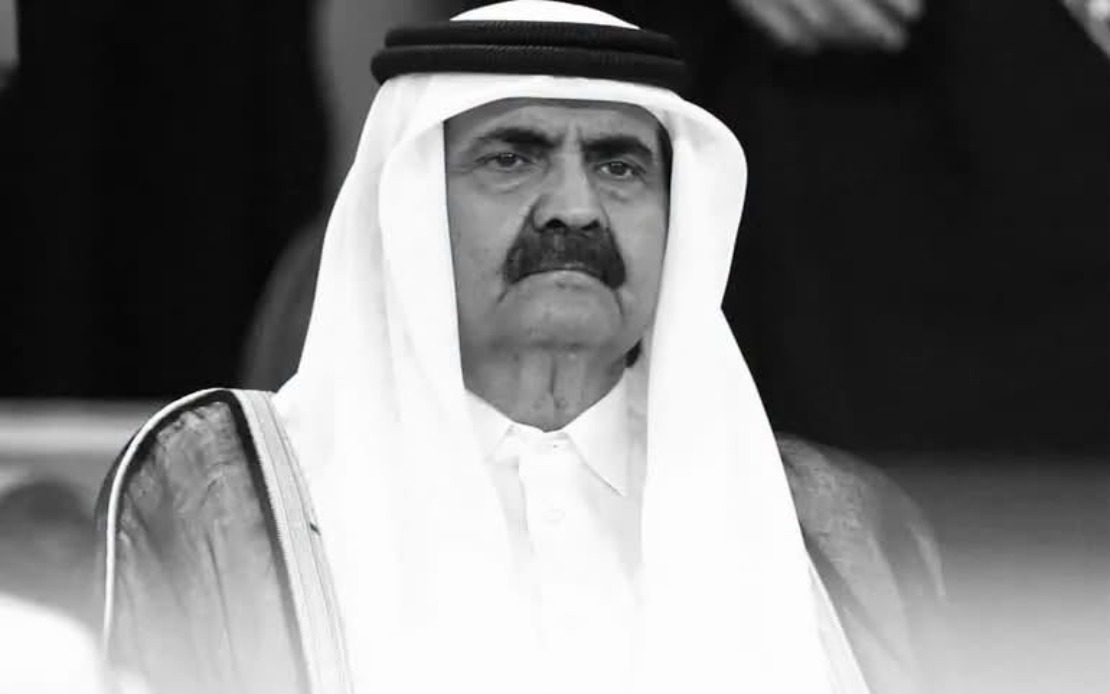
Prime Minister Datuk Seri Anwar Ibrahim has conveyed Malaysia's heartfelt condolences to Qatar's reigning Amir Sheikh Tamim bin Hamad Al Thani, the Qatari royal family, and the broader population of Qatar following the death of Sheikh Hamad bin Khalifa Al Thani, who served as the nation's leader during a pivotal period of transformation. The former Amir passed away on Sunday morning at the age of 74, according to an announcement by Qatar's Amiri Diwan.
In remarks posted to social media, Anwar acknowledged Sheikh Hamad's profound impact on shaping Qatar's trajectory during his 18-year tenure as Amir, which spanned from 1995 until 2013. The Prime Minister emphasised that under the former leader's stewardship, Qatar experienced substantial economic advancement and consolidated itself as a significant player on the global stage, moving from relative obscurity to become one of the region's most influential actors in both regional diplomacy and international relations.
Anwar particularly highlighted what he characterised as Sheikh Hamad's exceptional act of leadership wisdom in 2013, when the former Amir voluntarily transferred authority to his son, Sheikh Tamim. Such a deliberate and peaceful transition of power remains uncommon in the Gulf region, where questions of succession and governance transfers often prove contentious or remain unresolved until forced by circumstance. The Malaysian Prime Minister's recognition of this moment suggests an appreciation for how Sheikh Hamad's decision established a model of orderly governance transition that could serve as an example within the Arab world and beyond.
The relationship between Malaysia and Qatar has historically held considerable importance, with both nations sharing Islamic values and maintaining robust diplomatic ties across multiple sectors including trade, investment, and cultural exchange. Anwar's characterisation of Sheikh Hamad as a steadfast friend of Malaysia reflects the pragmatic bilateral relationship that has developed over decades, encompassing economic partnerships and mutual support on international forums. The Qatari leadership has consistently demonstrated openness towards Malaysian initiatives, particularly in regional Islamic cooperation and development.
Sheikh Hamad's 18-year reign witnessed Qatar's emergence from a modest petroleum-exporting nation into a regional powerhouse with significant geopolitical influence. His government invested extensively in infrastructure modernisation, economic diversification, and the establishment of cultural institutions that gained international recognition. The establishment of media outlets like Al Jazeera during his period in power fundamentally altered Qatar's information reach and regional narrative-shaping capabilities, positioning the nation as an independent voice within Arab media landscape.
Beyond economic transformation, Sheikh Hamad cultivated Qatar's role as a diplomatic mediator in regional conflicts and disputes. His administration pursued an active foreign policy characterised by engagement across diverse geopolitical alignments, from Western powers to regional rivals. This balanced approach, while occasionally controversial, enabled Qatar to maintain relationships with multiple stakeholders and position itself as a neutral ground for negotiations and dialogue. Such diplomatic footprints extended throughout the Muslim world, where the former Amir earned widespread respect.
The transition to his son Sheikh Tamim in 2013 marked a generational shift while maintaining continuity in Qatar's strategic direction. Since assuming leadership, Sheikh Tamim has continued many of his father's policies whilst navigating new challenges including a regional blockade and the preparations for hosting the FIFA World Cup. The younger Amir has sought to build upon the institutional and economic foundations established during his father's tenure, whilst adapting governance approaches to contemporary circumstances.
For Malaysia specifically, Qatar's continued influence and stability carry significance across multiple dimensions. Trade relationships, investments in Malaysian infrastructure and enterprises, and collaboration within Islamic organisations and forums represent tangible interests requiring stable bilateral relations. Malaysian citizens and businesses maintain considerable presence in Qatar, whilst Qatari capital has supported development projects across Malaysian territories. The continuation of cordial relations between Kuala Lumpur and Doha depends partly on Malaysia's ability to acknowledge shared historical connections and mutual respect with Qatar's leadership across generational transitions.
Anwar's expression of condolence demonstrates Malaysia's commitment to maintaining strong relations with Qatar during a period of national mourning. The Prime Minister's specific reference to Islamic values and his invocation of divine blessing reflects both the spiritual dimensions of Malaysian-Qatari ties and the shared Islamic heritage that anchors bilateral relations. Such diplomatic gestures, whilst ceremonial in nature, serve important functions in affirming relationships and demonstrating respect during significant moments in a nation's history.
The passing of Sheikh Hamad represents the end of an era in Qatari governance. His legacy encompasses rapid modernisation, strategic positioning within regional geopolitics, and the successful establishment of institutions that have outlasted his personal leadership. For neighbouring nations including Malaysia, his death signals a moment to reflect on the contributions of his generation to regional development and stability, whilst looking forward to continued partnership with Qatar's current leadership under Sheikh Tamim as it navigates evolving regional and global circumstances.

