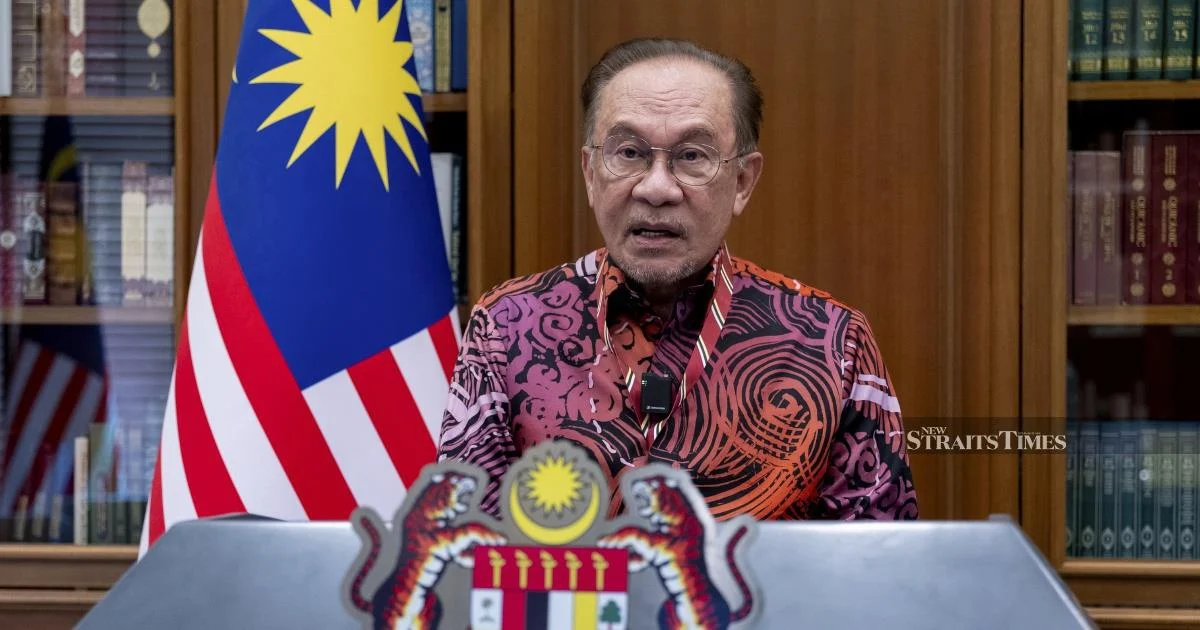
Prime Minister Datuk Seri Anwar Ibrahim has marked a significant milestone in China's political calendar by offering official felicitations to the Chinese government on the 105th anniversary of the founding of its ruling Communist Party. The gesture underscores Malaysia's commitment to maintaining warm bilateral ties with Beijing, one of the nation's most important trading partners and strategic collaborators across Southeast Asia.
The commemoration of the Chinese Communist Party's establishment carries considerable symbolic weight in Beijing's political calendar, representing more than a century of continuous governance and ideological continuity. For Malaysia, acknowledging such milestones reflects the importance placed on stable relations with a major regional power that influences everything from trade flows to geopolitical alignments across the Indo-Pacific.
Anwar's message of congratulations represents the formal diplomatic protocol that characterises Malaysia's engagement with major powers. As Malaysia navigates an increasingly complex regional landscape where great power competition intensifies, maintaining respectful and cordial relations with all major partners remains a cornerstone of the nation's foreign policy doctrine. Such exchanges, though ceremonial in nature, serve as important confidence-building measures that reinforce the bilateral framework.
China's economic footprint in Malaysia has expanded substantially over recent years, with Chinese investment touching multiple sectors including infrastructure development, manufacturing, and digital technology initiatives. The relationship extends beyond commercial interests to encompass educational partnerships, cultural exchanges, and security cooperation. Anwar's acknowledgment of the anniversary aligns with a broader pattern of strengthening people-to-people connections alongside official government channels.
From a Malaysian perspective, stability in the China relationship carries implications for the nation's position within the Association of Southeast Asian Nations. As ASEAN seeks to maintain unity and centrality in regional affairs whilst managing competing interests from various global powers, individual member states must balance their relationships carefully. Malaysia's approach emphasises constructive engagement that preserves strategic autonomy whilst building mutually beneficial partnerships.
The timing of such diplomatic courtesies often coincides with broader efforts to advance shared agendas in bilateral and multilateral forums. Malaysia and China collaborate through various regional mechanisms and have pursued joint initiatives addressing economic integration, maritime cooperation, and connectivity projects that align with China's broader development vision for Asia.
For Malaysian business communities and investors, the strength of Malaysia-China relations has direct implications for market access, investment opportunities, and sectoral growth prospects. A relationship characterised by warmth and mutual respect creates conditions favourable for deepening commercial ties and exploring new areas of economic cooperation that benefit both nations' citizens.
Anwar's approach to international relations emphasises the importance of pragmatism and mutual respect as organising principles for Malaysia's engagement with major global and regional actors. Rather than adopting adversarial postures, the government has positioned Malaysia as a constructive partner willing to work with all nations on issues of mutual interest. This philosophy extends to celebrations of significant historical moments in the political evolution of important partners like China.
The congratulatory message also reflects Malaysia's understanding that Southeast Asia's prosperity increasingly depends on preventing strategic competition between major powers from destabilising the region. By maintaining positive relations with Beijing whilst simultaneously preserving friendships with other partners, Malaysia contributes to an environment where dialogue and cooperation can flourish across multiple domains.
Looking forward, the strength of Malaysia-China relations will likely continue influencing the nation's capacity to leverage opportunities in emerging areas such as digital economy integration, renewable energy collaboration, and talent exchange programmes. The birthday acknowledgment serves as a reminder of the enduring nature of these connections and the commitment to nurturing them for mutual benefit.
Anwar's diplomatic gesture sits within a broader context of Malaysia's strategic positioning as a nation bridging multiple spheres of influence whilst maintaining its own distinct national interests. As regional dynamics continue to evolve, the ability to preserve and strengthen relationships with major powers remains central to Malaysia's success in pursuing development objectives and contributing to regional stability and prosperity.

