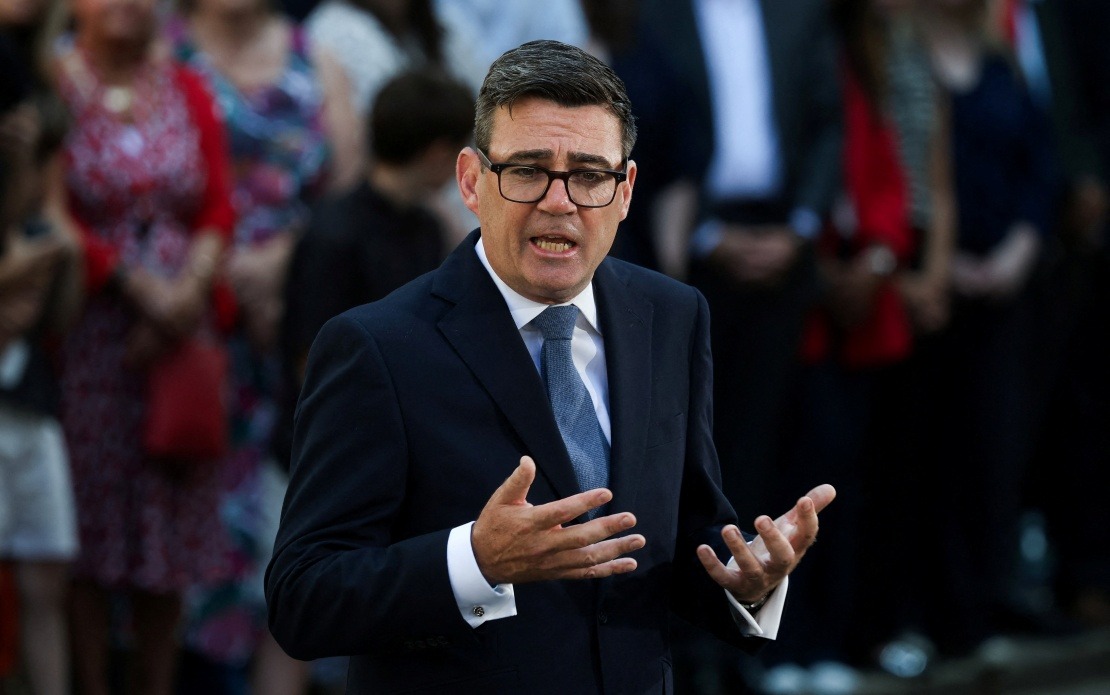
Prime Minister Datuk Seri Anwar Ibrahim has moved quickly to establish rapport with the United Kingdom's newly appointed leader Andy Burnham, extending formal congratulations and reaffirming Malaysia's determination to elevate the strategic partnership between the two nations. The gesture, communicated through a Facebook statement, underscores the importance Kuala Lumpur places on maintaining strong diplomatic channels with a traditionally significant partner in Southeast Asia's external relations landscape.
Anwar signalled particular enthusiasm for collaborative initiatives spanning several contemporary policy domains. The Malaysian leader identified the finalisation of a Digital Trade Agreement as a priority, reflecting both nations' recognition of how digital commerce reshapes modern economies. Beyond trade mechanics, he outlined ambitions to deepen cooperation in artificial intelligence and digitalisation—sectors where both Malaysia and the UK possess distinct comparative advantages and complementary expertise. The inclusion of clean energy and defence collaboration in his stated priorities reveals a comprehensive approach to bilateral engagement that extends beyond traditional commercial ties into emerging strategic concerns.
Remarkably, Anwar accorded considerable significance to Burnham's public acknowledgment regarding Britain's initial governmental response to the Gaza crisis. The Malaysian Prime Minister characterised Burnham's admission that this response had proven inadequate as "a welcome and important first step," suggesting that such moral clarity on humanitarian issues carries substantial weight in how Malaysia evaluates potential partners. Anwar's commendation of Burnham's renewed calls for intensified pressure against the Israeli regime demonstrates how Malaysian foreign policy continues to integrate Palestinian solidarity as a substantive diplomatic consideration rather than a peripheral gesture.
The timing of Anwar's overture gains additional resonance given that 2025 will mark seven decades of Malaysia-UK diplomatic relations. This milestone anniversary provides both governments with a symbolically laden opportunity to reaffirm their commitment to a partnership that predates Malaysian independence and has evolved through multiple geopolitical eras. Anwar explicitly framed this anniversary as creating ideal conditions for renewing bilateral undertakings and collaboratively charting the mutual path forward—language suggesting that Malaysia views this period as a potential inflection point for recalibrating how the two nations engage.
Anwar also extended courtesies to departing UK Prime Minister Keir Starmer, acknowledging the contributions Starmer made during his tenure to advancing Malaysia-UK relations. This diplomatic courtesy—wishing him success in future endeavours—maintains the goodwill essential for sustained bilateral engagement across successive administrations. Such gestures, though formulaic in appearance, carry procedural importance in maintaining the diplomatic infrastructure that underpins state-to-state relations.
Burnham's ascension to the premiership represents a particularly significant juncture for UK politics, occurring against a backdrop of extraordinary governmental instability. His appointment as Britain's seventh prime minister in a decade reflects the turbulent political conditions that have characterised Westminster since the 2016 Brexit referendum. The Labour leader formally assumed office following Starmer's resignation at Buckingham Palace, having secured leadership of the Labour Party on Friday in a process that compressed multiple leadership transitions into an exceptionally compressed timeframe.
For Malaysian policymakers, Burnham's arrival presents both continuities and potential adjustments in bilateral engagement. The new British Prime Minister inherits longstanding partnerships across the Commonwealth framework while simultaneously navigating domestic challenges that may influence the bandwidth available for international engagement. Malaysia's early articulation of cooperation priorities—particularly the Digital Trade Agreement and emerging technology collaboration—appears calibrated to ensure these initiatives gain traction during the opening phase of Burnham's administration, when establishing positive international relationships often carries particular diplomatic value.
The Malaysian government's emphasis on clean energy cooperation reflects broader regional positioning within Southeast Asia's energy transition narratives. The UK's substantial renewable energy expertise and manufacturing capabilities in green technologies align with Malaysia's renewable energy ambitions and aspirations to position itself as a regional hub for sustainable development. Defence collaboration, meanwhile, connects to established patterns of military-to-military engagement and intelligence sharing that have characterised Malaysia-UK relations across multiple decades.
Anwar's explicit reference to Burnham's moral clarity on Gaza-related issues carries implications extending beyond bilateral aesthetics. It signals that Malaysia evaluates potential partners partly through the lens of their demonstrated humanitarian commitments and willingness to apply consistent ethical standards in international affairs. This positioning reflects how Malaysian diplomacy increasingly incorporates values-based considerations into strategic calculations, particularly regarding conflicts affecting Muslim-majority populations.
The substance of Malaysia's diplomatic outreach suggests measured optimism regarding Burnham's premiership as an opportunity for substantive advancement rather than mere procedural continuity. By articulating concrete cooperation objectives across digital trade, artificial intelligence, clean energy, and defence while simultaneously acknowledging Burnham's stated positions on Gaza, Anwar has constructed a comprehensive framework for bilateral engagement that addresses both practical economic interests and values-based foreign policy commitments. How Burnham's government responds to these overtures will largely determine whether the 70th anniversary of Malaysia-UK diplomatic relations becomes a genuine inflection point for renewed partnership or remains primarily ceremonial.

