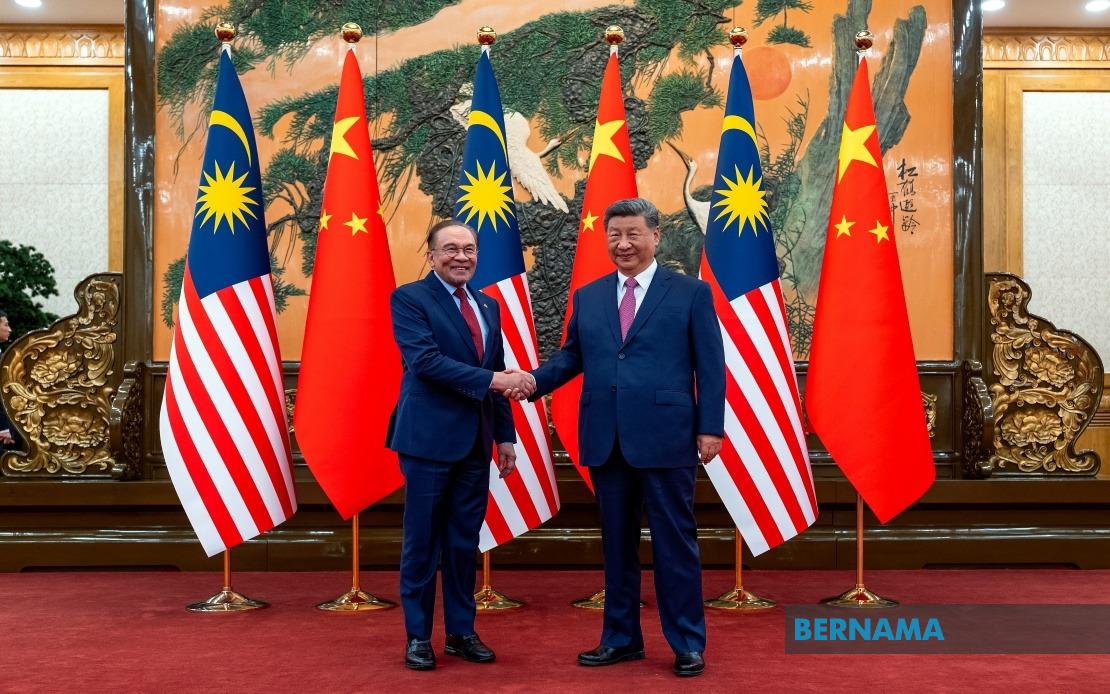
Prime Minister Datuk Seri Anwar Ibrahim has conveyed official felicitations to Chinese President Xi Jinping marking the 105th anniversary of China's ruling Communist Party, reaffirming the depth of diplomatic relations between Kuala Lumpur and Beijing. Through a Facebook announcement on July 2, Anwar disclosed that he had transmitted a formal letter to the Chinese leader, articulating congratulations on behalf of both the Malaysian government and its citizens as the party marked its founding milestone.
In his message, the Prime Minister acknowledged the transformative journey undertaken by China's ruling party, paying tribute to how institutional governance has propelled the nation's development trajectory. Anwar specifically highlighted the foundational role played by China's accumulated civilisational heritage, historical continuity and inherited cultural values in shaping contemporary progress, positioning the party's century-long trajectory within the broader context of national advancement rooted in deep historical reserves.
The congratulatory gesture carries particular symbolic weight given Malaysia's pivotal diplomatic decision nearly five decades earlier. On May 31, 1974, Malaysia became the first non-socialist nation in Southeast Asia to formally recognise the People's Republic of China, a watershed moment that reflected both geopolitical pragmatism and visionary leadership during the Cold War era. This recognition, executed with strategic foresight at a time when many Western-aligned nations maintained diplomatic distance from communist China, established the bedrock upon which contemporary bilateral engagement now flourishes.
Anwar invoked this historical precedent as evidence of Malaysia's enduring commitment to the relationship, characterising the five-decade partnership as a continuously strengthening foundation built upon that initial act of diplomatic recognition. The invocation serves multiple purposes: it validates Malaysia's independent foreign policy trajectory, demonstrates historical consistency in bilateral relations, and positions current engagement within a longer narrative of mutual respect and pragmatic cooperation that transcends ideological differences.
Beyond ceremonial acknowledgment, the Prime Minister articulated Malaysia's strategic intentions going forward, pledging renewed dedication to expanding collaborative frameworks with China across multiple domains. This commitment is explicitly anchored to three foundational principles: mutual respect for sovereignty and non-interference, reciprocal trust developed through sustained engagement, and tangible benefits accruing to both nations from deepened cooperation. These principles reflect Malaysia's broader foreign policy orientation of balancing relationships with major powers while maintaining strategic autonomy.
The emphasis on regional implications underscores how Malaysia-China relations extend beyond bilateral concerns to affect broader Southeast Asian stability and prosperity. By framing the partnership within a regional peace and stability context, Anwar signals that Malaysian-Chinese cooperation is conceived not as inward-looking but as contributing to collective regional well-being. This framing is particularly relevant given regional sensitivities around great power competition and the imperative for smaller nations to navigate competing interests without compromising their own developmental objectives.
The timing of this formal congratulation reflects standard diplomatic practice whereby bilateral relationships are reinforced through ceremonial gestures acknowledging significant national anniversaries. Such expressions serve as both protocol and substantive statements of commitment, particularly when delivered through personal correspondence from a nation's chief executive. The public announcement via social media amplifies the message domestically, signalling to Malaysian audiences the government's prioritisation of the China relationship.
Malaysia's approach to its Chinese partnership has evolved considerably since 1974, particularly as economic interdependencies have deepened substantially. Contemporary ties span investment, trade, technology transfer, infrastructure development through initiatives like the Belt and Road Initiative, and people-to-people exchange. The bilateral relationship has weathered various international tensions and regional uncertainties, demonstrating resilience rooted in mutual economic interests and pragmatic statecraft.
For Malaysian policymakers, maintaining a constructive relationship with China remains strategically essential given Beijing's role as a major trading partner, significant investor, and regional power whose policies directly affect Malaysian interests. Anwar's diplomatic overture reflects recognition that periodic reaffirmation of commitment serves to lubricate the relationship, prevent misunderstandings, and maintain channels of communication at the highest levels. This becomes increasingly important in periods of global uncertainty and regional flux.
The congratulatory letter also carries domestic political implications within Malaysia's complex ethnic and religious landscape. As a Muslim-majority nation, Malaysia has maintained steady engagement with China despite differing approaches to religious policy and governance models. The government's outreach demonstrates its capacity to maintain pragmatic international relations grounded in national interest rather than ideological affinity, a message directed both internationally and to domestic constituencies concerned about Malaysia's foreign policy direction.

