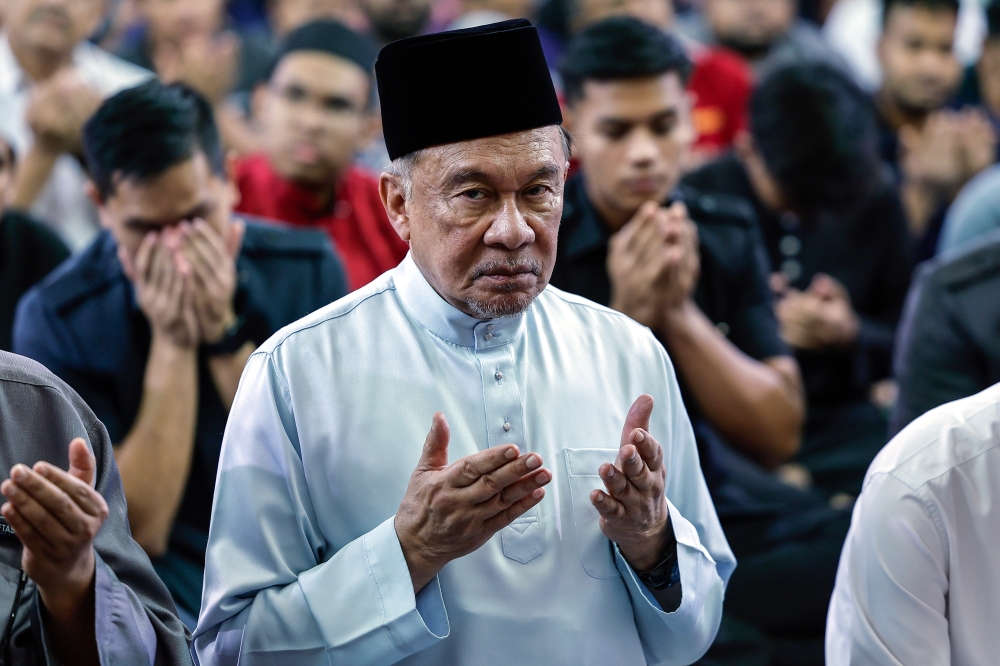
Prime Minister Datuk Seri Anwar Ibrahim has conveyed warm wishes and prayers for the good health of Yang di-Pertuan Agong Sultan Ibrahim as the nation's constitutional monarch prepares to undergo medical treatment. The expression of goodwill underscores the formal protocols that govern relations between Malaysia's executive and ceremonial leadership, demonstrating the continued courtesies exchanged at the highest levels of government despite the significant demands of their respective roles.
The Prime Minister's message, conveyed through official channels, reflects a long-standing tradition in Malaysian politics whereby senior government figures publicly acknowledge and express support for the sovereign's health matters. Such gestures carry symbolic weight in Malaysia's constitutional monarchy system, where the Yang di-Pertuan Agong holds the paramount position as the nation's Head of State and symbol of national unity. The timing of the Prime Minister's well-wishes indicates that relevant government officials and palace authorities had coordinated the communication appropriately.
Medical treatments undertaken by the Yang di-Pertuan Agong typically warrant discrete handling due to the sensitive nature of matters affecting the monarchy. However, when procedures are scheduled and anticipated, it is customary for senior political figures to offer their support publicly, reinforcing the notion that the entire government stands united in wishing for the sovereign's continued wellbeing. This approach balances transparency with the respect and dignity customarily afforded to the highest office in the land.
The relationship between the Prime Minister and the Yang di-Pertuan Agong represents one of the crucial balances in Malaysia's constitutional framework. While the monarch exercises powers that are largely ceremonial under the Westminster parliamentary system that Malaysia adopted at independence, the position carries immense symbolic importance for national cohesion and continuity. The Yang di-Pertuan Agong's health and presence thus matter significantly for the functioning of state ceremonies, constitutional processes, and the broader institutional framework that governs the country.
In the Malaysian context, public expressions of concern for the monarch's health transcend mere formality. They serve to reassure citizens that their Head of State is receiving appropriate care and attention, while simultaneously demonstrating the stability and continuity of government institutions. For a nation where the monarchy occupies such a central place in the constitutional order and national identity, ensuring smooth transitions and continuity of the sovereign's role is a matter of genuine national interest.
Prime Minister Anwar Ibrahim, who assumed office following significant political developments in recent years, has sought to establish working relationships with all key institutional figures. His gesture towards Sultan Ibrahim thus fits within a broader pattern of his administration engaging respectfully with Malaysia's constitutional structures and senior figures across government and the established institutions. Such engagement helps reinforce the notion that political differences do not undermine respect for constitutional roles and responsibilities.
The scheduling of medical procedures for a reigning monarch invariably involves careful consideration of government business, constitutional requirements, and the broader calendar of national events. Palace officials and senior government advisors typically coordinate such matters to ensure minimal disruption to constitutional processes or important state functions. The advance notice implicit in the Prime Minister's comments suggests that appropriate planning has already taken place.
Malaysia's experience with periods of temporary royal absence or restricted duties has historically been managed through constitutional provisions and delegated authority. The intricate arrangements that exist within the palace administration and between government ministries ensure that state business continues uninterrupted regardless of the monarch's temporary unavailability. These mechanisms have proven robust across multiple administrations and various circumstances over Malaysia's decades of independence.
The public dimension of the Prime Minister's wishes also carries significance for public confidence in government and state institutions. By openly acknowledging the situation and expressing appropriate concern, the Prime Minister helps shape a narrative of institutional competence and continuity. This approach contrasts with attempts to conceal or minimize information about leaders' health matters, which in Malaysia and elsewhere has occasionally sparked public anxiety or conspiracy theories. Transparent handling thus serves both institutional and public interest.
For Malaysian citizens and observers of the nation's politics, the exchange of formal courtesies between constitutional figures at moments like these reinforces understanding of how the system functions. The monarchy and the executive, while operating in distinct spheres, remain linked through constitutional ties and shared commitment to national governance. The Prime Minister's well-wishes thus represent not merely polite convention but an affirmation of institutional interdependence and mutual respect.
Looking forward, the progress of Sultan Ibrahim's medical treatment will likely be followed with interest both within government circles and among the broader Malaysian public. The strength of Malaysia's institutional arrangements means that routine medical procedures, however important they may be for the individual concerned, do not threaten governmental continuity or constitutional stability. Nevertheless, the expressions of support from senior figures like the Prime Minister contribute meaningfully to the sense of national solidarity and shared concern for the wellbeing of the nation's highest office holder.

