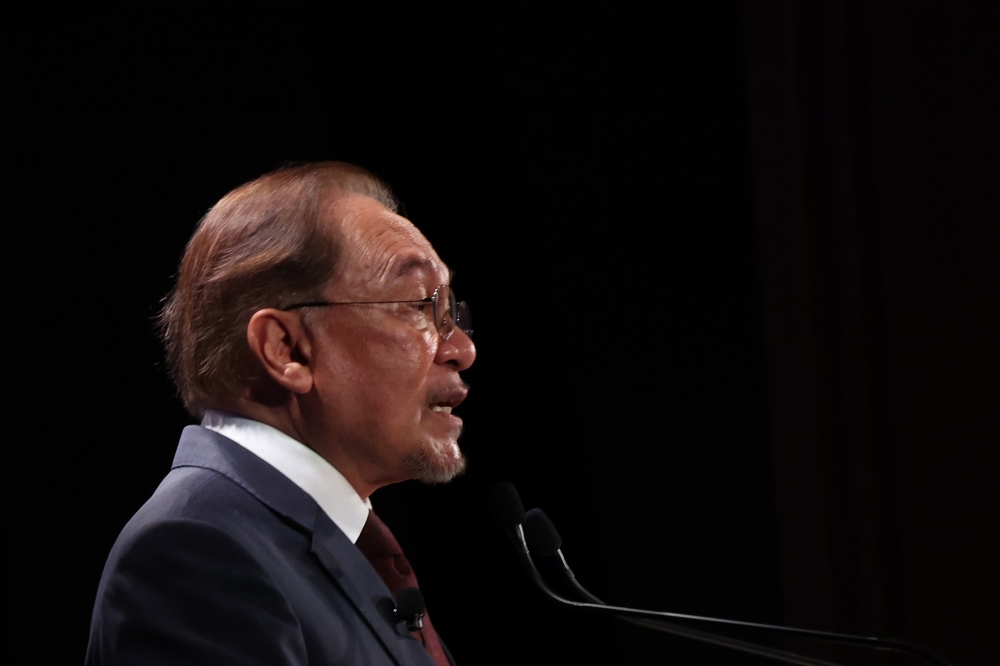
Prime Minister Datuk Seri Anwar Ibrahim has taken legal action against PAS deputy president Tuan Ibrahim over remarks the government alleges were defamatory in nature. The filing marks a significant escalation in the fractious relationship between the ruling Pakatan Harapan coalition and the opposition Islamic Party of Malaysia, which has been increasingly critical of the government's policies and leadership.
The decision to pursue litigation reflects mounting frustrations within government circles over what they characterise as a campaign of character attacks and misrepresentation by opposition figures. Legal experts suggest that such suits, while rare at the highest levels of Malaysian politics, signal the government's determination to establish clear boundaries around acceptable political discourse and to hold opposition leaders accountable for statements deemed to cross from legitimate criticism into false and damaging allegations.
Tuan Ibrahim, who serves as deputy president of PAS and represents the party in Parliament, has been among the more vocal opposition voices challenging Anwar's administration. The specific remarks at the centre of the lawsuit relate to statements made in recent weeks, though the precise nature of the allegations has not been immediately disclosed in full. Political analysts view the timing of the suit as significant, arriving during a period when inter-party tensions have been particularly acute over economic policy, religious matters, and governance approaches.
The legal move carries substantial implications for Malaysian politics, which has historically operated under informal conventions limiting the use of defamation law by sitting prime ministers against parliamentary opponents. The precedent being set here suggests a potential recalibration of how disputes between government and opposition are handled, with greater reliance on judicial processes rather than purely political mechanisms. This represents a departure from earlier practice and could reshape the boundaries of parliamentary debate.
PAS has positioned itself as a principled alternative to the ruling coalition, particularly appealing to Muslim voters concerned about what the party characterises as secular governance and insufficient attention to Islamic values. The party's rhetoric has often centred on allegations that Anwar's government lacks legitimacy or operates contrary to Islamic principles, messaging that resonates with its traditional base. Tuan Ibrahim, in particular, has been instrumental in articulating these positions within the party's broader political strategy.
The defamation suit will likely proceed through Malaysia's civil courts, a process that could take months or years to conclude. Malaysian law allows for substantial damages in proven defamation cases, and a judgment in the Prime Minister's favour would constitute a significant political and legal victory. However, the government would need to establish that the statements were false and caused genuine reputational harm, a threshold that legal observers suggest requires careful presentation of evidence.
Opposition response to the suit has been swift and pointed, with PAS allies suggesting that the legal action represents an attempt to intimidate and silence legitimate political opposition. The party argues that parliamentary criticism of government policies falls squarely within the protected domain of political speech and debate. This argument reflects broader concerns within opposition circles that defamation suits by powerful government figures can have a chilling effect on public discourse and democratic participation.
The broader significance of this dispute extends beyond the immediate parties involved. In Southeast Asia's democracies, questions about where the line falls between protected political speech and actionable defamation remain contested and evolving. Malaysia's approach to these questions carries implications for how other regional governments might similarly use legal tools to manage political criticism. The outcome here could influence similar disputes elsewhere in the region.
From an economic and policy perspective, the litigation represents a distraction during a period when Malaysia faces significant challenges requiring broad political consensus. Issues ranging from fiscal sustainability to education reform and infrastructure development benefit from constructive inter-party dialogue rather than costly legal disputes. The legal fees and political energy consumed by such litigation might be viewed by analysts as suboptimal allocation of national resources during a period of economic uncertainty.
Anwar's administration has positioned itself as committed to democratic governance and institutional strengthening, platforms that generally conflict with perceptions of using state power to suppress opposition voices. Legal scholars and civil society observers will likely scrutinise the suit closely to assess whether it reflects reasonable protection of individual reputation or represents an extension of executive power that could chill legitimate political debate. The judicial handling of the case will therefore carry significance beyond the immediate defamation question.
The matter also touches on questions of parliamentary privilege and immunities, longstanding features of Malaysian parliamentary practice. While parliamentarians generally enjoy substantial protection for statements made in Parliament, remarks made outside the chamber enjoy no such automatic protection. Determining whether Tuan Ibrahim's alleged statements fall within protected parliamentary speech or outside it will likely become a crucial point of legal contention as the case progresses.
As the suit proceeds through the courts, both sides appear positioned for a prolonged and contested legal battle. The political implications will extend well beyond the courtroom, shaping perceptions of government intentions and the boundaries of acceptable opposition activity. The outcome may ultimately influence how Malaysian politics functions during the remainder of Anwar's current term and establish precedents that govern political relations for years to come.

