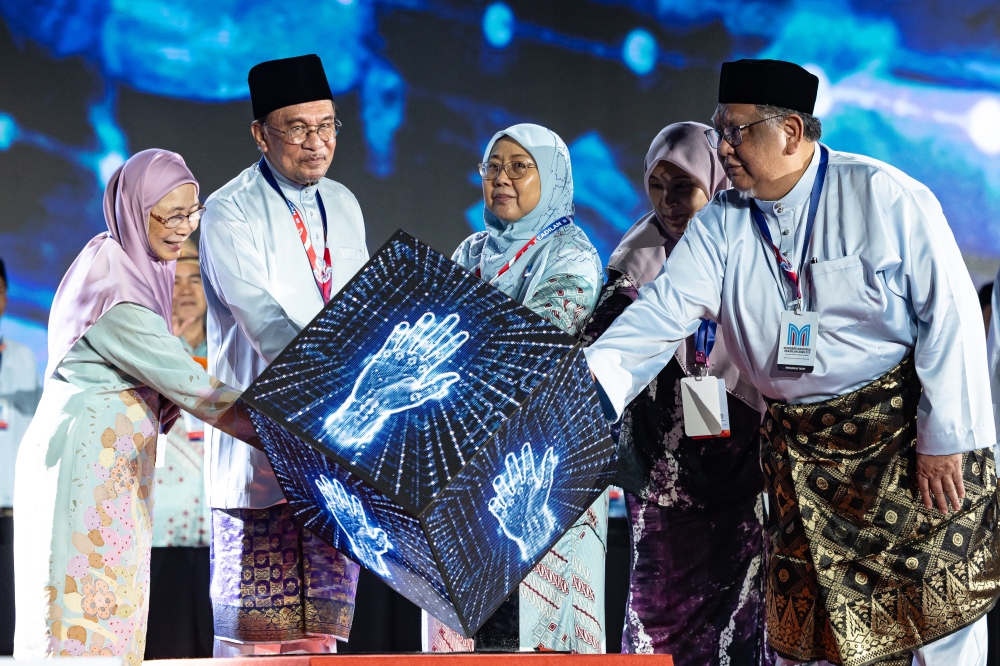
Prime Minister Datuk Seri Anwar Ibrahim has pushed back against claims that the Madani government discriminates against particular states, pointing to enhanced federal funding for Sabah, Sarawak, Kedah and Kelantan as evidence of equitable resource distribution. Speaking in Melaka on August 15, Anwar addressed persistent allegations that his administration favours certain regions over others, a charge that has periodically surfaced amid Malaysia's complex federal-state power dynamics.
The four states in question represent a politically and geographically diverse cross-section of the country. Sabah and Sarawak, located on Malaysian Borneo, command substantial federal attention due to their geographic isolation and development needs. Kedah, positioned in the north, and Kelantan, in the east coast, add another dimension to the discussion, as both states have experienced shifts in political governance and governance priorities. Anwar's enumeration of these four specifically suggests a deliberate attempt to demonstrate that his government's resource allocation transcends partisan boundaries.
The Madani government's approach to federal disbursements has become an increasingly contentious issue as Malaysia navigates political realignments following recent electoral cycles. States governed by political parties outside the federal coalition have occasionally questioned whether they receive proportionate funding, viewing allocation decisions through a lens of political advantage or disadvantage. By highlighting improvements in these four particular states, Anwar seeks to establish credibility that policy decisions rest on developmental need rather than electoral calculus.
Sabah and Sarawak hold particular strategic importance within Malaysia's federal framework. Both states possess significant autonomy regarding immigration, commerce and land matters under the Malaysia Agreement 1963, granting them distinct negotiating power in federal-state relations. Enhanced allocations to these states underscore the federal government's recognition of their unique constitutional standing and their indispensable role in maintaining national cohesion. Investment in infrastructure, education and healthcare across Sabah and Sarawak demonstrates federal commitment to bridging the development gap between peninsular and East Malaysia.
Kedah's inclusion in Anwar's announcement reflects attention to northern Malaysia, where economic disparities persist relative to more developed regions. The state has historically lobbied for greater federal support to diversify its economy beyond agriculture and tourism. Similarly, Kelantan's mention addresses concerns in this east coast state, which has advocated for increased investment in manufacturing capabilities and urban infrastructure development. Both states represent constituencies where the ruling coalition maintains electoral interest while also serving broader national development objectives.
The Madani government's budgetary approach reveals underlying assumptions about governance equity in a federation where resource distribution remains perpetually contested. Previous administrations have faced similar criticisms, suggesting this issue transcends individual prime ministers or governments. However, Anwar's specific identification of these four states signals an intentional counter-narrative to opposition claims, arguably positioning his government as more inclusive than its predecessors in acknowledging diverse regional needs.
For Malaysian and Southeast Asian observers, this development reflects broader questions about federalism and political governance in post-election settings. How new administrations navigate the intersection of electoral politics and equitable governance remains consequential for institutional legitimacy. Anwar's public refutation of discrimination allegations, backed by concrete budgetary evidence, attempts to establish that technocratic considerations—infrastructure needs, population density, economic indicators—guide allocation decisions rather than partisan preference.
The timing and venue of Anwar's statement in Melaka carry additional significance. Melaka represents a swing state within peninsular Malaysia where coalition politics remains fluid. By addressing concerns about regional equity in this location, Anwar signals that his government remains responsive to state-level anxieties about federal resource fairness, potentially reinforcing support among constituencies concerned about marginalisation.
International observers monitoring Malaysian governance note that resource allocation disputes have occasionally inflamed tensions between federal and state authorities. Clear communication regarding budgetary justifications contributes to transparency and institutional credibility. Anwar's enumeration of specific states receiving increased allocations follows this logic, though underlying data regarding absolute and proportional increases relative to other states remains contested terrain in Malaysian political discourse.
Moving forward, the Madani government's capacity to sustain enhanced allocations to these four states while managing overall fiscal responsibility will prove consequential. Economic conditions, revenue projections and competing demands from other states will constrain budgetary flexibility. Nevertheless, Anwar's public commitment to Sabah, Sarawak, Kedah and Kelantan establishes benchmarks against which government performance will be measured, particularly as Malaysia approaches subsequent electoral cycles.
The broader implication extends beyond simple fiscal accounting. Anwar's statement reflects recognition that in Malaysia's federal system, states possess meaningful political leverage and constituencies maintain heightened sensitivity to perceived distributive unfairness. By proactively addressing such concerns and demonstrating tangible responses through budgetary allocation, the Madani government attempts to reinforce coalitional unity while establishing legitimacy across diverse geographic and political constituencies throughout the country.

