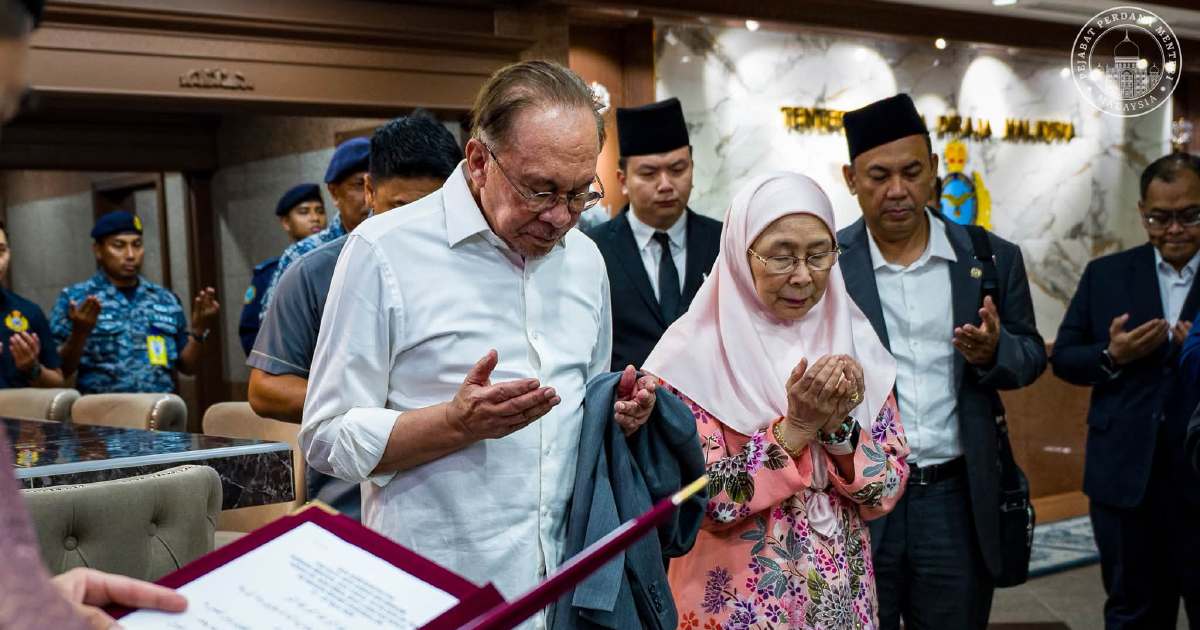
Prime Minister Datuk Seri Anwar Ibrahim has arrived in Bandar Seri Begawan for a two-day working visit centred on the 27th Annual Leaders' Consultation, a significant bilateral summit that underscores the enduring strategic partnership between Malaysia and Brunei. The consultation format represents a longstanding diplomatic tradition that brings together the top leadership of both nations to address matters of mutual concern and to chart the course of bilateral relations.
The Annual Leaders' Consultation mechanism has evolved as one of the most important platforms for Malaysia and Brunei to synchronise their policy positions on regional and international matters. This particular edition, marking the 27th iteration of the dialogue, reflects the sustained commitment of both governments to maintaining robust channels of communication at the highest level. For Malaysia, such engagements with its smaller neighbour across the South China Sea are particularly valuable given the shared maritime borders, overlapping economic interests, and common ASEAN obligations that bind the two nations.
Brunei's significance in Malaysia's regional strategy extends beyond simple geographical proximity. As a fellow member of ASEAN and an oil-producing nation with considerable reserves, Brunei occupies a distinctive position that makes Malaysia's relationship with the sultanate both strategically and economically consequential. The Annual Leaders' Consultation provides the structured venue to discuss trade flows, investment opportunities, and the coordination of maritime and resource management issues that inevitably arise between neighbouring states.
The timing of this visit carries additional weight given the contemporary regional dynamics in Southeast Asia. Issues ranging from maritime security in the South China Sea to the resilience of ASEAN unity in the face of geopolitical pressures would likely feature in discussions between the Malaysian and Bruneian leaderships. Both nations share concerns about maintaining freedom of navigation, protecting their maritime zones, and ensuring that regional affairs remain anchored to international law and ASEAN principles.
From Malaysia's perspective, the consultation offers an opportunity to reinforce bilateral cooperation on several fronts. Defence and security coordination between the two countries has historically been a cornerstone of their relationship, with military-to-military engagement providing a foundation for broader strategic alignment. The working visit allows for a comprehensive review of ongoing defence projects, joint training exercises, and the sharing of intelligence on transnational threats including smuggling, piracy, and terrorism that affect both nations' security.
Economic cooperation forms another critical pillar of the Malaysia-Brunei relationship. Despite Brunei's smaller economy, bilateral trade mechanisms and investment frameworks have historically delivered benefits to both parties. The consultation provides an occasion to assess the performance of existing trade agreements, identify new sectors for collaboration, and explore mechanisms to deepen economic integration while respecting each nation's development priorities and regulatory frameworks.
The broader ASEAN context also influences the substance of such bilateral consultations. Both Malaysia and Brunei are participants in the evolving architecture of Southeast Asian regionalism, including dialogue relationships with major powers and participation in frameworks such as the Regional Comprehensive Economic Partnership. The Annual Leaders' Consultation allows the two nations to coordinate their positions ahead of ASEAN meetings and to present a united front on issues of regional importance.
From a people-to-people perspective, Malaysia-Brunei ties benefit from deep cultural, religious, and linguistic commonalities. Many Malaysians and Bruneians have family connections across the border, and the two populations interact through education, commerce, and tourism. The political dialogue at the leadership level reflects and reinforces these grassroots connections, making the Annual Leaders' Consultation not merely a governmental exercise but an expression of bonds that transcend official channels.
For Malaysian policymakers, the visit to Bandar Seri Begawan represents a strategic investment in one of Southeast Asia's most stable and prosperous relationships. In a regional environment characterised by shifting great power dynamics and evolving security challenges, the Malaysia-Brunei partnership offers a foundation of predictability and mutual commitment. The 27th Annual Leaders' Consultation, conducted against this backdrop, will likely focus on consolidating existing agreements, addressing any outstanding bilateral issues, and positioning both nations to navigate emerging challenges in the region effectively.
The two-day format of this visit allows for comprehensive dialogue covering not only headline issues but also technical matters and implementation details of existing arrangements. Such intensive engagement at the prime ministerial level sends a clear signal to both the domestic constituencies of Malaysia and Brunei and to the international community about the seriousness with which both governments regard their bilateral relationship.
As Malaysia continues to balance its regional diplomacy and economic statecraft across multiple partnerships, the consultation in Brunei reinforces Kuala Lumpur's commitment to its immediate neighbourhood. This approach reflects a pragmatic recognition that stable, mutually beneficial relations with near neighbours create the foundation upon which broader regional engagement and global partnerships can be built effectively.

