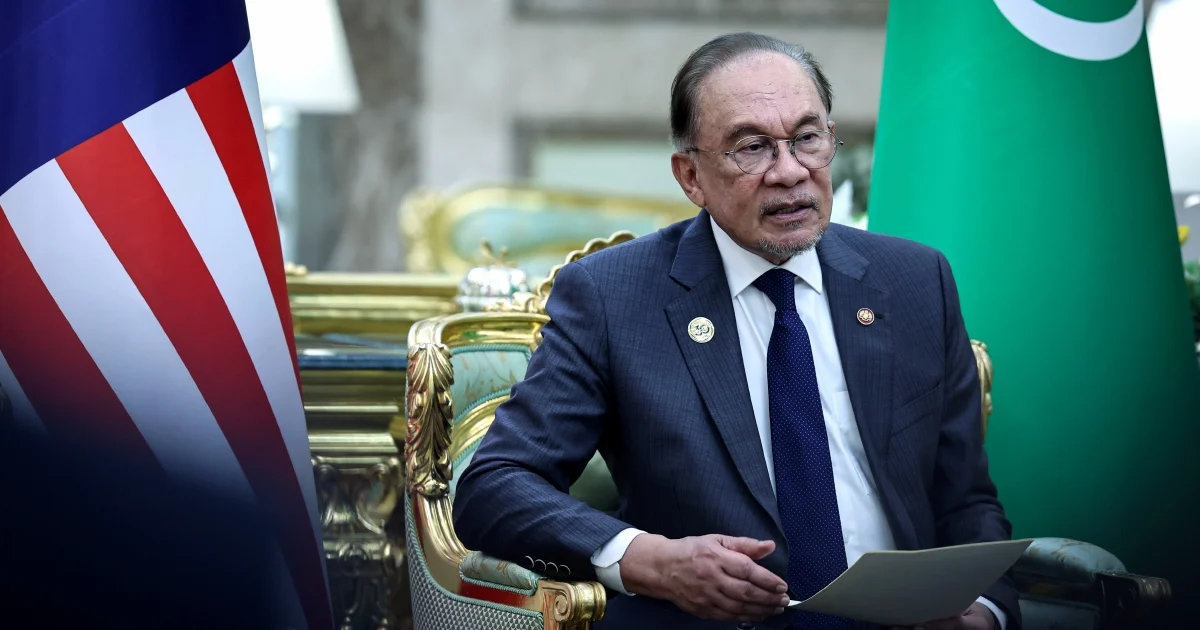
Prime Minister Datuk Seri Anwar Ibrahim has expressed cautious optimism following reports of preliminary negotiations yielding results in the long-contentious relationship between Washington and Tehran. Speaking at an event in Batu Kawan, Malaysia's chief executive welcomed the reported breakthrough, viewing it as a constructive step that holds potential ramifications extending well beyond the two nations directly involved in talks.
The reported agreement marks a significant moment in a relationship marked by decades of tension, diplomatic rupture, and mutual economic sanctions. Malaysia, as a prominent nation within the Muslim-majority Association of Southeast Asian Nations and holder of considerable influence within multilateral forums, has historically advocated for dialogue-based solutions to international conflicts. Anwar's response aligns with this broader Malaysian diplomatic posture of favouring negotiated settlements over confrontational approaches to geopolitical disputes.
For Southeast Asia specifically, any thawing of US-Iran relations carries strategic implications. Regional stability benefits when major powers engaged in rivalry find common ground, reducing the risk of proxy conflicts or tensions that could destabilise global supply chains and energy markets. Malaysia and other ASEAN members maintain commercial and diplomatic interests that are negatively affected by protracted great-power tensions, making genuine efforts toward dialogue strategically relevant to the region's prosperity and security architecture.
Anwar's comments reflect Malaysia's traditional foreign policy emphasis on multilateralism and peaceful resolution of disputes. Throughout his political career, Malaysia's premier has championed dialogue frameworks and has frequently articulated the position that even entrenched adversaries benefit from sustained engagement. This outlook extends to Malaysia's broader international relationships and its philosophy within ASEAN, where consensus-building and non-interference in internal affairs remain foundational principles.
The reported agreement between the United States and Iran, should it advance toward formal implementation, would address one of the most persistent flashpoints in contemporary international relations. The nuclear question, regional proxy activities, and sanctions regimes have created an intractable impasse for years. Any meaningful breakthrough suggests that both parties have identified sufficient common ground to justify renewed diplomatic engagement, even if complete reconciliation remains distant.
From Malaysia's vantage point, sustained dialogue between Washington and Tehran creates beneficial conditions for smaller nations navigating complex great-power dynamics. When major actors are engaged in productive conversation rather than escalatory rhetoric, there is less pressure on middle-power nations to choose sides or become caught in crossfire. This dynamic particularly matters for ASEAN members, which collectively pursue a strategy of maintaining equidistant relationships with major powers while preserving autonomy in foreign policy decision-making.
Anwar's welcoming remarks also signal Malaysia's interest in seeing international tensions de-escalate broadly. The prime minister has previously advocated for stronger multilateral institutions and has emphasised that sustainable peace requires addressing root causes of conflict rather than managing symptoms through military posturing. His response to the reported US-Iran breakthrough appears consistent with this philosophical framework, suggesting that initial agreements, though modest, represent progress toward more comprehensive settlements.
The timing of Anwar's comments carries weight given Malaysia's rotating chairmanship positions within various regional and international organisations, and its voice within the Non-Aligned Movement. When leaders of significant developing nations publicly support diplomatic breakthroughs, they implicitly encourage both negotiating parties to persist and deepen engagement. Such statements, while diplomatically measured, contribute to creating psychological space for negotiators to take risks that negotiations require.
However, Anwar's characterisation of the development as "positive news for the world" acknowledges that actual implementation remains uncertain. Preliminary agreements frequently encounter obstacles during formalisation stages, as technical details and political domestic considerations create friction. Malaysia's experience in regional diplomacy suggests that initial breakthroughs, while genuinely significant, require sustained political will and commitment from all parties to materialise into enduring arrangements.
The implications for Malaysian foreign policy include reinforced opportunity to position the nation as a voice for moderation and dialogue within international forums. As regional and global tensions persist across multiple domains—from trade disputes to security concerns—Malaysia's consistent advocacy for negotiated solutions provides both moral authority and potential diplomatic leverage. Anwar's embrace of the reported US-Iran agreement demonstrates this positioning in practice, aligning Malaysia with broader international sentiment favouring peaceful conflict resolution.
Moving forward, observers will scrutinise whether this reported agreement reflects genuine strategic recalibration or merely tactical repositioning by either party. The durability of such arrangements depends on whether underlying disputes can be addressed through mutually acceptable mechanisms. Malaysia's perspective, informed by its experience mediating various disputes within ASEAN and beyond, recognises that initial agreements often serve as foundations upon which more substantial arrangements are subsequently constructed.