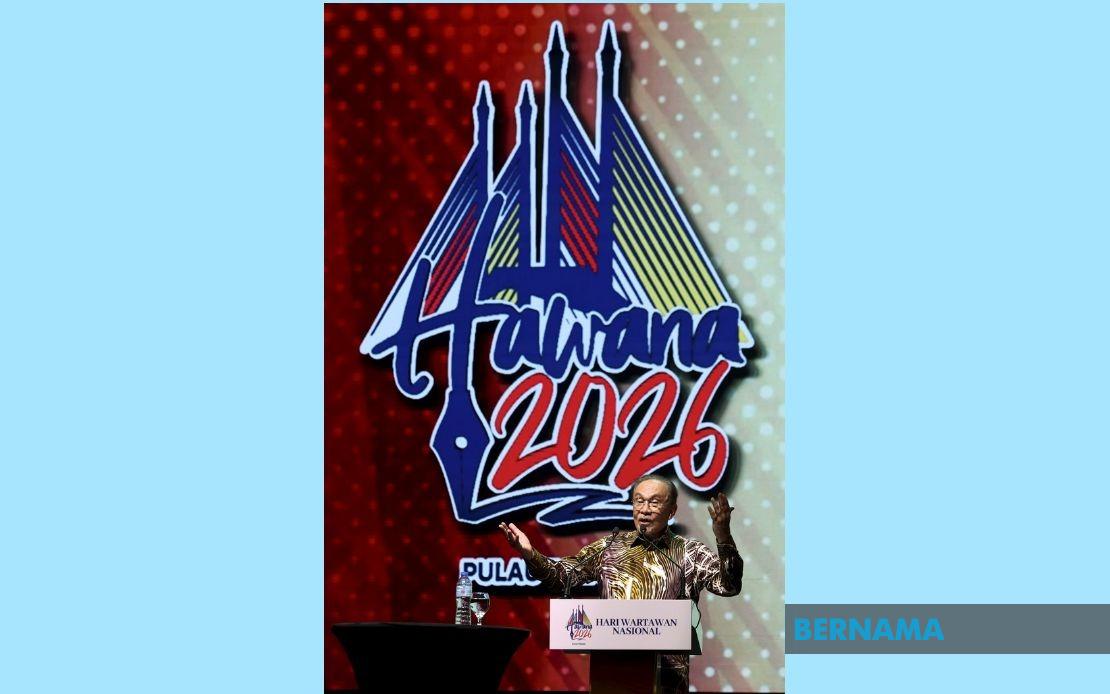
Prime Minister Datuk Seri Anwar Ibrahim has pledged an extra RM1 million to the Tabung Kasih@HAWANA, reinforcing the government's commitment to safeguarding the financial security of media workers across Malaysia. The announcement came during his address at the National Journalists' Day (HAWANA) 2026 main event in Butterworth on June 20, where Anwar, speaking in his dual capacity as Finance Minister, underscored the administration's recognition of journalism's critical role in society.
The augmented funding represents a significant investment in the profession at a time when media organisations navigate uncertain economic terrain. Since the fund's establishment during HAWANA 2023, a total of 773 media practitioners nationwide have benefited from assistance packages totalling RM2.26 million. With the new allocation, cumulative disbursements will reach RM3.26 million, demonstrating sustained governmental focus on the sector's workforce welfare. The timing of the announcement, coupled with its scale, suggests the government views media worker support as integral to maintaining press stability and independence.
The Tabung Kasih@HAWANA operates as a comprehensive safety net, extending beyond simple financial handouts. The fund provides support across multiple dimensions of practitioner need, including direct cash assistance for those facing economic distress, coverage of medical and healthcare expenses, family welfare provisions, and additional relief mechanisms tailored to individual circumstances. This multi-faceted approach acknowledges that media workers encounter diverse challenges—from illness and injury to family emergencies—that can threaten their professional continuity and personal wellbeing.
For Malaysia's media landscape, the fund addresses a structural vulnerability within journalism as a profession. Unlike corporate employees benefiting from comprehensive employer-sponsored schemes, many media practitioners operate with limited safety nets, particularly freelancers and those working for smaller publications. The RM1 million addition demonstrates recognition that state support can complement market mechanisms in protecting vulnerable workers while reinforcing the professional status of journalism itself.
The HAWANA 2026 gathering itself reflected the profession's regional significance. Held at PICCA Convention Centre@Butterworth Arena under the theme 'Media Integrity Strengthens Credibility', the event assembled over 1,000 media practitioners from Malaysia and international delegations from Timor-Leste, Cambodia, and Laos. This regional participation underscores journalism's cross-border concerns and shared professional standards across Southeast Asia, particularly regarding credibility maintenance in an era of information fragmentation.
Penang Chief Minister Chow Kon Yeow and Communications Minister Datuk Fahmi Fadzil's presence signalled multi-level governmental engagement with media sector welfare. The attendance of Communications Ministry leadership, including Secretary-General Datuk Abdul Halim Hamzah and Deputy Secretary-General Datuk Bahria Mohd Tamil, further illustrated institutional commitment to implementing such support structures. Malaysian National News Agency (Bernama) chairman Datuk Seri Wong Chun Wai and chief executive officer Datin Paduka Nur-ul Afida Kamaludin's participation highlighted state media's coordinating role in profession-wide initiatives.
For Malaysian journalism, fund allocation decisions carry implications beyond immediate welfare. They signal governmental prioritisation of media worker stability, which can influence recruitment and retention within news organisations. Young journalists considering career commitments might view such safety-net investments as indicators of professional viability. Simultaneously, the fund's existence implicitly acknowledges economic pressures within the sector—declining advertising revenues, subscription challenges, and digital disruption have collectively strained media organisations' capacity to maintain competitive compensation and comprehensive benefits.
The RM1 million annual increment also reflects evolving policy thinking regarding the relationship between state, media, and public interest. Rather than direct subsidies to news organisations—a practice that historically raises editorial independence concerns—the fund supports individual practitioners irrespective of employer, protecting both editorial autonomy and worker welfare. This structural distinction matters for maintaining institutional integrity while acknowledging journalism's public service dimensions.
Looking forward, the Tabung Kasih@HAWANA's sustainability and expansion merit monitoring. Media sector conditions continue deteriorating globally, with employment instability increasing. Malaysia's journalists face competition from digital platforms, advertising migration, and audience fragmentation. Should such pressures intensify, demand for welfare fund assistance will likely increase proportionally. Current allocation levels may require reassessment if application numbers rise significantly above historical trends.
The fund's establishment and ongoing enhancement also positions Malaysia within regional conversations about media sustainability. Southeast Asian governments increasingly grapple with supporting journalism without compromising editorial independence. Malaysia's welfare-fund approach—distinct from direct state subsidies or regulatory protectionism—offers a model potentially instructive for neighbouring nations. The HAWANA 2026 gathering's regional composition suggests such policy experimentation occurs within observed peer networks.
For Malaysian readers and media consumers, these developments carry indirect significance. Media practitioner stability and welfare directly correlate with news quality, investigative capacity, and professional resilience. Workers facing acute financial distress may compromise editorial judgment or abandon journalism entirely, reducing talent within the profession. Conversely, adequate support systems enable practitioners to pursue complex investigations, maintain professional standards, and resist external pressures that might compromise news accuracy. The RM1 million allocation therefore represents investment in the institutional preconditions for credible, independent journalism.
As Malaysia's media landscape continues evolving amid technological disruption and economic pressure, governmental willingness to fund practitioner welfare suggests recognition that market mechanisms alone cannot sustain journalism's public interest function. The Tabung Kasih@HAWANA, now augmented with additional resources, exemplifies targeted intervention designed to preserve professional journalism's viability while respecting editorial independence and avoiding direct state control over news content.
%22%2F%3E%3C%2Fpattern%3E%3C%2Fdefs%3E%3Crect%20width%3D%22100%25%22%20height%3D%22100%25%22%20fill%3D%22url(%23ph4da0ug)%22%2F%3E%3Crect%20width%3D%22100%25%22%20height%3D%22100%25%22%20fill%3D%22url(%23ph4da0up)%22%2F%3E%3Ctext%20x%3D%2250%25%22%20y%3D%2250%25%22%20text-anchor%3D%22middle%22%20dominant-baseline%3D%22central%22%20fill%3D%22rgba(255%2C255%2C255%2C0.95)%22%20font-family%3D%22Georgia%2C%20'Times%20New%20Roman'%2C%20serif%22%20font-weight%3D%22700%22%20font-size%3D%22320%22%20letter-spacing%3D%22-0.02em%22%3ERare%3C%2Ftext%3E%3C%2Fsvg%3E)
%22%2F%3E%3C%2Fpattern%3E%3C%2Fdefs%3E%3Crect%20width%3D%22100%25%22%20height%3D%22100%25%22%20fill%3D%22url(%23phm749g)%22%2F%3E%3Crect%20width%3D%22100%25%22%20height%3D%22100%25%22%20fill%3D%22url(%23phm749p)%22%2F%3E%3Ctext%20x%3D%2250%25%22%20y%3D%2250%25%22%20text-anchor%3D%22middle%22%20dominant-baseline%3D%22central%22%20fill%3D%22rgba(255%2C255%2C255%2C0.95)%22%20font-family%3D%22Georgia%2C%20'Times%20New%20Roman'%2C%20serif%22%20font-weight%3D%22700%22%20font-size%3D%22320%22%20letter-spacing%3D%22-0.02em%22%3EPM%3C%2Ftext%3E%3C%2Fsvg%3E)
%22%2F%3E%3C%2Fpattern%3E%3C%2Fdefs%3E%3Crect%20width%3D%22100%25%22%20height%3D%22100%25%22%20fill%3D%22url(%23phgab1g)%22%2F%3E%3Crect%20width%3D%22100%25%22%20height%3D%22100%25%22%20fill%3D%22url(%23phgab1p)%22%2F%3E%3Ctext%20x%3D%2250%25%22%20y%3D%2250%25%22%20text-anchor%3D%22middle%22%20dominant-baseline%3D%22central%22%20fill%3D%22rgba(255%2C255%2C255%2C0.95)%22%20font-family%3D%22Georgia%2C%20'Times%20New%20Roman'%2C%20serif%22%20font-weight%3D%22700%22%20font-size%3D%22170%22%20letter-spacing%3D%22-0.02em%22%3EMalaysia%3C%2Ftext%3E%3C%2Fsvg%3E)