%22%2F%3E%3C%2Fpattern%3E%3C%2Fdefs%3E%3Crect%20width%3D%22100%25%22%20height%3D%22100%25%22%20fill%3D%22url(%23phm749g)%22%2F%3E%3Crect%20width%3D%22100%25%22%20height%3D%22100%25%22%20fill%3D%22url(%23phm749p)%22%2F%3E%3Ctext%20x%3D%2250%25%22%20y%3D%2250%25%22%20text-anchor%3D%22middle%22%20dominant-baseline%3D%22central%22%20fill%3D%22rgba(255%2C255%2C255%2C0.95)%22%20font-family%3D%22Georgia%2C%20'Times%20New%20Roman'%2C%20serif%22%20font-weight%3D%22700%22%20font-size%3D%22320%22%20letter-spacing%3D%22-0.02em%22%3EPM%3C%2Ftext%3E%3C%2Fsvg%3E)
Datuk Seri Dr Wan Azizah Wan Ismail, president of Pergerakan Puteri Islam Malaysia (PPIM), hosted a gathering with 395 participants of the National Level Nature Camp 2026 at the National Planetarium in Kuala Lumpur on June 20, marking the culmination of a three-day residential programme. The engagement underscores the organisation's commitment to youth development through experiential learning that bridges environmental stewardship, Islamic principles, and practical life competencies.
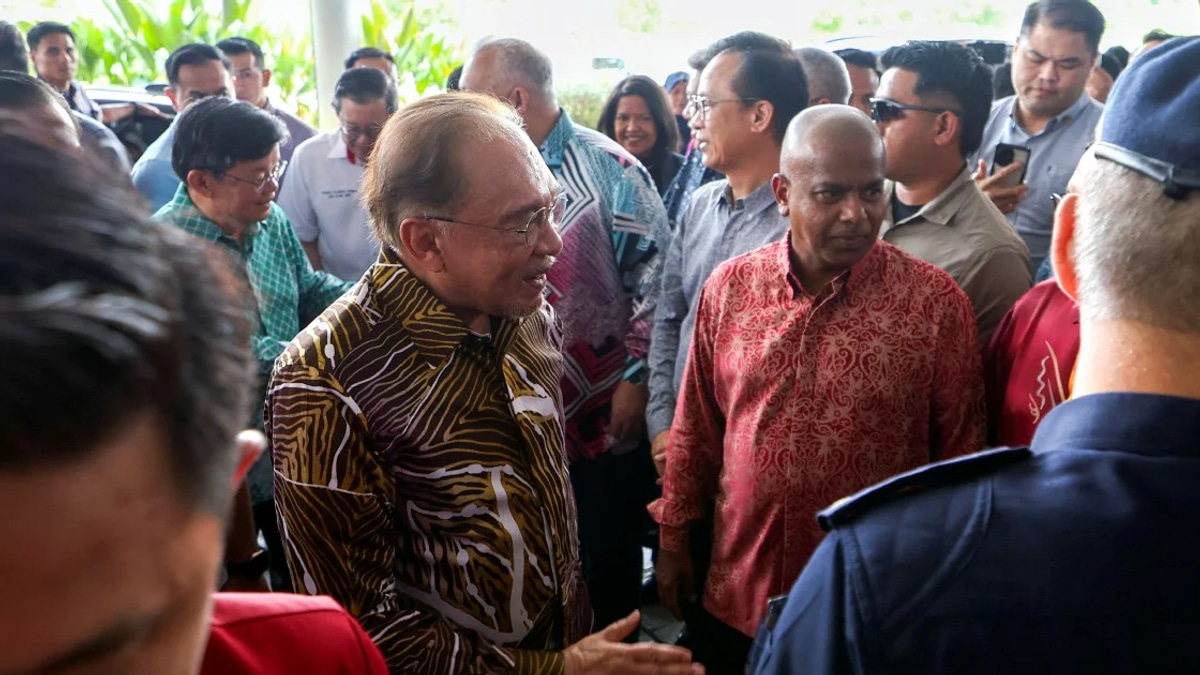
Arrivingat the National Planetarium lobby at 1.17 pm, Dr Wan Azizah, who serves as the Prime Minister's wife, spent time engaging directly with the young participants before formally signing the visitors' book. The casual interaction reflected an approachable leadership style, allowing organisers and attendees to interact with a high-profile national figure invested in youth educational initiatives. Her presence conveyed institutional recognition of PPIM's programming and its role in shaping the younger generation's worldview and capabilities.
The closing event drew significant government representation, including Datuk Ruziah Shafei, deputy secretary-general at the Ministry of Science, Technology and Innovation responsible for science planning and public engagement. This interdepartmental participation indicates alignment between PPIM's grassroots youth work and the government's broader science and innovation agenda. National Planetarium director Mohd Zamri Shah Mastor and senior PPIM officials at both national and state levels attended, demonstrating the programme's institutional importance across multiple governance levels.
According to PPIM honorary secretary Aizar Mohd Jaman, the biennial nature camp this year deliberately integrated environmental consciousness, Quranic teachings, and transferable life skills to forge a cohesive identity among participants. This pedagogical approach reflects growing recognition within youth organisations that effective moral and social development requires multidisciplinary engagement rather than compartmentalised instruction. The fusion of religious and ecological literacy acknowledges that contemporary young Malaysians navigate intersecting challenges requiring integrated knowledge frameworks.
The PPIM curriculum encompasses eight foundational pillars: spirituality, skills development, environmental awareness, camping competency, management and administration, health literacy, and personal development. This comprehensive structure positions the organisation beyond recreational camping, instead functioning as a structured capability-building ecosystem. Each pillar targets specific developmental outcomes while maintaining cohesion through an underlying values framework rooted in Islamic perspectives on stewardship, community responsibility, and self-improvement.
The three-day residential component ran from June 18 to 20 at Laman Puteri, Kompleks Darul Puteri on Jalan Cheras, providing an immersive environment for participants to engage with curriculum content experientially. The deliberate transition from the residential campsite to the National Planetarium for the closing ceremony served a strategic dual purpose: concluding the camping experience while introducing scientific and astronomical education. This pedagogical sequencing allows participants to carry forward the integrated learning mindset as they transition from intensive outdoor engagement to structured scientific inquiry.
For Malaysia's youth development landscape, the PPIM programme represents a significant model of faith-based organisation capacity building. Rather than limiting religious education to doctrinal instruction, PPIM weaves Islamic principles throughout practical competencies including environmental stewardship, scientific curiosity, and leadership skills. This approach aligns with growing international discourse around values-based education that cultivates both moral reasoning and tangible capabilities demanded by contemporary labour markets and civic life.
The inclusion of 395 participants indicates substantial reach across Malaysian states, suggesting that PPIM's network extends meaningfully beyond urban centres. Youth engagement at this scale demonstrates that religiously-affiliated organisations in Malaysia maintain significant mobilisation capacity and infrastructure for reaching young people outside formal educational systems. The biennial cycle ensures continuity of institutional knowledge while allowing programme refinement based on previous cohort experiences.
From a regional perspective, PPIM's integrated approach to youth development offers insights relevant to other Southeast Asian societies navigating similar tensions between traditional values transmission, scientific literacy, environmental consciousness, and employment readiness. The model demonstrates that these dimensions need not remain in competition but can reinforce one another when deliberately synthesised through carefully designed programming. Malaysia's experience implementing such frameworks may inform broader regional conversations about effective youth engagement strategies that respect diverse value systems while building practical capabilities.
The National Planetarium's involvement in hosting the closing ceremony reflects institutional partnerships essential for scaling youth programmes. By leveraging existing scientific infrastructure and expertise, PPIM extends its capacity beyond what the organisation could independently provide. This collaborative model, where religious and civil society organisations partner with government scientific institutions, represents pragmatic ecosystem thinking that maximises available resources for youth benefit.
Dr Wan Azizah's participation carries additional significance as it signals high-level institutional endorsement of youth-focused social development work. When senior political figures engage substantively with youth organisations, it communicates that such engagement merits national attention and resources. For PPIM, this validation reinforces the organisation's positioning as a credible partner in national youth development strategy, potentially influencing resource allocation and policy frameworks affecting similar initiatives.
%22%2F%3E%3C%2Fpattern%3E%3C%2Fdefs%3E%3Crect%20width%3D%22100%25%22%20height%3D%22100%25%22%20fill%3D%22url(%23ph1c6k9g)%22%2F%3E%3Crect%20width%3D%22100%25%22%20height%3D%22100%25%22%20fill%3D%22url(%23ph1c6k9p)%22%2F%3E%3Ctext%20x%3D%2250%25%22%20y%3D%2250%25%22%20text-anchor%3D%22middle%22%20dominant-baseline%3D%22central%22%20fill%3D%22rgba(255%2C255%2C255%2C0.95)%22%20font-family%3D%22Georgia%2C%20'Times%20New%20Roman'%2C%20serif%22%20font-weight%3D%22700%22%20font-size%3D%22170%22%20letter-spacing%3D%22-0.02em%22%3EMalaysia%3C%2Ftext%3E%3C%2Fsvg%3E)
%22%2F%3E%3C%2Fpattern%3E%3C%2Fdefs%3E%3Crect%20width%3D%22100%25%22%20height%3D%22100%25%22%20fill%3D%22url(%23ph41swg)%22%2F%3E%3Crect%20width%3D%22100%25%22%20height%3D%22100%25%22%20fill%3D%22url(%23ph41swp)%22%2F%3E%3Ctext%20x%3D%2250%25%22%20y%3D%2250%25%22%20text-anchor%3D%22middle%22%20dominant-baseline%3D%22central%22%20fill%3D%22rgba(255%2C255%2C255%2C0.95)%22%20font-family%3D%22Georgia%2C%20'Times%20New%20Roman'%2C%20serif%22%20font-weight%3D%22700%22%20font-size%3D%22320%22%20letter-spacing%3D%22-0.02em%22%3EPM%3C%2Ftext%3E%3C%2Fsvg%3E)