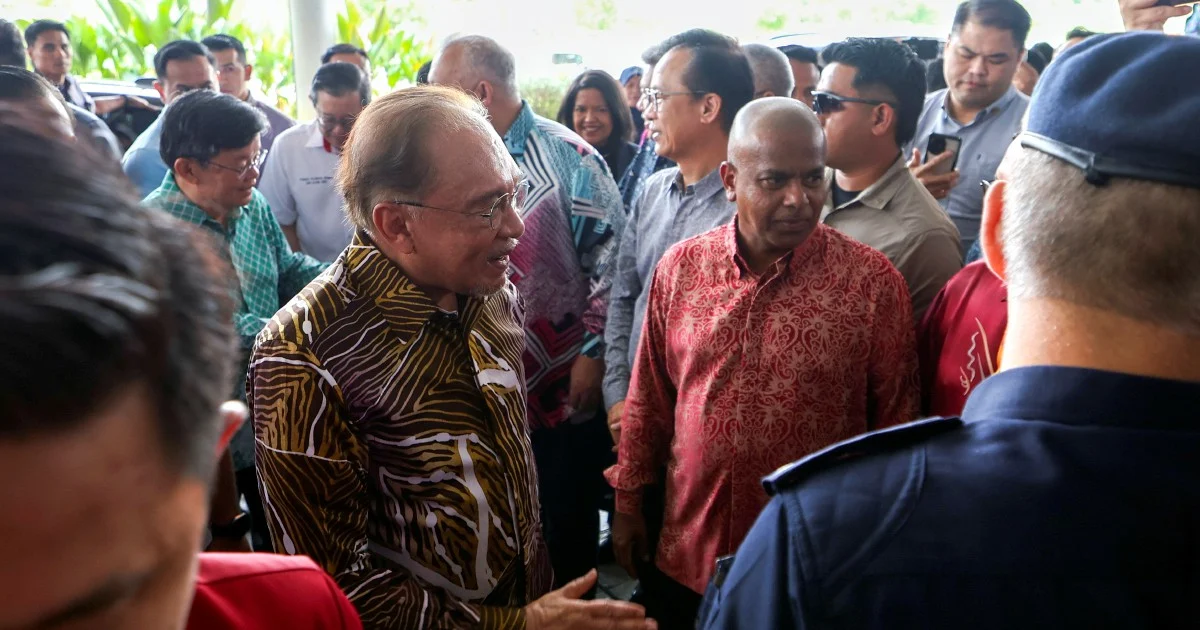
Prime Minister Datuk Seri Anwar Ibrahim has celebrated Petronas's successful acquisition of operational rights to two substantial gas fields in Turkmenistan, hailing the breakthrough as a pivotal achievement for the nation's energy portfolio. Speaking in Permatang Pauh, Anwar underscored the strategic importance of the development for Malaysia's long-term power generation capacity and industrial competitiveness.
The decision by Turkmenistan to entrust these hydrocarbon assets to Malaysia's national petroleum company represents recognition of Petronas's technical expertise and operational track record in Central Asian resource extraction. The move reflects growing confidence in Malaysian energy companies among regional producers seeking reliable international partners with proven project delivery capabilities. For Petronas, the expansion into Turkmenistan's gas sector opens substantial revenue streams and positions the corporation as an increasingly significant player in global energy markets beyond its traditional Southeast Asian footprint.
Turkmenistan ranks among the world's top natural gas reserves holders, sitting alongside Russia, Iran, and Qatar in terms of recoverable hydrocarbon wealth. The country's vast energy resources remain largely underexploited due to limited infrastructure, international sanctions complications, and geographical constraints that restrict market access. By partnering with Petronas, Turkmenistan gains a capable operator with experience managing complex upstream projects in geographically challenging environments and navigating international regulatory frameworks. For Petronas, exposure to Turkmenistan's reserves provides diversification away from regional dependencies and strengthens negotiating position with existing customers in Asia.
Energy security constitutes a cornerstone of Malaysia's development strategy. The nation remains a net importer of crude oil and faces mounting power demand from industrialisation and urbanisation. Domestic production from Peninsular Malaysia, Sabah, and Sarawak has plateaued or declined in recent years, creating genuine concerns about long-term supply resilience. New gas supply sources from friendly, stable countries like Turkmenistan help bridge projected deficits and reduce vulnerability to price volatility in global energy markets. The arrangement also provides Malaysia greater bargaining leverage in regional energy negotiations and reduces dependence on any single supplier.
Petronas's expansion into Central Asia builds on decades of international experience. The company operates in multiple continents and manages complex joint ventures with state entities and multinational corporations. The Turkmenistan gas fields represent natural progression for an organisation seeking growth opportunities beyond its saturated domestic market. Successfully developing these assets could unlock additional expansion opportunities across Central Asia and demonstrate Malaysian capacity to execute major infrastructure projects in less familiar territories.
The geopolitical dimensions merit attention. Central Asia traditionally orbits Russian and Chinese spheres of influence, with limited Western presence. Malaysia's involvement through Petronas signals an alternative partnership model emphasising mutual commercial benefit without ideological conditions or political interference. For Southeast Asian nations concerned about great power competition, Malaysian success in Turkmenistan demonstrates that regional players retain agency in navigating global energy markets without choosing between superpowers.
Investment requirements for developing these gas fields will be substantial. Turkmenistan's landlocked geography necessitates expensive pipeline infrastructure to export gas to Asian markets. Petronas will need to coordinate with regional governments, arrange financing, and manage complex logistics. The company's experience in similar challenges across Southeast Asia and beyond provides relevant expertise. Capital commitments could exceed billions of ringgit, making this a significant undertaking for Petronas shareholders and national development strategy.
Domestic electricity generation stands to benefit most immediately. Malaysia's power sector relies heavily on natural gas for baseload generation. Additional gas supplies reduce future procurement costs and create supply redundancy that strengthens grid reliability. Manufacturing sectors dependent on energy-intensive processes gain cost certainty through improved long-term supply prospects. Industrial competitiveness faces pressure from rising electricity tariffs across developed Asia; secure, affordable gas supplies help Malaysian manufacturers maintain cost advantages against regional competitors.
The transaction also reflects Petronas's adaptation to evolving global energy dynamics. As renewable energy expands and fossil fuel investment faces increasing scrutiny, natural gas positions itself as a transitional fuel supporting the shift away from coal. Developing additional gas capacity aligns Petronas with international expectations that fossil fuels will remain material to the global energy mix for decades. The company's strategy reflects pragmatism about transition timelines and recognition that Asian economies require reliable baseload power sources to sustain development.
Regional partnerships in energy infrastructure remain underdeveloped compared to other sectors. The Petronas-Turkmenistan arrangement potentially catalyses broader cooperation frameworks across Central and South Asia. Malaysian expertise in offshore operations, project management, and international financing could transfer to other resource-rich nations seeking development partners. Building relationships with Central Asian governments strengthens Malaysia's diplomatic profile and creates commercial opportunities beyond hydrocarbons.
For investors monitoring Malaysia's strategic direction, the Turkmenistan investment signals confidence in long-term energy demand and commitment to securing supplies supporting the nation's development objectives. Petronas's willingness to deploy capital in frontier markets demonstrates management conviction about growth opportunities. The development also reinforces Malaysia's positioning as a credible intermediary in global energy markets, capable of managing sophisticated projects across diverse geopolitical contexts.
Successful execution of the Turkmenistan fields remains essential. Operational challenges, regulatory shifts, or technical difficulties could delay projected benefits. International oil and gas companies routinely encounter setbacks in unfamiliar territories. Petronas's ability to navigate these obstacles while maintaining cost discipline and timeline adherence will determine whether this milestone translates into sustained energy security improvements for Malaysia.