%22%2F%3E%3C%2Fpattern%3E%3C%2Fdefs%3E%3Crect%20width%3D%22100%25%22%20height%3D%22100%25%22%20fill%3D%22url(%23ph41swg)%22%2F%3E%3Crect%20width%3D%22100%25%22%20height%3D%22100%25%22%20fill%3D%22url(%23ph41swp)%22%2F%3E%3Ctext%20x%3D%2250%25%22%20y%3D%2250%25%22%20text-anchor%3D%22middle%22%20dominant-baseline%3D%22central%22%20fill%3D%22rgba(255%2C255%2C255%2C0.95)%22%20font-family%3D%22Georgia%2C%20'Times%20New%20Roman'%2C%20serif%22%20font-weight%3D%22700%22%20font-size%3D%22320%22%20letter-spacing%3D%22-0.02em%22%3EPM%3C%2Ftext%3E%3C%2Fsvg%3E)
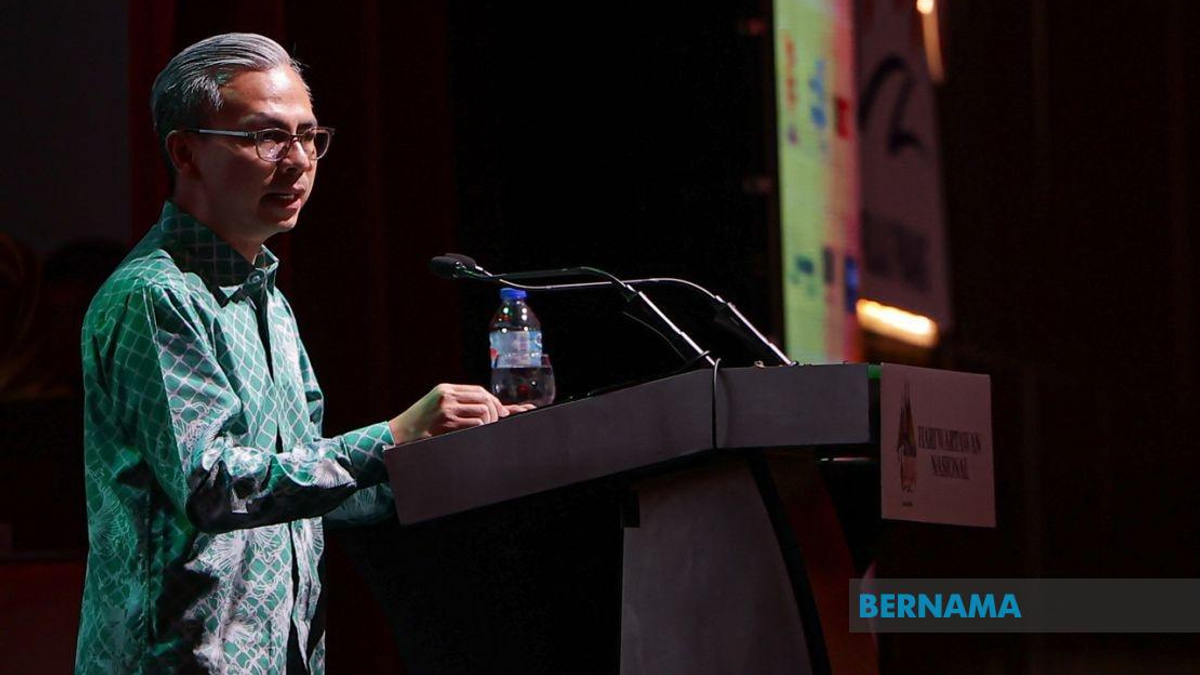
Prime Minister Datuk Seri Anwar Ibrahim has commended Malaysia's media community for steadfastly adhering to professional ethics and integrity while serving the public interest, acknowledging the mounting pressures facing journalists in an increasingly complex information landscape. His remarks came during the official opening of the National Journalists' Day (HAWANA) 2026 ceremony at the PICCA Convention Centre @ Butterworth Arena, where he recognized the vital contribution that news organisations continue to make to national discourse and democratic participation.
The Prime Minister recognised that the contemporary media environment has become fundamentally more challenging than in previous decades. The twin forces of rapid digital technological advancement and the emergence of artificial intelligence have fundamentally altered how news is gathered, processed, and distributed. These developments have simultaneously created new opportunities for reaching audiences while introducing complex ethical dilemmas that journalism educators and practitioners struggle to address. Anwar acknowledged that despite these obstacles, committed media professionals persevere in their duty to inform citizens accurately and responsibly.
Central to Anwar's message was the assertion that media organisations perform an essential democratic function beyond simply reporting facts. Journalists serve as institutional interpreters, helping ordinary Malaysians understand the nuances of government policy, economic strategy, and long-term national development initiatives. This interpretive role requires not merely factual accuracy but also contextual wisdom and careful consideration of how information shapes public perception and policy debate. The Prime Minister emphasised that this responsibility extends to explaining Malaysia's evolving development priorities, including efforts to balance economic growth with digital transformation and energy sector transition.
A crucial component of his address focused on the philosophical distinction between freedom and responsibility in media operations. Anwar articulated a vision of press freedom that operates within guardrails designed to protect institutional stability and prevent information disorder. He argued that unbridled information dissemination, untethered from ethical frameworks, could potentially destabilise the democratic system itself. This reflects a recurring tension in Malaysian political discourse between protecting the media's watchdog function and ensuring that journalistic freedom does not become a weapon for undermining legitimate governance structures or social cohesion.
The Prime Minister placed particular emphasis on the role of ethics and values as defining principles that transcend mere factual correctness. He suggested that determining whether reported information serves the public interest involves moral judgments that cannot be reduced to objective fact-checking alone. This philosophical stance implies that journalists must cultivate wisdom and judgment beyond technical competency, recognising that the same factual statement can have different ethical implications depending on context, timing, and societal impact. The underlying message suggested that Malaysian media practitioners should see themselves as custodians not merely of information but of social values.
The HAWANA 2026 event, held under the theme "Media Integrity Strengthens Credibility," attracted more than 1,000 media professionals from Malaysia and international participants representing Cambodia, Laos, and Timor-Leste. The multi-national attendance underscored growing regional recognition that professional standards in journalism transcend national borders. International participation also signalled Malaysia's effort to position itself as a thought leader in Southeast Asian media development and to foster collaborative frameworks for addressing common challenges facing news organisations across the region.
During the ceremony, Anwar witnessed the signing of a Memorandum of Understanding between Malaysia's national news agency Bernama and Timor-Leste's national news agency TATOLI, formalising bilateral cooperation in news gathering and information exchange. This agreement reflects broader strategic initiatives to strengthen media institutions across Southeast Asia and create networks for sharing journalistic standards and professional development. Such institutional partnerships become increasingly valuable when individual news organisations face resource constraints and when the region faces information challenges requiring coordinated professional responses.
The Prime Minister presented several recognitions acknowledging contributions to Malaysia's media sector development. Former broadcasting director-general Datuk Suhaimi Sulaiman received the HAWANA Award, while the HAWANA 2026 Special Award was presented posthumously to the late Azlan Idris, former Bernama Radio chief. These honours signalled government recognition of individuals who shaped institutional frameworks and professional standards that continue influencing the industry. Additionally, Anwar distributed financial assistance through the Tabung Kasih@HAWANA programme to three practitioners facing health challenges, demonstrating targeted support for individuals experiencing hardship within the professional community.
The event also featured recognition of excellence through the HAWANA-Dewan Bahasa dan Pustaka 2026 Pantun Festival, which awarded prizes to TV3 and Bernama for their literary contributions. This cultural dimension reflected efforts to integrate traditional Malaysian cultural forms with contemporary media practice, suggesting that modernisation need not come at the expense of cultural authenticity. Such initiatives indicate government interest in supporting media that serves both informational and cultural preservation functions within Malaysian society.
Chow Kon Yeow, Penang Chief Minister, and Communications Minister Datuk Fahmi Fadzil attended the ceremony alongside senior officials from Malaysia's Communications Ministry and state government. International representation included Timor-Leste's Secretary of State for Social Communication Expedito Loro Dias Ximenes, reflecting broader regional interest in professional media development and cross-border cooperation on journalism standards. The diverse attendance highlighted how media sector challenges and solutions increasingly transcend national frameworks, requiring regional and international coordination.
Anwar's emphasis on balancing freedom with responsibility particularly resonates for Malaysian media given ongoing debates about press freedoms, digital regulation, and social media governance. His framing suggests a position that supports robust journalism while acknowledging legitimate government interests in preventing information disorder and protecting institutional stability. This philosophical stance shapes how Malaysia approaches questions about media regulation and the boundaries between protecting press freedom and maintaining social order, issues that remain contested in both government and journalistic circles.
The HAWANA 2026 gathering occurred amid continued global transformation in media economics and consumption patterns. Traditional funding models have eroded, audience fragmentation has accelerated, and competition from digital-native outlets has intensified pressure on established news organisations. By convening this multi-national assembly and publicly honouring commitment to professional standards, Malaysian authorities signalled that maintaining institutional journalism remains a priority despite these structural pressures. The event itself became a statement about the perceived value of professional news production in democratic societies.