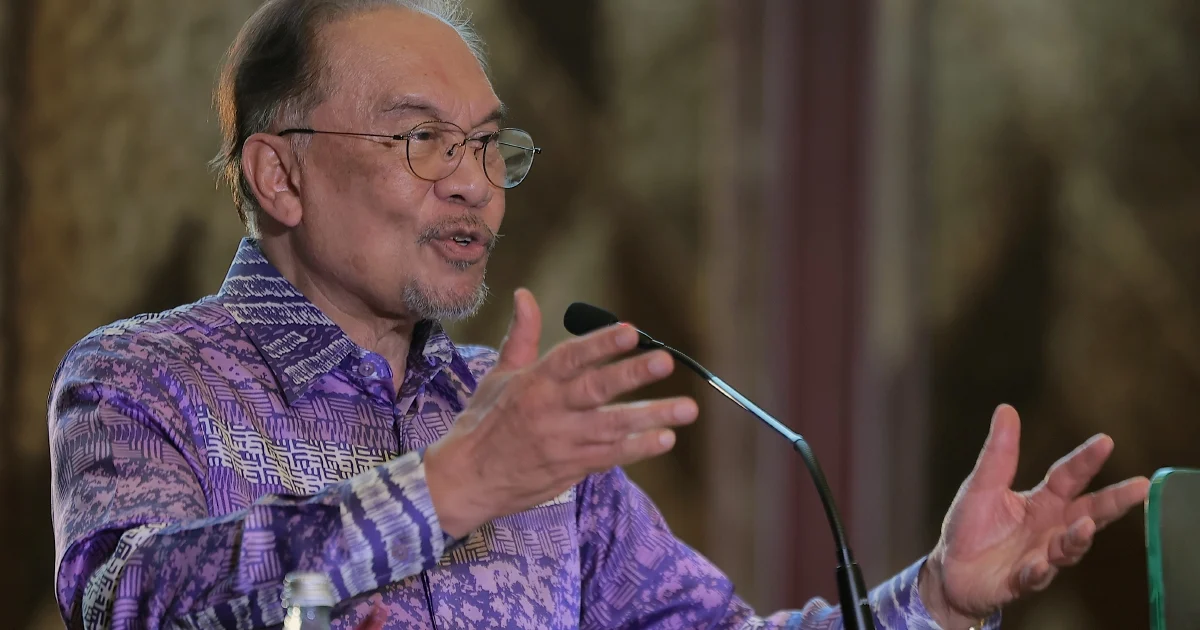
Prime Minister Datuk Seri Anwar Ibrahim will undertake a two-day working visit to Kazan beginning June 17, during which he is expected to hold discussions with Rais of the Republic of Tatarstan Rustam Minnikhanov. The visit forms part of Malaysia's strategic engagement with Russia and represents an effort to broaden the relationship beyond traditional bilateral channels to encompass broader regional cooperation frameworks involving the Association of Southeast Asian Nations.
Kazan, the capital of Tatarstan and Russia's largest city east of the Urals, has emerged as an increasingly important diplomatic destination for regional leaders. The choice of venue reflects the significance Malaysia places on engaging with Russian federal subjects and local authorities, not merely with Moscow's central government. This approach recognises that Russia's political structure grants considerable autonomy to its regional administrations, which often pursue their own economic and cultural initiatives on the international stage.
The diplomatic mission carries particular weight given the evolving geopolitical landscape in Southeast Asia and beyond. Malaysia, as a non-aligned nation and current or recent chair of various regional forums, has consistently positioned itself as a bridge between the West and non-Western powers. A substantive engagement with Russia through both governmental and regional channels underscores this balancing act, especially as Kuala Lumpur navigates complex international pressures and seeks to maintain strategic flexibility in its foreign policy.
Bilateral Malaysia-Russia relations have historically been characterised by steady but modest engagement across trade, investment, and cultural domains. The planned discussions between Anwar and Minnikhanov are expected to explore opportunities for strengthening these connections, potentially encompassing areas such as energy cooperation, investment frameworks, and people-to-people exchanges. Russia's significance as a major energy producer and global actor makes it a natural partner for Malaysian economic diversification efforts.
The visit also signals Malaysia's commitment to deepening Asean-Russia ties more broadly. As a regional organisation, Asean has long sought to maintain constructive relations with major powers while preserving its centrality in regional architecture. Russia, despite its geographic distance from Southeast Asia, maintains strategic interests in the region and has increasingly sought to strengthen its engagement with Asean member states. This collective dimension adds layers of complexity and importance to bilateral meetings, as outcomes often carry implications for the broader regional grouping.
Minnikhanov has established himself as a prominent figure in Russia's regional governance and international diplomacy. His government in Tatarstan has pursued active foreign engagement, hosting international forums and attracting investment. A meeting between Malaysia's premier and the Tatarstan leader provides an opportunity to explore sub-national cooperation mechanisms that can complement central government relations and create additional channels for sustained engagement.
The timing of the visit warrants consideration within the broader context of contemporary international relations. Malaysia's willingness to maintain substantive diplomatic contacts with Russia, even as Western nations have imposed sanctions and restricted engagement following geopolitical tensions, demonstrates the country's commitment to independent foreign policy decision-making. This reflects Malaysia's historical position as a nation that refuses to take sides in global power competitions while protecting its own interests and values.
Economic dimensions of the visit cannot be overlooked. Trade between Malaysia and Russia has faced headwinds in recent years due to various international circumstances, but both nations recognise untapped potential in bilateral commercial relations. Discussions during Anwar's visit are likely to address mechanisms for facilitating business connections, reducing trade barriers, and creating predictable investment environments that could benefit companies from both countries.
Cultural and educational exchanges also feature prominently in Malaysia-Russia relations. Both nations have invested in student exchange programmes and cultural initiatives that foster people-to-people understanding. These soft power dimensions of diplomacy often prove durable and create constituencies in both societies favouring continued engagement, providing a foundation for resilient bilateral relations that transcend temporary political disagreements.
The Asean angle deserves particular emphasis, as Malaysia's role in regional forums means that outcomes from bilateral meetings often influence broader regional positions. Asean's commitment to an open, inclusive regional architecture that engages all major powers aligns with Malaysia's diplomatic philosophy. Strengthening Asean-Russia relations through bilateral visits and discussions helps sustain Russia's meaningful participation in regional affairs and dialogue mechanisms.
Looking ahead, the Kazan visit represents one data point in an ongoing process of engagement between Malaysia and Russia at multiple levels of government and society. Success will be measured not merely by the immediate outcomes of meetings between leaders, but by whether tangible mechanisms are established or strengthened for continued cooperation across economic, cultural, and diplomatic domains. Such sustained engagement, conducted with clarity about respective interests and values, serves Malaysia's broader strategic objectives of maintaining autonomy and flexibility in an increasingly multipolar world.