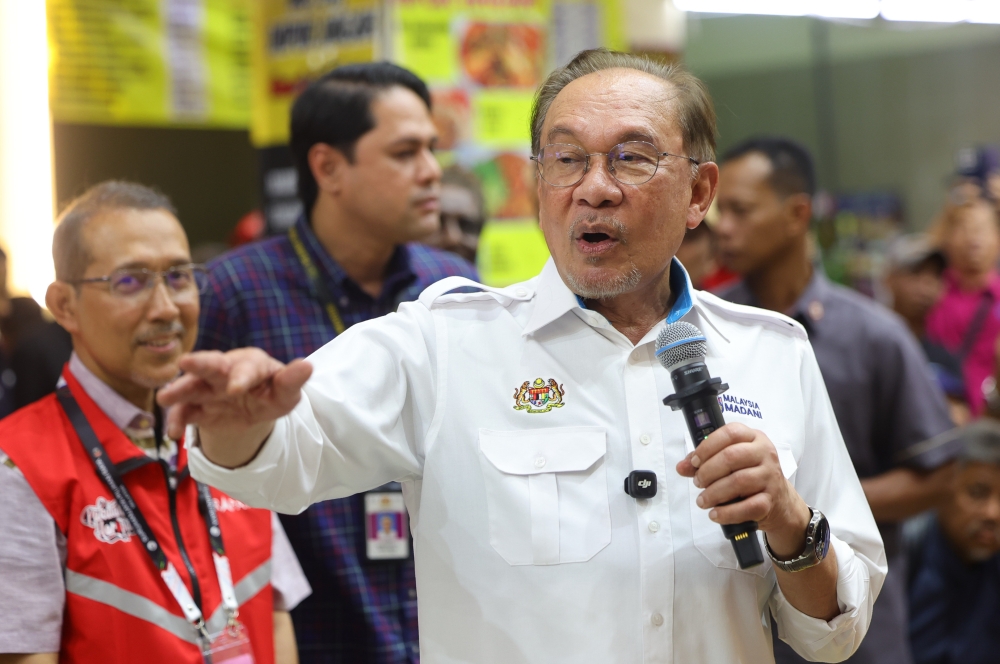
Prime Minister Datuk Seri Anwar Ibrahim is making a determined push in Negeri Sembilan during the campaign's closing days, embarking on an ambitious series of stops and public appearances designed to consolidate support across the state's key constituencies. The intensive itinerary reflects the strategic importance Putrajaya places on retaining influence in a state that has proven pivotal in recent electoral cycles and remains competitively contested between major coalitions.
The concentration of campaign activity in Negeri Sembilan underscores how both the ruling coalition and opposition parties view the state as genuinely competitive terrain. With multiple federal parliamentary seats and state assemblies at stake, Negeri Sembilan holds disproportionate significance in determining not only the state government's composition but also the broader political trajectory of Malaysian politics in the post-2022 era. Anwar's visible commitment to the ground game signals that his administration views potential setbacks in the state as unacceptable given the government's current political standing.
For Malaysian observers, the intensity of final-week campaigning by a sitting prime minister carries deeper meaning about internal coalition dynamics and electoral confidence. When frontline federal leadership descends on a particular state during the campaign's denouement, it typically indicates either genuine concern about that state's outcome or, alternatively, a calculated attempt to generate momentum that might assist allied candidates in surrounding marginal constituencies. The scale of Anwar's engagement suggests both factors are in play.
Negeri Sembilan's political composition makes it a natural flashpoint in Malaysian electoral competition. The state has historically served as a bellwether, with its voting patterns often foreshadowing broader national sentiment. Recent trends have seen the state swing between different political coalitions, making it particularly sensitive to shifts in voter preference. The presence of several mixed urban-rural constituencies means that campaigns must address both urban voter concerns about economic management and rural constituents' anxieties regarding development and service delivery.
The campaign schedule likely encompasses a mix of coalition endorsements, local community engagement sessions, and public rallies designed to energise party workers and undecided voters. Such final-stretch activities serve multiple purposes: they generate media coverage that frames the narrative around the Pakatan Harapan coalition's campaign messaging, provide visible validation to local political structures that federal support remains firm, and create opportunities for grassroots party machinery to identify remaining persuadable voters in the diminishing campaign window.
From a broader Southeast Asian perspective, Malaysia's electoral dynamics continue to reflect evolving patterns of coalition politics and voter behaviour common across the region. Unlike the more polarised structures of neighbouring countries, Malaysian politics remains characterised by fluid coalitions that reorganise between elections based on locational, ethnic, and issue-based calculations. Anwar's willingness to commit prime ministerial bandwidth to Negeri Sembilan reflects the ongoing negotiation required to maintain the Pakatan coalition's stability, particularly given how state-level electoral outcomes influence federal power dynamics and ministerial allocations.
The final campaign phase also illuminates how Malaysian political parties remain fundamentally dependent on retail politics and face-to-face voter engagement despite technological advances. Even in an era of digital campaigning and social media influence, the physical presence of senior leadership remains an irreplaceable asset in mobilising party machinery and persuading wavering voters. Anwar's schedule demonstrates that Malaysian electoral contests are ultimately decided through traditional grassroots activism combined with strategic leadership visibility.
Negeri Sembilan's electoral mathematics also matters for coalition stability within Putrajaya. The state sends multiple representatives to parliament, and the distribution of state administration roles often reflects each coalition component's electoral performance. A strong showing in Negeri Sembilan would strengthen the Pakatan Harapan's internal negotiating position and potentially enhance the Malaysian United Democratic Alliance's standing within the broader federal coalition architecture. Conversely, significant losses could embolden opposition parties and complicate future coalition dynamics.
For voters in Negeri Sembilan, the heightened campaign activity represents an opportunity to engage directly with federal leadership on issues affecting the state. These final-phase campaigns often surface voter concerns about specific development projects, infrastructure deficits, or economic opportunities that might otherwise remain peripheral to national political discourse. The concentrated attention can genuinely influence state-level policy priorities following the election.
The campaign intensity also reflects practical political calculus about voter turnout and enthusiasm. Final-week activities are designed to translate existing support into actual votes by maximising turnout among favourable demographics and constituencies. In competitive electoral environments like Negeri Sembilan, marginal improvements in turnout among supportive constituencies can prove decisive in close three-way contests between competing state administrations.
Looking ahead, the outcome in Negeri Sembilan will provide important indicators about the strength of Putrajaya's political position and the stability of current coalition arrangements. A decisive performance would validate Anwar's leadership and the government's policy direction, while a disappointing result would invite questions about electoral momentum and internal coalition cohesion heading toward the next federal general election cycle.

