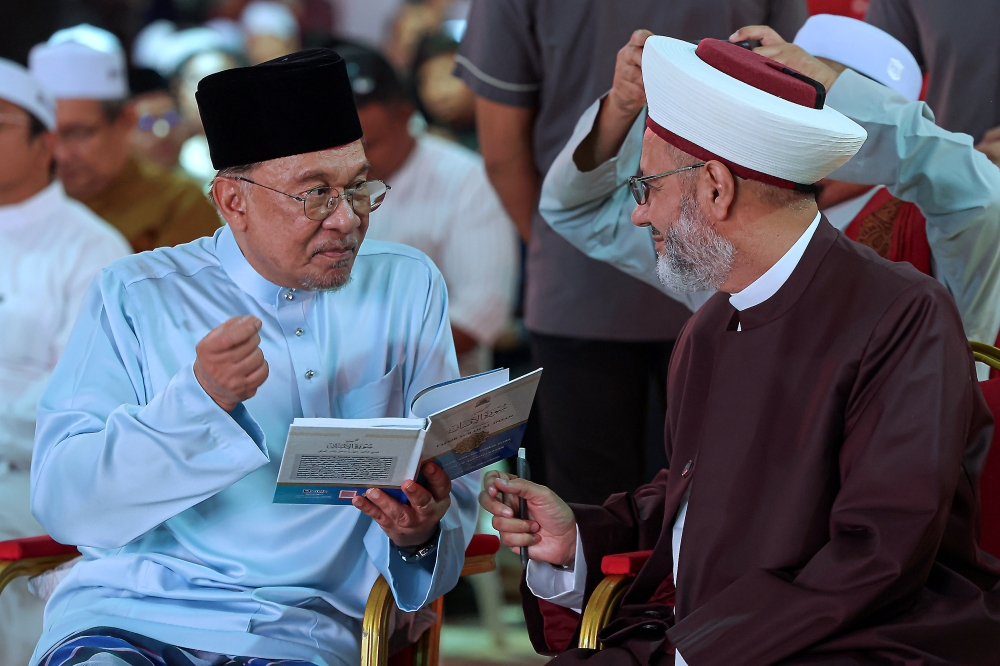
Prime Minister Datuk Seri Anwar Ibrahim has expressed profound admiration for Ahmed Al-Tayyeb, the Grand Imam of Al-Azhar, recognising him as a pivotal figure in advancing moderate interpretations of Islam across the globe. In remarks delivered on July 31, the Malaysian leader highlighted the significance of Al-Tayyeb's contributions to building bridges between different faith communities and promoting values of tolerance within Islamic discourse.
Al-Azhar, one of the world's most influential Islamic institutions based in Cairo, Egypt, occupies a unique position in shaping theological thought and religious education across the Muslim world. As its Grand Imam since 2010, Al-Tayyeb has consistently articulated a vision of Islam that emphasises coexistence, scientific advancement, and engagement with contemporary challenges. Anwar's recognition of this leadership underscores Malaysia's alignment with institutional voices that advocate for progressive Islamic scholarship without abandoning traditional authority and credibility.
The Prime Minister's commentary reflects Malaysia's broader diplomatic strategy of positioning itself as a nation that bridges East and West, tradition and modernity. By publicly endorsing figures like Al-Tayyeb who champion moderate Islamic thought, Anwar reinforces Malaysia's international standing as a Muslim-majority country committed to pluralism, interfaith dialogue, and rational engagement with global issues. This positioning becomes increasingly important as Malaysia seeks to influence regional and international conversations about the role of Islam in contemporary society.
Al-Tayyeb's work extending beyond theological matters into practical advocacy for dialogue has earned respect from secular and religious quarters alike. His initiatives promoting interfaith understanding have included hosting delegations from Christian churches, Jewish organisations, and Buddhist communities. These efforts resonate particularly in Malaysia's context, where constitutional guarantees of religious freedom and the Rukun Negara principle of unity are foundational to national identity.
Anwar's commendation also carries domestic implications. By associating himself with the vision of institutional Islamic moderation represented by Al-Azhar, the Prime Minister strengthens his position among constituencies concerned about extremism whilst simultaneously demonstrating Islam's compatibility with democratic governance and social pluralism. This messaging proves valuable amid ongoing debates within Malaysian society about Islamic law, religious authority, and secular governance structures.
The relationship between Malaysia and Egypt's Al-Azhar institution has historical depth. Malaysian Islamic scholars have studied at Al-Azhar for centuries, and the institution's theological positions influence religious discourse and education systems throughout Southeast Asia. Recognition from Malaysia's premier political leader acknowledges Al-Azhar's enduring relevance as a source of moderate Islamic jurisprudence and commentary on pressing global issues ranging from terrorism to climate change.
Al-Tayyeb's approach to combating religious extremism focuses on ideological and theological counter-narratives rather than purely security-based responses. He has spoken forcefully against groups claiming to represent authentic Islam whilst perpetrating violence, positioning moderation as theologically rigorous rather than as a watered-down compromise. This intellectual framework aligns with Malaysian approaches that have gradually shifted toward engaging Islamic scholars in countering narratives promoted by extremist groups.
The timing of Anwar's remarks reflects broader geopolitical currents in the Muslim world. Several Muslim-majority nations have moved toward normalising relationships with Israel and engaging with Western powers, whilst others assert more assertive Islamic positions. Malaysia, under Anwar's leadership, attempts to navigate these tensions by emphasising universal Islamic values of justice, compassion, and intellectual inquiry whilst maintaining principled foreign policy positions, particularly regarding Palestinian rights.
For Southeast Asia specifically, Anwar's endorsement of Al-Tayyeb's moderate Islamic leadership model carries significance given the region's religious diversity and occasional communal tensions. Countries including Malaysia, Indonesia, and Thailand house substantial Muslim populations alongside significant Buddhist, Christian, and Hindu communities. Institutional voices advocating for interfaith respect and theological moderation provide intellectual resources for regional leaders managing religious pluralism.
The Grand Imam's prominence in global interfaith initiatives has extended to engagement with United Nations bodies and international organisations concerned with religious freedom and tolerance. His intellectual authority allows him to speak to both conservative Islamic constituencies and international audiences, a balance that few contemporary religious leaders achieve. Anwar's appreciation for this diplomatic skill reflects recognition that Malaysia similarly requires leaders capable of articulating Islamic values whilst engaging effectively with global governance frameworks.
Moving forward, Anwar's public recognition of Al-Tayyeb signals Malaysian intention to strengthen cultural and intellectual ties with Egypt's premier Islamic institution. Educational exchanges, theological dialogues, and collaborative initiatives addressing shared challenges become more probable when top political leaders explicitly value such relationships. This soft power dimension of Malaysia's foreign policy potentially enhances the nation's influence within Islamic forums and multilateral bodies.
The remarks ultimately demonstrate how contemporary Islamic leadership navigates between defending religious tradition and embracing pluralistic modernity. By commending Al-Tayyeb, Anwar positions Malaysia within a global network of Muslim-majority states and Islamic institutions committed to demonstrating that Islamic faith traditions flourish most robustly when wedded to intellectual freedom, scientific inquiry, and respectful coexistence with different worldviews.

