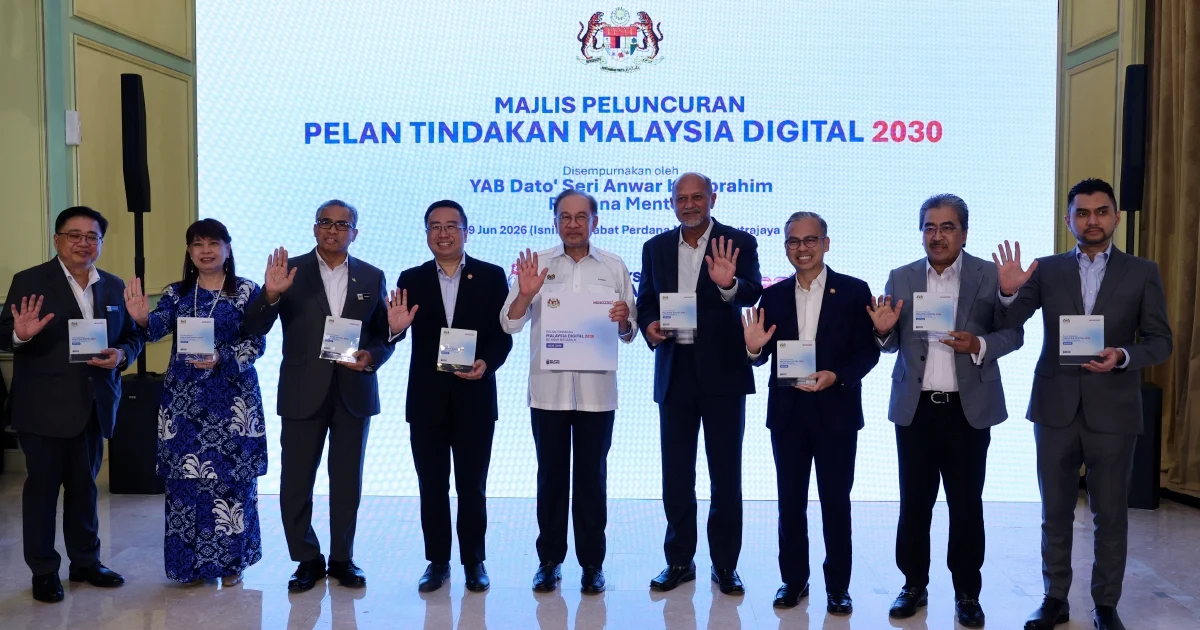
Prime Minister Datuk Seri Anwar Ibrahim has formally launched Malaysia Digital 2030 (MD2030), a comprehensive national action plan spanning 2026 to 2030 that represents a fundamental reorientation of Malaysia's approach to digital development. Rather than continuing as a passive importer of technology solutions, the blueprint commits the nation to becoming an active creator of indigenous digital innovation, with artificial intelligence at its core. This strategic pivot signals recognition within government circles that Malaysia's future economic competitiveness depends on building homegrown technological capacity rather than relying indefinitely on foreign expertise and imports.
The timing of this initiative reflects Malaysia's growing awareness that regional competitors are rapidly advancing in the digital economy. Countries across Southeast Asia have begun establishing their own innovation ecosystems, research hubs, and technology manufacturing bases. Without a coherent national strategy to harness domestic talent and resources, Malaysia risks falling further behind in sectors that will define economic growth over the next decade. The MD2030 framework attempts to address this by establishing clear targets and mechanisms for developing local capability across multiple digital domains, with artificial intelligence representing the flagship sector where Malaysia seeks to establish credible international presence.
Under the MD2030 banner, the government has committed to transforming Malaysia's technology sector through investments in research and development infrastructure, talent cultivation programmes, and regulatory frameworks that nurture innovation. The plan acknowledges that Malaysia possesses substantial advantages—a young, educated workforce with growing technical expertise, established manufacturing capabilities that can be adapted for electronics and technology production, and a strategic geographic position in global trade networks. By leveraging these assets more effectively, policymakers believe Malaysia can transition from assembling and deploying foreign technology to originating solutions that address both domestic needs and international market demands.
A critical component of the MD2030 strategy involves cultivating Malaysia's artificial intelligence sector through targeted funding and institutional support. This includes establishing research centres of excellence, incentivizing private sector participation through tax benefits and procurement preferences, and developing educational pathways that equip Malaysian workers with advanced technical skills in machine learning, data science, and AI systems design. The government recognizes that building such capacity takes sustained commitment over years, which is why the five-year framework provides a definable horizon for measuring progress and adjusting tactics as implementation proceeds.
The transition from technology consumer to producer will require substantial realignment of Malaysia's digital economy. Currently, most digital services and products consumed domestically originate from international corporations. This means that value creation, intellectual property ownership, and higher-wage employment opportunities flow overseas. By developing competitive local alternatives, Malaysia can potentially capture greater economic value from its digital sector, create more highly-skilled jobs, and build export opportunities for Malaysian-created technology solutions. These benefits would extend beyond the immediate technology sector, as artificial intelligence increasingly becomes foundational infrastructure for other industries including finance, manufacturing, healthcare, and agriculture.
Regional context matters significantly for understanding Malaysia's digital ambitions. Singapore has already established itself as a regional artificial intelligence hub, attracting major technology companies and research institutions. Vietnam and Thailand are aggressively pursuing digital transformation strategies. Indonesia, with its massive population and digital market, has become an attractive target for technology investment. Malaysia must demonstrate that it offers unique competitive advantages if it wishes to retain ambitious technologists and entrepreneurs who might otherwise seek opportunities elsewhere in Asia. The MD2030 framework serves partly as a statement of national commitment to this competitive positioning.
The plan also addresses digital infrastructure requirements necessary for supporting innovation at scale. High-speed internet connectivity, cloud computing resources, cybersecurity standards, and data governance frameworks all underpin a functioning innovation economy. Malaysia's existing digital infrastructure provides a reasonable foundation, but MD2030 identifies gaps that must be addressed to support the next generation of technological development. This includes ensuring rural and peripheral areas gain adequate digital access, preventing the concentration of innovation capacity in only a handful of major cities, and creating environments where Malaysian companies can scale successfully without being forced to relocate operations.
Public-private collaboration represents another cornerstone of the MD2030 approach. The government cannot and should not attempt to develop artificial intelligence capability exclusively through state-controlled institutions. Instead, the framework emphasizes partnerships with private sector technology companies, academic institutions, and startups that can contribute specialized expertise and entrepreneurial dynamism. This includes creating incubation programmes where promising Malaysian startups receive mentorship, funding, and market access support while remaining headquartered in Malaysia rather than migrating to regional hubs like Singapore or Bangkok.
The MD2030 launch also highlights human capital development as fundamental to success. Malaysia possesses significant demographic advantages in terms of youth population, but these advantages only translate into competitive strength if young Malaysians develop relevant skills and see viable career pathways in technology creation. This requires investment in computer science and engineering education at secondary and tertiary levels, accessible retraining programmes for workers transitioning from declining sectors, and demonstration effects showing that successful technology careers can be built within Malaysia rather than requiring expatriation.
International collaboration and knowledge exchange remain important within the MD2030 framework. Malaysia cannot isolate itself from global technological developments or claim self-sufficiency in all domains. Rather, the plan seeks to create conditions where Malaysia becomes an active participant in international research networks, attracts collaborative partnerships with leading global institutions, and positions Malaysian researchers and entrepreneurs as valued contributors to cutting-edge development rather than merely as consumers of foreign expertise. This positioning would naturally enhance Malaysia's attractiveness for foreign talent seeking to work in collaborative environments with capable local partners.
Implementing MD2030 successfully will require sustained political commitment, adequate budget allocation, and institutional capacity to coordinate across multiple government agencies, private sector entities, and educational institutions. Success will also depend on measuring progress through clear metrics and demonstrating tangible results that convince both public and private stakeholders that investing in Malaysian digital innovation represents sound economic strategy. The framework thus functions simultaneously as technical roadmap and political statement about Malaysia's digital future.

