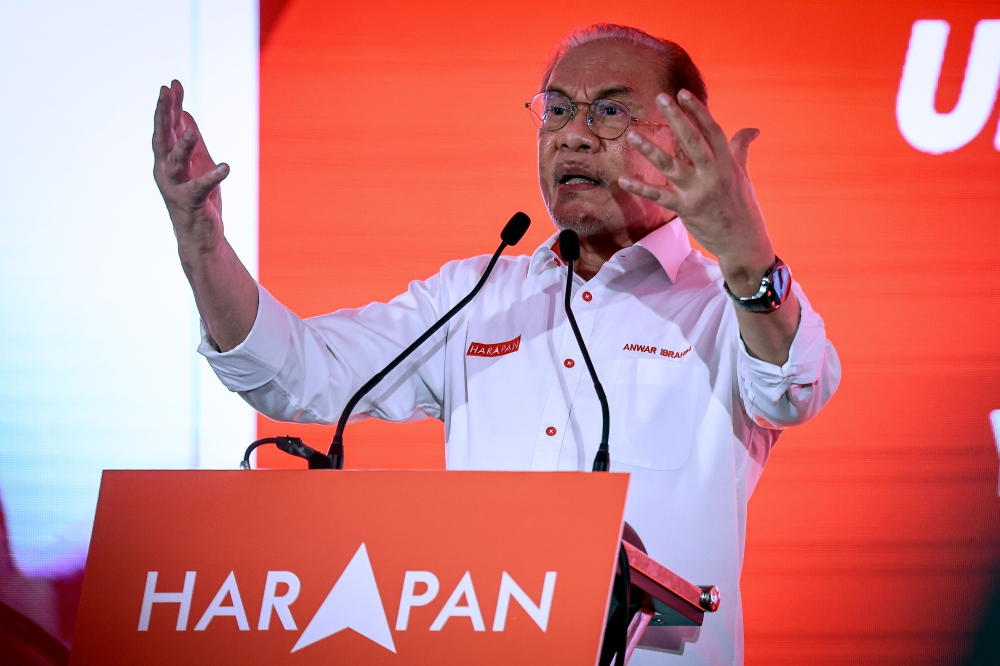
Prime Minister Datuk Seri Anwar Ibrahim has begun his campaign engagements in Negeri Sembilan, marking a significant strategic move by Pakatan Harapan to maintain electoral momentum in one of the nation's pivotal swing states. The premier's ground-level activities represent a calculated effort to energise coalition supporters and shore up grassroots organisation in constituencies where competition remains closely contested, underscoring the heightened importance placed on Negeri Sembilan's electoral mathematics.
Negeri Sembilan occupies a distinctive position within Malaysia's political landscape. The state has historically demonstrated volatility in voting patterns, oscillating between competing coalitions across successive election cycles. This unpredictability renders it strategically crucial for Pakatan Harapan's broader electoral calculations, particularly as the coalition seeks to consolidate gains made during recent political realignments. Anwar's personal involvement in the campaign stage signals the administration's recognition that direct engagement from the highest political level can meaningfully influence voter sentiment in such marginal constituencies.
The timing of Anwar's Negeri Sembilan campaign debut carries significance beyond immediate electoral considerations. It arrives at a juncture when Pakatan Harapan continues managing internal coalition dynamics whilst simultaneously addressing governance expectations among the broader electorate. By visibly campaigning in Negeri Sembilan, Anwar projects an image of active leadership whilst simultaneously testing and refining messaging that coalition strategists believe will resonate with the state's electorate. The premiere's personal touch in campaign activities typically generates heightened media attention and voter engagement compared to routine political visits.
The Negeri Sembilan electorate comprises constituencies with distinct demographic and socioeconomic characteristics that demand targeted political messaging. Rural constituencies within the state maintain different priorities compared to more urbanised districts surrounding Seremban and Nilai, necessitating campaign strategies that address localised concerns whilst maintaining broader coalition themes. Anwar's campaign activities appear calibrated to connect with these varied constituencies through direct engagement, allowing the prime minister to comprehend on-ground sentiments and demonstrate responsiveness to constituent feedback.
Packatan Harapan's electoral positioning in Negeri Sembilan reflects broader national political trends characterised by fluid coalition politics and shifting voter allegiances. The coalition's ability to retain support in states where it previously secured mandate requires sustained engagement and demonstrable delivery of campaign promises. Anwar's campaign presence serves multiple strategic functions: reinforcing coalition unity, energising party machinery, and signalling administrative commitment to Negeri Sembilan's development priorities. This multi-layered approach seeks to insulate coalition support against competing political messaging whilst simultaneously building narratives around leadership stability and economic management.
The campaign activities encompass engagement with various demographic segments, including rural communities, small business operators, and organised labour groups whose economic interests intersect with government policy decisions. These interactions provide opportunities for coalition leaders to articulate government achievements whilst simultaneously gathering intelligence regarding voter concerns and emerging electoral vulnerabilities. Such feedback loops inform subsequent campaign adjustments and policy messaging, creating dynamic engagement strategies responsive to evolving electoral sentiment.
Opposition parties maintain active campaign presence throughout Negeri Sembilan, intensifying competitive dynamics within the state's political arena. Pakatan Harapan's campaign mobilisation represents a necessary response to such competition, ensuring that coalition narratives maintain sufficient visibility and appeal among undecided and swing voters. Anwar's personal campaign involvement establishes clear differentiation between coalition messaging and opposition alternatives, leveraging the institutional authority of the prime ministerial office to enhance campaign credibility.
The administrative apparatus supporting Pakatan Harapan's campaign activities encompasses party machinery at state, district, and grassroots levels. These structures facilitate coordination between central campaign directives emanating from party leadership and localised implementation tailored to individual constituencies. Anwar's presence at campaign events activates these networks, generating cascading effects throughout organisational hierarchies and energising volunteer networks whose ground-level activities ultimately determine electoral outcomes.
Electoral mathematics in Negeri Sembilan carry consequences extending beyond the state's boundaries. Coalition performance in Negeri Sembilan influences broader perceptions regarding Pakatan Harapan's electoral viability, affecting campaign momentum, fundraising capacity, and volunteer recruitment across other states. Strong performance strengthens coalition narratives around momentum and inevitability, whilst disappointing results provide opposition parties with ammunition regarding governance effectiveness and electoral appeal. This amplified significance explains why national-level leadership allocates substantial personal time to Negeri Sembilan campaign activities.
Looking forward, Anwar's campaign engagement in Negeri Sembilan will likely intensify as election dates approach, potentially involving subsequent visits targeting specific constituencies or demographic segments. Such sustained engagement maintains coalition visibility whilst reinforcing messages regarding economic stewardship, institutional stability, and development initiatives relevant to Negeri Sembilan's constituents. The campaign phase serves as critical testing ground for broader coalition messaging, with lessons learned informing strategies deployed across other electoral arenas.

