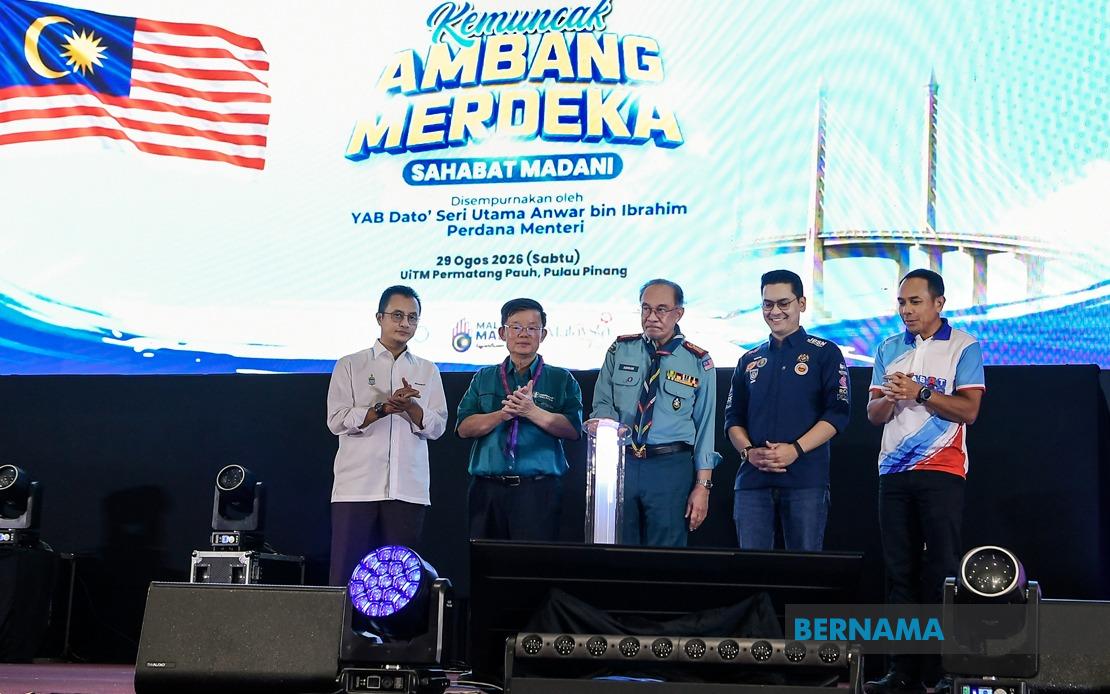
Prime Minister Datuk Seri Anwar Ibrahim has unveiled the Sahabat MADANI volunteer movement in Bukit Mertajam, introducing what government officials describe as a nationwide initiative designed to harness citizen participation in community development. The programme has already mobilised 11,060 volunteers who have registered to participate in structured community service activities, marking an ambitious effort to translate political reform rhetoric into organised grassroots action across the nation's diverse communities.
The Implementation Coordination Unit of the Prime Minister's Department explains that Sahabat MADANI operates as an integrative platform bringing together governmental bodies, volunteer networks and local communities under a unified framework. Rather than functioning as a purely charitable endeavour, the initiative emphasises systematic coordination and responsive service delivery calibrated to address genuine community requirements. This approach reflects an attempt to move beyond ad-hoc charitable work toward institutionalised volunteer structures that operate with defined objectives and measurable outcomes.
Core activities under the programme encompass several interconnected service domains. Volunteers are positioned to deliver targeted assistance to economically disadvantaged households, intervene in youth educational pathways by supporting children at risk of dropping out, facilitate employment and entrepreneurial training for young adults, and mobilise rapid response mechanisms during public emergencies. The breadth of these categories suggests an intention to address multiple dimensions of social vulnerability simultaneously, from immediate material needs to longer-term human capital development.
The timing of the initiative's launch during Malaysia's National Day observances carries deliberate symbolic weight. Government communications frame volunteer participation not as charitable sentiment but as an expression of national independence and civic responsibility. By connecting service to the themes of Merdeka, officials position community volunteering as a contemporary manifestation of the independence struggle's original ideals—suggesting that true sovereignty requires active citizen participation rather than passive reliance on state provision alone.
A particularly noteworthy aspect of Sahabat MADANI's framing emphasises intercommunal participation across ethnic, religious and socioeconomic boundaries. The programme explicitly encourages volunteers from different backgrounds to work alongside one another, positioning this collaborative diversity as both a means and an end. For Malaysian policymakers navigating persistent communal tensions, the ability to mobilise volunteers willing to serve across identity lines represents a significant objective, suggesting that social cohesion cannot be legislated but must be constructed through shared purposeful action.
The initiative aligns with the broader Malaysia MADANI governance framework, which prioritises equitable prosperity and inclusive development. Government messaging emphasises that Sahabat MADANI operationalises the "Kesejahteraan Dinikmati"—shared wellbeing—concept by democratising access to welfare initiatives and community benefits. Rather than positioning government as the sole service provider, the model distributes responsibility and capability across governmental and volunteer networks, potentially extending reach into communities where formal bureaucratic structures struggle to penetrate.
For Southeast Asian observers, Sahabat MADANI illustrates broader contemporary governance trends across the region. Multiple governments throughout Southeast Asia have attempted to revitalise social cohesion and distribute development benefits through formal volunteer structures. However, the sustainability and effectiveness of such programmes frequently depends on institutional capacity to coordinate activities, retain volunteer commitment over time, and ensure that service delivery genuinely responds to community priorities rather than reflecting governmental perceptions of need.
The 11,060 volunteer registrations achieved within the initial launch phase suggest considerable receptiveness, particularly among demographic cohorts that government messaging specifically targets. Young Malaysians comprise a significant portion of registered volunteers, indicating that appeals to channel youthful energy toward national development resonate with at least a segment of this population. Sustaining this momentum, however, requires demonstrating tangible community improvements and maintaining volunteer engagement beyond the initial enthusiasm phase.
Critical questions regarding implementation remain largely unanswered in available public communications. The structure and funding mechanisms supporting this nationwide volunteer coordination, the training and accountability systems ensuring service quality, and the mechanisms preventing political instrumentalisation of volunteer networks all warrant transparent articulation. International experience with large-scale volunteer programmes demonstrates that organisational clarity on these dimensions significantly influences whether initiatives deliver promised community benefits or devolve into symbolic gestures lacking substantive impact.
The programme's emphasis on rejecting divisive narratives and channelling youth expertise toward constructive national development suggests anxiety among policymakers regarding radicalisation risks and social fragmentation. By providing structured channels for civic participation, Sahabat MADANI implicitly acknowledges that young Malaysians seek meaningful engagement opportunities. Whether this particular initiative adequately addresses underlying grievances or primarily channels existing civic inclination remains an open question requiring longitudinal assessment.
For Malaysia's private sector and civil society organisations, Sahabat MADANI potentially creates new collaboration opportunities. Corporations might partner with the volunteer network to address specific community challenges aligned with corporate social responsibility objectives, while civil society organisations could leverage the infrastructure to expand service reach. However, such partnerships require carefully calibrated governance arrangements preventing government co-option of independent civil society actors.
The international dimension merits consideration as well. Regional comparisons with volunteer initiatives in Thailand, Indonesia and the Philippines provide instructive lessons regarding both effective implementation strategies and common pitfalls. Malaysian policymakers' willingness to learn from regional experience in volunteer mobilisation could significantly enhance programme effectiveness and sustainability prospects throughout Sahabat MADANI's development trajectory.

