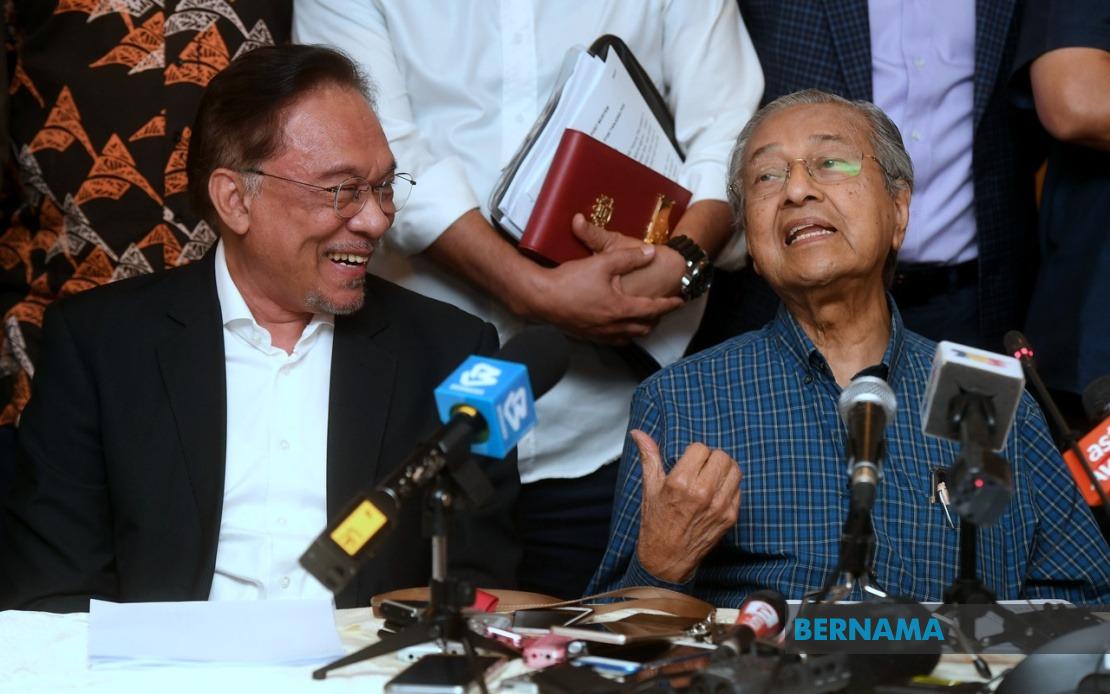
Prime Minister Datuk Seri Anwar Ibrahim marked a significant milestone in Malaysian political history on Wednesday by extending his birthday greetings to former Prime Minister Tun Dr Mahathir Mohamad, who turned 101 years old. The warm wishes, shared via social media, represented a moment of civility between two figures whose political trajectories have been notably intertwined over the past decade, though often marked by considerable tension and shifting alliances.
In his Facebook message, Anwar conveyed hopes that the elder statesman would continue to enjoy divine favour, robust health, and the protection of the Almighty. The gracious public acknowledgement underscores the complex dynamics of Malaysian politics, where former adversaries occasionally find occasions to set aside their differences and recognise shared respect. Such gestures, though seemingly routine in many democracies, carry particular weight in Malaysia's politically fractious environment.
Tun Dr Mahathir was born on July 10, 1925 in Alor Setar, Kedah, establishing himself as one of Southeast Asia's most consequential and controversial political leaders. His first stint in the highest office spanned an extraordinary 22 years from 1981 through 2003, during which he transformed Malaysia's economy, infrastructure, and global standing while also consolidating executive power in ways that fundamentally reshaped the nation's democratic institutions.
The longevity of his initial premiership reflected both his political acumen and the dominance of the United Malays National Organisation, which permitted extended tenures for favoured leaders. His tenure witnessed Malaysia's industrialisation drive, the construction of landmark megaprojects including the Petronas Twin Towers, and interventionist economic policies that prioritised bumiputera advancement. Yet this period also saw contentious episodes including the detention of political rivals under internal security laws and the erosion of institutional checks on executive authority.
After stepping down in 2003, Tun Dr Mahathir remained a formidable political force, offering commentary on Malaysian governance and periodically threatening comebacks. His eventual return to power at age 92 in 2018 made him the world's oldest serving prime minister at that time, a distinction reflecting both the vitality of his longevity and the peculiar circumstances of Malaysian politics during that era. This remarkable achievement demonstrated that even at an advanced age, his political network and popular appeal retained considerable power.
His second premiership from 2018 to 2020 came as part of the Pakatan Harapan coalition's victory over the long-ruling Barisan Nasional. During this brief period, he spearheaded efforts to undo previous policies, initiated investigations into alleged financial misconduct by predecessors, and sought to restore institutional independence. However, his tenure proved fractious, marked by conflicts with coalition partners and ultimately ending after disputes over leadership succession triggered the coalition's collapse.
The relationship between Anwar and Mahathir during this coalition period was already fraught with historical baggage. In the 1990s, when Anwar served as Mahathir's deputy, their relationship deteriorated dramatically, culminating in Anwar's sacking from government and subsequent imprisonment on charges many international observers characterised as politically motivated. The memory of this rupture, along with their subsequent competing claims for the premiership, created deep personal animosity that persisted even after their collaboration within Pakatan Harapan.
That Anwar, now firmly established as prime minister following the November 2022 elections, would publicly acknowledge his predecessor's milestone birthday signals a certain maturation in Malaysian political discourse. It reflects recognition that individual rivalries, however bitter their history, ultimately serve the nation less effectively than occasional displays of institutional respect. For Malaysian audiences accustomed to viewing their political leaders in adversarial terms, such moments carry symbolic importance beyond mere courtesies.
Mahathir's longevity itself has become a fascinating element of Malaysian national identity. As someone whose career spanned from the pre-independence era through the present day, he embodies continuities and transformations in the nation's political development. His survival to 101 makes him a living link to Malaysia's founding period, lending him a quasi-historical status that transcends partisan divisions. His advanced age has paradoxically enhanced his influence as an elder statesman whom various factions occasionally invoke for legitimacy.
The public birthday greeting also reflects contemporary Malaysian realities where former prime ministers retain significant cultural standing and informal influence. Unlike systems where former heads of government recede into obscurity, Malaysia's political culture maintains ongoing roles for former leaders, whether through advisory positions, party leadership, or simply continued public commentary. Mahathir in particular has remained politically engaged despite his age, offering views on governance and national direction that still command attention among certain constituencies.
Looking forward, Tun Dr Mahathir's continued longevity represents both an asset and potential complication for Malaysian politics. His enduring prominence can anchor institutional memory and provide perspective on long-term governance challenges, yet his interventions in current political debates occasionally complicate consensus-building among diverse factions. His influence particularly resonates within Malay-Muslim communities where his legacy remains contested but undeniably significant.
Anwar's gesture, while brief, thus encapsulates larger themes in contemporary Malaysian politics: the gradual normalisation of relationships between former rivals, the respect accorded to historical figures regardless of disagreements, and the recognition that shared national interests sometimes warrant setting aside personal grievances. Whether such civility becomes more characteristic of Malaysian political culture remains an open question, but Anwar's tribute suggested at least the possibility that the nation's leaders could model greater grace in their public conduct, particularly toward those whose contributions to the nation's development, whatever their controversial aspects, warrant acknowledgement.

