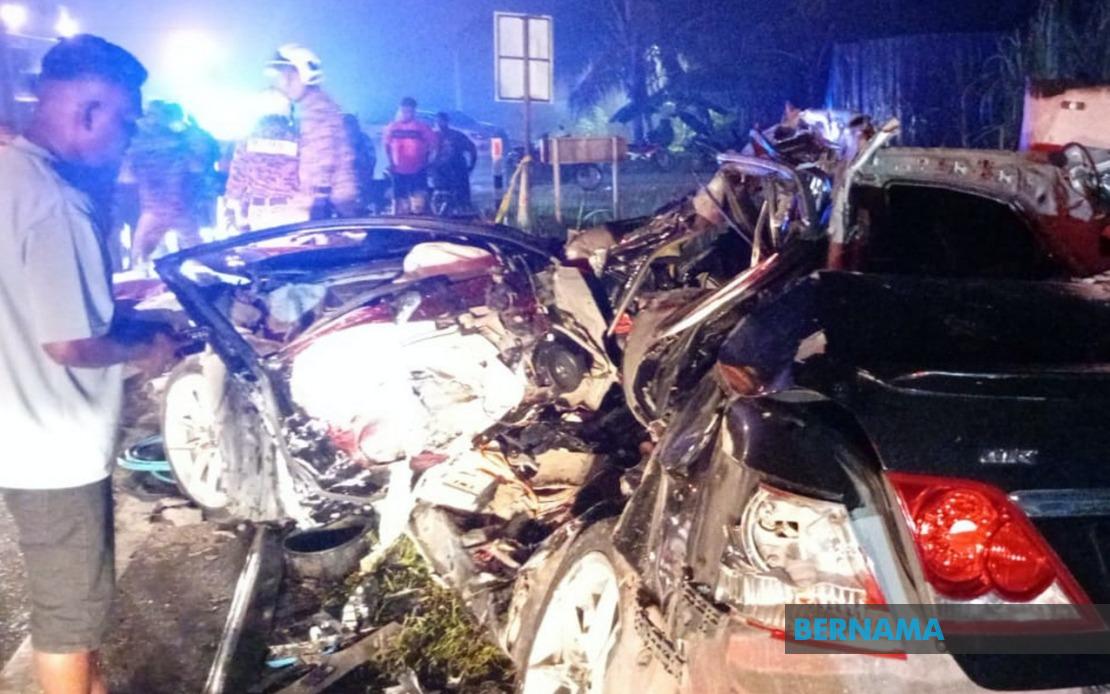
Prime Minister Datuk Seri Anwar Ibrahim has conveyed his heartfelt condolences to the grieving families of six men who perished in a devastating collision on Jalan Karak Lama in Bentong, Pahang. The tragedy occurred in the early hours of July 25, marking yet another sobering reminder of the dangers lurking on Malaysian highways. Through a post on X, Anwar, alongside his wife Datuk Seri Dr Wan Azizah Wan Ismail, expressed their profound sadness at the loss, underscoring the personal weight of such incidents on the nation's leadership.
The accident unfolded at approximately 4 am when a Toyota Vios carrying six occupants collided head-on with a one-tonne lorry on the road towards Temerloh, near Klink Desa Jambu Rias. The impact was catastrophic, with all six passengers in the car losing their lives at the scene. The victims were identified as the vehicle's driver V. Mugilan, aged 25, alongside passengers K. Dineshvaran, 22; K. Alaganathan, 21; A. Kanabati Raja, 19; S. Kiisven, 17; and M. Paranthaman, 16. The lorry operator, a 31-year-old man, sustained serious injuries but survived the collision.
Preliminary findings from police investigations suggest that the Toyota Vios, which was en route from Kuantan to Kuala Lumpur, veered into the opposing traffic lane while traversing a downhill section of the road. This momentary loss of control proved fatal, as the vehicle collided directly with the oncoming lorry. The specific circumstances surrounding the lane departure remain under investigation, though initial assessments point to potential issues with vehicle control or driver awareness during the descent.
In his official statement, Anwar appealed for resilience and compassion toward those affected by the tragedy. His message extended beyond mere expressions of sympathy, encompassing prayers for the injured and an implicit acknowledgment of the systemic vulnerabilities that continue to plague Malaysia's road networks. The prime minister's invocation that "road safety must never be taken lightly" signals governmental concern over the persistent toll of highway accidents across the nation.
This incident exemplifies a broader pattern of fatal collisions that has become disturbingly routine on Malaysian highways. Jalan Karak Lama, which serves as a critical arterial route connecting the east and west coasts, has historically witnessed numerous accidents. The early morning timing of this crash—4 am—raises questions about driver fatigue, visibility conditions, and whether speed regulations were being observed. Night and early-morning driving poses heightened risks, particularly on routes where accident black spots have been previously documented.
The composition of the victims, predominantly young men ranging from age 16 to 25, adds a tragic dimension to an already devastating event. Young drivers and passengers represent a disproportionately high-risk demographic in Malaysia's road fatality statistics, often associated with inexperience, risk-taking behaviour, and insufficient engagement with safety protocols. This age profile reflects demographic trends in highway casualties that persistently challenge road safety authorities.
The incident also carries implications for vehicle safety standards and roadworthiness. While the cause remains under investigation, questions arise regarding whether the Toyota Vios possessed adequate safety features—including stability control systems, airbags, and structural integrity—to mitigate impact forces. Conversely, examination of the lorry's maintenance condition and compliance with safety regulations may reveal preventable factors.
Road safety remains a contentious issue in Malaysia, with multiple stakeholders—government agencies, enforcement bodies, vehicle manufacturers, and road users—bearing shared responsibility. The Royal Malaysia Police's Traffic Investigation and Enforcement Department has traditionally attributed accident causation to human factors, including speeding, lane discipline violations, and driver inattention. However, infrastructure deficiencies, inadequate road markings, and insufficient lighting in high-risk zones continue to compound risks.
For Malaysian highway safety, this tragedy underscores the pressing need for comprehensive interventions. These encompass enhanced enforcement mechanisms, particularly regarding speed compliance and driving under fatigue; infrastructure improvements at documented accident black spots; public education campaigns targeting young drivers; and periodic reviews of vehicle safety compliance standards. The Bentong collision serves as a cautionary narrative that resonates throughout Southeast Asia, where similar highway safety challenges persistently claim thousands of lives annually.
The prime minister's call for heightened awareness represents an opportunity for policymakers to revisit road safety frameworks. Investment in modern traffic management systems, widened investigation protocols for serious accidents, and coordination between multiple government agencies could yield measurable improvements. Such measures, though administratively demanding, remain proportionate to the scale of human suffering that preventable road accidents inflict upon families and communities throughout Malaysia.

