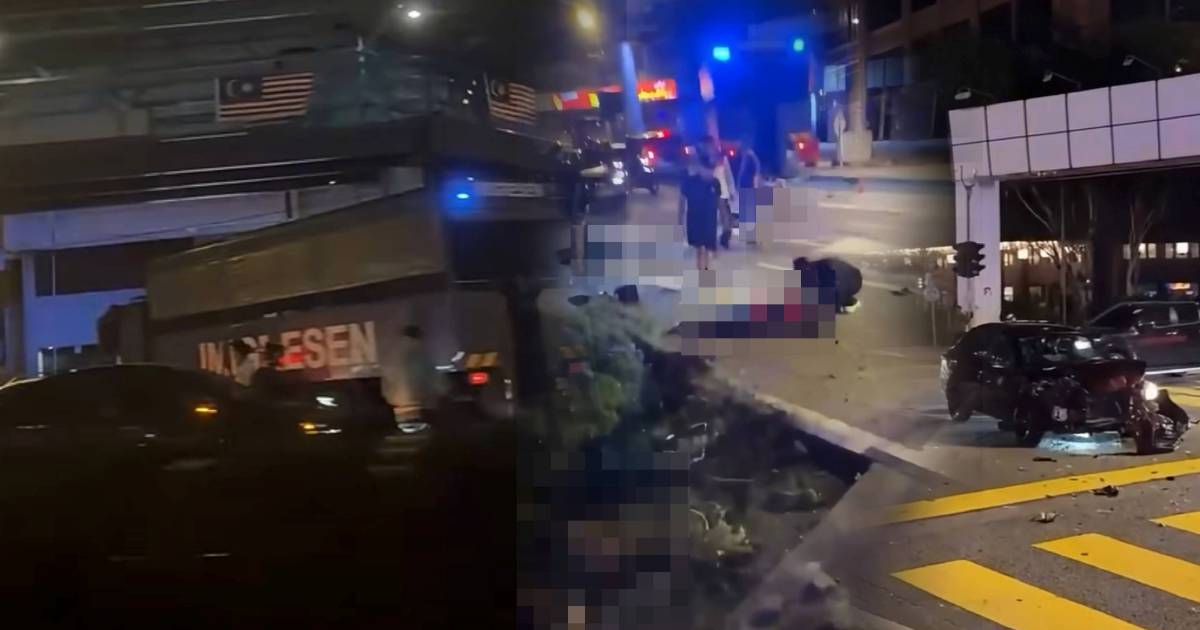
Prime Minister Datuk Seri Anwar Ibrahim has stepped in to oversee the investigation into a fatal crash involving an Immigration Department truck that occurred on Jalan Sultan Ismail in Kuala Lumpur in the early hours of today. The incident has prompted high-level intervention from the nation's top political office, signalling the seriousness with which the government is treating the matter and the need for swift answers regarding the circumstances that led to the collision.
The directive for an immediate and thorough investigation represents a significant escalation in scrutiny, underscoring the government's commitment to transparency when public sector vehicles and personnel are involved in serious accidents. By ordering the probe directly, Anwar has made clear that accountability and a comprehensive understanding of what transpired are priorities that warrant ministerial-level attention. Such interventions typically occur when public confidence is at stake or when the incident raises broader questions about departmental operations and safety protocols.
Fatalities involving government vehicles, particularly those operated by uniformed services such as Immigration, draw heightened public attention in Malaysia. The Jalan Sultan Ismail location in central Kuala Lumpur, a major thoroughfare that experiences significant traffic volume, adds another dimension to the incident. Early-morning crashes in busy urban areas often involve multiple factors ranging from traffic conditions to driver fatigue to mechanical failures, and determining the precise cause requires systematic investigation.
The Immigration Department, responsible for managing border control, visa operations, and related administrative functions, operates a substantial fleet of vehicles for its various operational needs. A fatal crash involving departmental transport raises questions about vehicle maintenance standards, driver training, and adherence to road safety protocols within the organisation. These institutional factors frequently become points of examination when such incidents occur, particularly when fatalities are involved.
The timing of the incident in the early morning hours may prove significant to investigators. Night and early-morning driving carries elevated accident risks across all categories of road users, whether due to reduced visibility, fatigue, or reduced traffic vigilance during off-peak periods. Understanding whether driver fatigue, weather conditions, or other early-morning specific factors played a role will be central to the inquiry.
For Malaysian road safety advocates, incidents involving government vehicles prompt broader conversations about whether departmental fleets adhere to the same safety standards expected of civilian operators. Questions about regular vehicle maintenance schedules, driver certification standards, and whether these match or exceed civilian requirements often emerge following such tragedies. The results of this investigation may therefore have implications extending beyond the Immigration Department itself.
The directive for an immediate investigation suggests the government recognises the need to move quickly in gathering evidence, documenting the scene, and preserving crucial details while they remain fresh. Early intervention can sometimes prevent the degradation of physical evidence or witness recollection that might otherwise complicate later analysis. The swiftness of the Prime Minister's response indicates institutional awareness of the importance of gathering comprehensive information promptly.
For the affected families and those directly involved in the incident, the investigation represents the formal process through which circumstances will be documented, responsibility potentially established, and lessons extracted to prevent similar tragedies. In Malaysia's context, such investigations typically involve multiple agencies including the police, the Malaysian Road Safety Board where applicable, and relevant departmental authorities, operating within established protocols for fatal traffic incidents.
The involvement of the Prime Minister's office suggests that findings from this investigation may be reported at a level higher than routine departmental review. This elevates the profile of the inquiry and signals that the government considers the matter sufficiently important to warrant senior leadership oversight. Such visibility can sometimes accelerate the implementation of corrective measures and systemic improvements that might otherwise be delayed.
For transport operators and departmental heads across the Malaysian civil service, this incident and the resulting investigation serve as a reminder that vehicle safety is a non-negotiable responsibility. The rapid mobilisation of high-level attention to oversee the probe demonstrates that serious crashes involving government assets will not be treated as routine administrative matters but as significant events requiring comprehensive analysis and appropriate response.
The broader implications for road safety in Malaysia remain relevant. Government vehicles are operated by trained professionals across multiple agencies, and maintaining the highest standards of vehicle maintenance and driver conduct is essential. This investigation will likely produce findings that extend beyond Immigration Department operations to offer insights applicable to fleet management practices across various public sector organisations.
As the investigation proceeds, the public and relevant stakeholders will be watching for how thoroughly the authorities examine contributing factors and what recommendations emerge regarding prevention of similar incidents. The transparency with which findings are eventually communicated may influence public perception of government accountability in handling operational failures, whether mechanical or human in origin.

