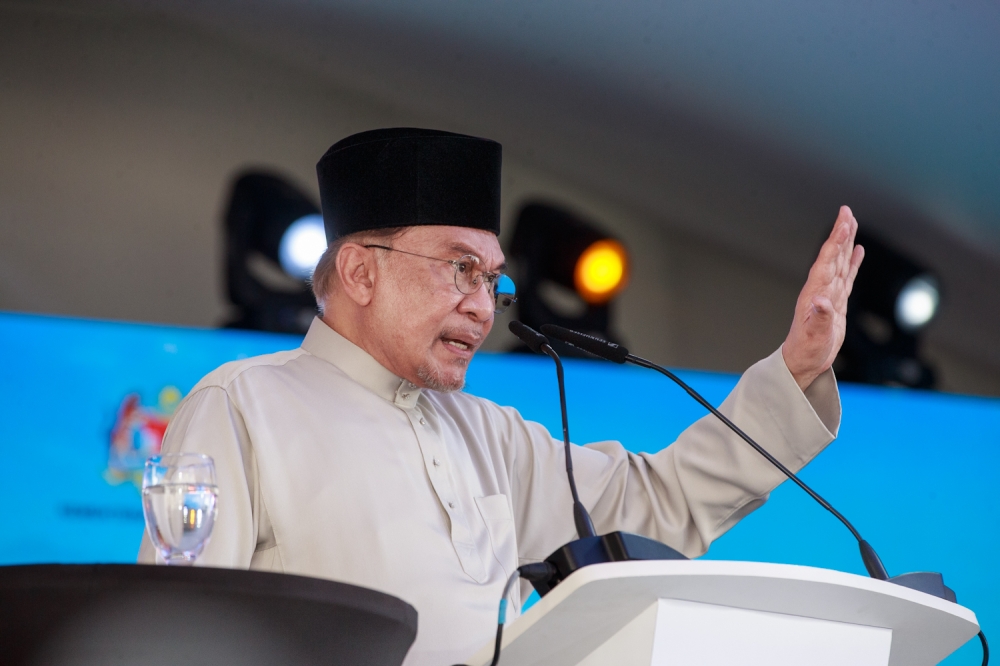
Prime Minister Datuk Seri Anwar Ibrahim has called for a comprehensive examination of Malaysia's civil service promotion framework, highlighting systemic bottlenecks that have left thousands of officers languishing in their current positions. Speaking in Kajang on July 20, Anwar ordered Chief Secretary to the Government T. Arumugan to investigate the structural impediments blocking career progression, pointing to documented instances where officers have endured promotion delays stretching to eight years or more.
The backlog represents a critical morale crisis within the Malaysian civil service, an institution that forms the backbone of government administration and service delivery. When career advancement stalls, experienced personnel become demotivated, institutional knowledge remains concentrated at senior levels, and younger officers lose confidence in meritocratic advancement. The scale of the problem has evidently reached a level that demands prime ministerial intervention, signalling that routine administrative channels have failed to resolve what has become an acute structural dysfunction.
Anwar's directive reflects growing recognition that the civil service faces a competitiveness crisis in the labour market. Malaysia's public sector must retain talented administrators who increasingly possess qualifications and experience that private employers actively seek. When promotion pathways narrow and timelines extend unpredictably, the government risks losing skilled personnel to private industry, consulting firms, and regional opportunities. This talent drain undermines institutional capacity precisely when Malaysia requires robust governance to navigate economic challenges and deliver critical public services.
The eight-year waiting periods cited by the Prime Minister suggest multiple failure points within the promotion system. These could include inadequate succession planning, bottlenecks at senior levels where few vacancies emerge, unclear criteria for advancement, or administrative procedures that create unnecessary delays. Each of these factors compounds individual frustration while collectively weakening the entire service's effectiveness. Arumugan's review must diagnose these root causes rather than applying superficial remedies that merely shuffle existing constraints.
Malaysia's civil service comprises approximately 1.6 million employees across federal, state, and local levels. A significant proportion work in grades where advancement opportunities have contracted due to hiring freezes, retirement pattern disruptions, and cost-control measures implemented during various fiscal austerity periods. These structural constraints, accumulated over years of policy decisions, have created a pyramid-shaped workforce where too many officers compete for insufficient senior positions. Resolving this requires both immediate relief measures and longer-term structural reform.
The promotion gridlock carries implications extending beyond individual career disappointment. Stalled advancement affects job satisfaction, productivity, and organisational culture across government agencies. When officers perceive the system as immobile or based on factors beyond merit, cynicism spreads and institutional commitment weakens. This psychological dimension—often overlooked in purely administrative analyses—fundamentally shapes whether the civil service functions as a motivated, high-performing institution or a demoralized bureaucracy.
Regionally, Malaysia competes with other Southeast Asian economies for administrative talent and effective governance. Singapore's civil service maintains competitive advantage partly through meritocratic advancement structures and assured career pathways. Thailand and Indonesia face similar retention challenges. Anwar's intervention signals that Malaysia recognises this competitive dimension and seeks to strengthen institutional attractiveness through genuine career progression opportunities. This positions civil service reform as an economic competitiveness issue, not merely a personnel management matter.
Arumugan's review should examine whether promotion criteria are transparently applied and consistently communicated. Officers often cite uncertainty about advancement timelines and selection standards as primary frustrations. Clear, measurable benchmarks for promotion—based on performance, qualifications, and tenure—would provide psychological relief even before structural changes take effect. Transparency itself becomes a tool for retention and morale improvement.
The review must also consider whether compressed promotion cycles within specific grade levels could accelerate movement through mid-career positions, creating more senior vacancies without increasing total headcount. Some governments employ accelerated pathways for high performers, allowing motivated officers to advance faster than standard timelines permit. Such mechanisms require careful design to maintain fairness but could ease blockages affecting the broader workforce.
Another dimension involves lateral mobility and skills transfer. Officers stuck in specific departments or grade levels might progress if horizontal movement options expanded, allowing them to transfer to areas with greater advancement opportunity while retaining seniority and benefits. This requires breaking down inter-departmental silos and recognising that institutional loyalty matters less than overall civil service retention.
Retirement age and succession planning warrant examination. If senior officers extend careers beyond traditional retirement ages, junior positions remain blocked. Reviewing retirement policies and ensuring adequate succession depth at every level could unlock promotion pathways without requiring new hiring. This approach redistributes existing opportunity rather than requiring resource expansion.
Anwar's commitment to civil service reform reflects understanding that governance quality depends fundamentally on institutional capacity and personnel motivation. Malaysia's development agenda—encompassing digital transformation, economic diversification, and social service improvement—requires a capable, motivated bureaucracy. The Prime Minister's intervention signals that civil service sustainability receives serious policy attention, not merely routine administrative oversight. Arumugan's review should deliver concrete recommendations with implementation timelines, transforming this moment of prime ministerial attention into genuine, lasting reform.

