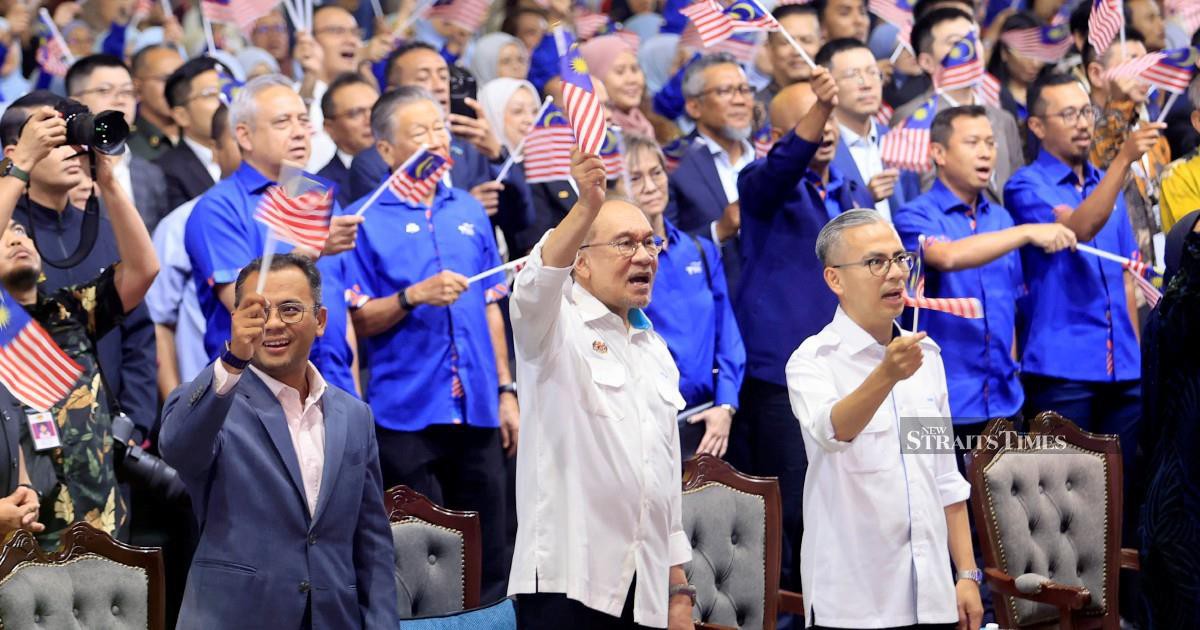
Prime Minister Datuk Seri Anwar Ibrahim has directed universities across Malaysia to immediately grant students unrestricted freedoms, bypassing the need to wait for formal legislative abolition of the Universities and University Colleges Act (AUKU). The directive came into force this morning, marking a significant shift in campus governance and student autonomy that has been decades in the making.
The AUKU, a colonial-era legislation dating back to 1971, has long restricted student political activities, public gatherings, and demonstrations on university campuses. Students have been prohibited from joining political parties, participating in rallies, and engaging in activist work—rules that have drawn persistent criticism from international human rights organisations and domestic civil society groups. The law effectively created a controlled environment where academic institutions operated under strict state oversight, with student conduct monitored and regulated far more stringently than their counterparts in other democracies.
Anwar's directive represents a pragmatic approach to institutional reform. Rather than await the lengthy parliamentary procedures required to formally repeal the AUKU, the Prime Minister has instructed university administrations to voluntarily implement the freedoms that would come with such repeal. This expedited method allows students to experience enhanced civil liberties immediately while legislators navigate the formal legislative process. The move reflects a broader commitment to liberalisation within Malaysia's higher education sector, aligning with campaign promises made during recent political cycles.
For Malaysian students, the implications are substantial. Campus life will undergo transformation as young people gain space to organise, assemble, and express political views without fear of disciplinary action. University student unions can operate with greater independence, while political clubs and advocacy groups may flourish on campuses. Undergraduate participation in public discourse and demonstrations becomes possible, potentially energising youth engagement with national issues and governance—something that has been muted under the restrictions of the past half-century.
The timing of this directive carries particular significance within Malaysia's evolving political landscape. Educational liberalisation often correlates with broader democratic reforms and institutional strengthening. By granting students freedom of assembly and expression, the government signals confidence in Malaysia's democratic maturity and its ability to accommodate diverse viewpoints within structured environments. This stands in contrast to the paternalistic security rationale that historically justified AUKU restrictions.
University administrators now face the delicate task of translating the Prime Minister's directive into institutional practice. Campuses must establish new protocols for student gatherings, clarify which activities previously prohibited are now permitted, and train security and administrative staff accordingly. The transition requires clear communication to prevent confusion about boundaries that remain in place—universities will still maintain authority over academic standards, conduct expectations, and facilities management. The challenge lies in distinguishing between enhanced political freedoms and the maintenance of core institutional functions.
International observers and human rights advocates have long flagged Malaysia's AUKU restrictions as outliers in the Southeast Asian region. Countries like Thailand and Indonesia, despite their own governance challenges, permit greater student political participation. This directive brings Malaysian practice closer to global norms for higher education environments, potentially improving Malaysia's standing on international indices measuring press freedom, civil liberties, and democratic governance. It may also make Malaysian universities more attractive to international students and faculty who value open intellectual environments.
The directive raises questions about how universities will handle the interface between student political activism and institutional neutrality. Academic institutions traditionally maintain political independence, but this becomes more complex when students engage in partisan advocacy on campus grounds. University leadership will need to develop balanced policies that protect both student freedoms and institutional integrity. These policies should allow activism while preventing campuses from becoming arms of any political movement.
For Malaysia's education sector more broadly, this reform signals willingness to trust students as adults capable of exercising freedoms responsibly. The paternalistic framework of AUKU restrictions was predicated on assumptions that young people required strict control to maintain order and social stability. By removing these restrictions, the government implicitly endorses a different model—one where education encompasses civic participation and where universities function as spaces for robust intellectual debate rather than controlled environments. This philosophical shift may influence how institutions approach curriculum development, research autonomy, and faculty academic freedom.
The financial implications warrant consideration as well. Universities currently dedicate administrative resources to enforcing AUKU restrictions through disciplinary committees and oversight mechanisms. With these restrictions lifted, resources previously allocated to policing student conduct could theoretically be redirected toward educational enhancement. However, universities will require funding to develop appropriate new governance structures and ensure adequate facilities for student activities and gatherings.
Regional developments suggest potential momentum for similar reforms elsewhere in Southeast Asia. Malaysia's move may inspire policy discussions in neighbouring countries regarding student freedoms in higher education. It demonstrates that established legal frameworks can be reformed through executive action when legislative processes prove cumbersome, offering a model for other governments seeking liberalisation.
Looking forward, the formal legislative repeal of AUKU remains on the policy agenda. While Anwar's directive immediately implements the practical effect of abolition, the formal law remains on the statute book. Lawmakers will eventually need to address this gap through parliamentary process, ensuring consistency between executive directive and legal code. The months ahead will be crucial in demonstrating whether unrestricted student freedoms can coexist with institutional stability and academic excellence, potentially reshaping expectations about what Malaysian universities can become.

