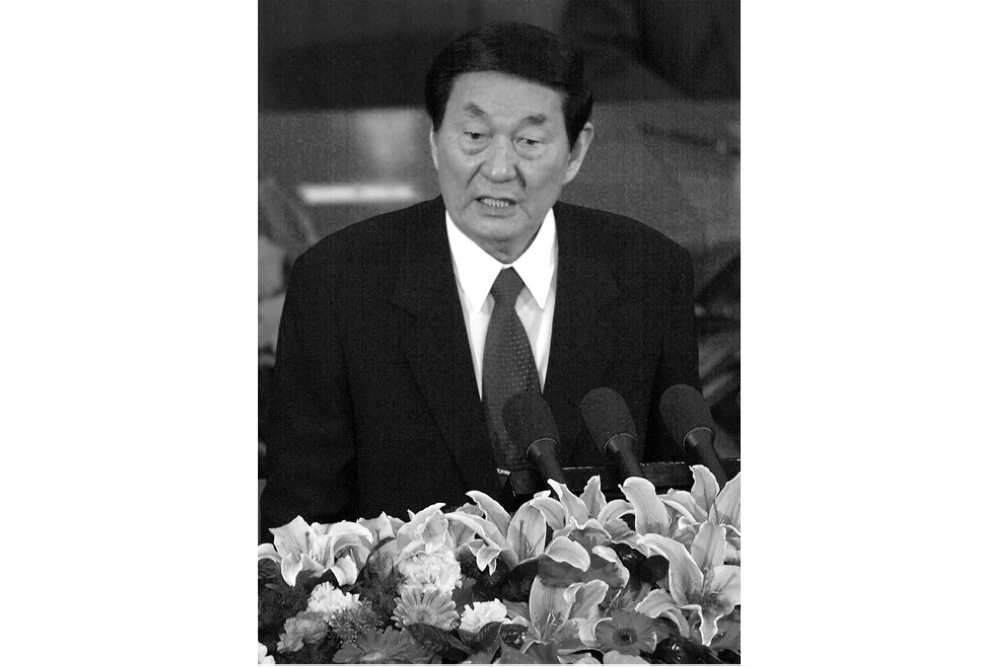
Prime Minister Datuk Seri Anwar Ibrahim has paid his respects following the death of Zhu Rongji, the former Premier of China who served as a transformative figure in shaping modern China's economic trajectory. Anwar's remarks underscore the personal bonds that Beijing's most influential leaders have cultivated with Malaysian counterparts, reflecting the strategic importance both nations place on their bilateral relationship.
Zhu Rongji, who held the position of Premier from 1998 to 2003, became synonymous with China's market-oriented reforms during a critical period of the country's development. His tenure coincided with major transitions in China's economy, including its preparation for and eventual accession to the World Trade Organization in 2001, a watershed moment that fundamentally altered global trade patterns. As the architect of numerous structural reforms, Zhu left an indelible mark on how modern China engages with international commerce and diplomacy.
Anwar's characterization of Zhu as a "good friend" to Malaysia extends beyond ceremonial politeness, touching on substantive cooperation that emerged during the Chinese leader's years in power. During the late 1990s and early 2000s, bilateral ties between Malaysia and China expanded across multiple dimensions, from trade and investment to cultural and educational exchanges. Zhu's reformist outlook and openness to international engagement created a favourable environment for Southeast Asian nations like Malaysia to deepen economic partnerships with Beijing.
The timing of Anwar's tribute carries significance given Malaysia's ongoing efforts to maintain balanced relationships within the complex geopolitical landscape of Asia. As China's economic influence continues to reshape regional dynamics, acknowledgment of figures like Zhu who championed pragmatic engagement and market principles demonstrates Malaysia's interest in nurturing ties with a modernising China. This diplomatic gesture also signals continuity in Malaysia's China policy regardless of domestic political transitions.
Zhu's legacy extends to his pioneering work in state-owned enterprise reform and fiscal discipline, measures that transformed China's economic structure and prepared it for sustained growth. Malaysian policymakers, grappling with their own questions about economic modernisation and state intervention, have observed closely how Zhu navigated these challenges. His approach—combining market mechanisms with strategic state guidance—has influenced economic thinking across the region.
The relationship between Malaysian leaders and Chinese Premier-tier officials has historically served as a barometer for broader bilateral health. Anwar's public mourning reflects the respect garnered by Zhu within Southeast Asian circles, where his tenure was viewed as a period of constructive engagement and economic pragmatism. Unlike some of his predecessors and successors, Zhu cultivated a reputation for straightforward dialogue and results-oriented collaboration, qualities that resonated with Malaysian political and business elites.
Malaysia's trade relationship with China has grown exponentially since Zhu's era, with two-way commerce now numbering in the tens of billions of dollars annually. Electronics, palm oil, and manufactured goods form the backbone of this exchange, sectors that benefited from China's opening under leaders like Zhu. The infrastructure investments and Special Economic Zones that characterise modern Malaysia-China cooperation were conceptually rooted in the market-opening reforms Zhu championed.
Anwar's remarks also underscore the generational transition occurring among Asian statesmen. Zhu represented an older cohort of reformers and technocrats whose influence shaped the region's development trajectory. As contemporary leaders navigate questions of technological sovereignty, debt sustainability, and regional balancing, figures like Zhu serve as reference points for how major powers can engage constructively with their neighbours. His pragmatism stands in contrast to some contemporary approaches characterised by heightened strategic competition.
The passing of prominent international figures like Zhu provides opportunities for reflection on how bilateral relationships have evolved. Under Zhu's leadership, Chinese engagement with Southeast Asia emphasised economic complementarity and mutual benefit. Today's Malaysia-China ties, while substantially deeper, operate against a backdrop of heightened geopolitical tensions and competition for regional influence. Anwar's acknowledgment of Zhu's contributions implicitly affirms Malaysia's preference for the collaborative model these historical figures represented.
For Malaysian observers of Chinese politics, Zhu's career trajectory—rising from Shanghai's municipal leadership to national prominence, then maintaining influence after leaving formal office—illustrates China's complex succession mechanisms and the enduring power of economic reformers within the Communist Party. Understanding such dynamics helps Malaysian analysts contextualise current developments in China's governance and foreign policy. The reverence with which regional leaders like Anwar recall Zhu suggests his brand of technocratic reform remains the preferred template for constructive engagement.
Looking forward, Anwar's tribute serves as a reminder that Malaysia's approach to China remains fundamentally pragmatic, centred on mutual economic interest and stability rather than ideological alignment. As pressures mount on Malaysia to choose sides in great power competition, invoking memories of figures like Zhu who represented openness and adaptation becomes diplomatically valuable. The former Premier's death marks the end of an era in China's development, but the principles underlying his engagement model continue to shape how Southeast Asian nations like Malaysia approach their most important trading partner and regional superpower.

