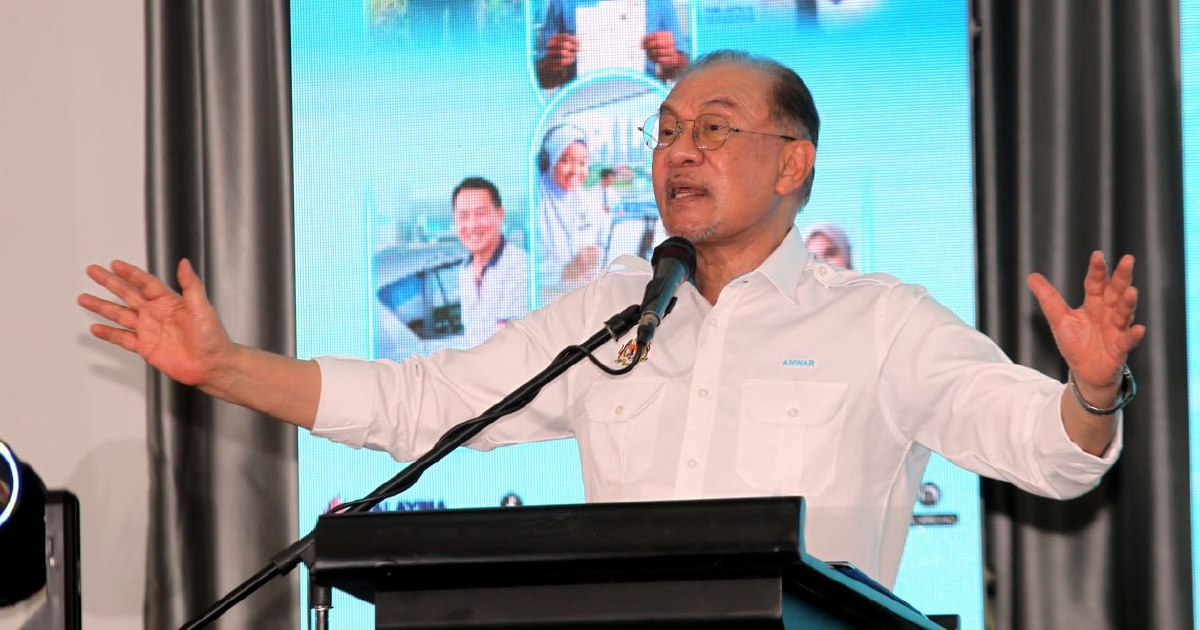
Prime Minister Datuk Seri Anwar Ibrahim has pledged RM15.3 million to support religious and pondok schools in Perak, signalling the Madani administration's sustained commitment to developing the country's Islamic education sector. The announcement reflects a broader policy direction aimed at improving facilities, resources, and operational capacity across religious institutions that form a critical pillar of Malaysia's education ecosystem.
Anwar's declaration in Ipoh underscores the government's recognition that pondok schools and religious educational establishments serve an estimated hundreds of thousands of students nationwide, many from economically disadvantaged backgrounds. These institutions, which combine formal Islamic learning with vocational skills development, have historically operated with limited government support, relying heavily on community donations and waqf contributions. The Perak allocation represents a tangible step toward addressing infrastructural and resource gaps that have long constrained these schools' operations.
The RM15.3 million investment for Perak specifically is expected to address multiple development needs, including facility upgrades, maintenance of existing infrastructure, acquisition of educational materials, and potentially enhanced staff benefits to attract and retain qualified educators. Perak hosts a significant concentration of religious schools, particularly in rural and semi-urban areas, making the state a strategic focus point for resource allocation. The injection of federal funds signals a shift toward more systematic, needs-based support rather than ad-hoc assistance.
The Madani government's approach to religious education financing reflects a recalibration of priorities under Anwar's administration. Where previous approaches sometimes treated pondok schools as peripheral to national education planning, current policy positioning elevates them as integral components of Malaysia's human capital development strategy. This reframing carries practical implications, as religious schools increasingly integrate entrepreneurial skills, digital literacy, and contemporary subjects alongside traditional Islamic curricula.
For Malaysia's broader socioeconomic landscape, strengthening pondok school infrastructure holds significance beyond purely educational dimensions. These institutions traditionally serve as social mobility channels for students from lower-income households, many in Malaysia's interior regions. Improved funding can expand access, reduce dropout rates, and enhance graduate employment prospects, thereby contributing to poverty alleviation and inclusive development goals. Southeast Asia observers note that Malaysia's approach to Islamic education funding increasingly mirrors regional patterns of greater government investment in religious institutions.
The commitment also addresses stakeholder concerns that had emerged following budget pressures in preceding years. Parents, educators, and religious leaders have repeatedly called for enhanced government support to prevent deterioration in teaching conditions and learning environments. The RM15.3 million allocation, while substantial, represents a baseline acknowledgement that such investment is overdue. Perak's allocation may also serve as a template for similar disbursements to other states, suggesting a nationwide expansion of the initiative.
Anwar's emphasis on continuing enhancement efforts hints at longer-term planning within the Madani administration. The use of language around "nationwide" development suggests this Perak announcement precedes or accompanies similar initiatives elsewhere. For schools management and education administrators, this signals that multi-year support frameworks may be in development, enabling more strategic long-term planning rather than year-to-year uncertainty. Such predictability could encourage institutional investment in staff development and curriculum modernisation.
The timing of the announcement also merits consideration within Malaysia's political context. With state elections periodically contested and federal-state education cooperation varying by administrative alignment, federal investment pledges carry both symbolic and practical weight. Perak's voters and stakeholders receive a concrete indicator of Madani government priority-setting, potentially influencing perceptions of how national resources are distributed across Malaysia's geographic and demographic diversity.
From a Southeast Asian perspective, Malaysia's ongoing investment in religious education institutions reflects broader regional trends. Thailand, Indonesia, and the Philippines similarly grapple with balancing formal national curricula against community-rooted religious learning traditions. Malaysia's approach—incorporating religious schools within broader education funding frameworks while maintaining their distinctive character—offers a model worth monitoring as other nations navigate similar policy questions.
Educators and analysts emphasise that funding alone cannot resolve all challenges facing pondok schools. Curriculum development, teacher training standardisation, and integration with national qualification frameworks require equally sustained attention. The RM15.3 million commitment therefore functions as a necessary but insufficient foundation. Observers will scrutinise how funds are allocated, whether disbursement processes are transparent, and whether accountability mechanisms ensure resources reach intended beneficiaries effectively. Success in Perak could validate broader expansion of similar initiatives, while implementation shortcomings might signal systemic obstacles to equitable religious education funding nationwide.

