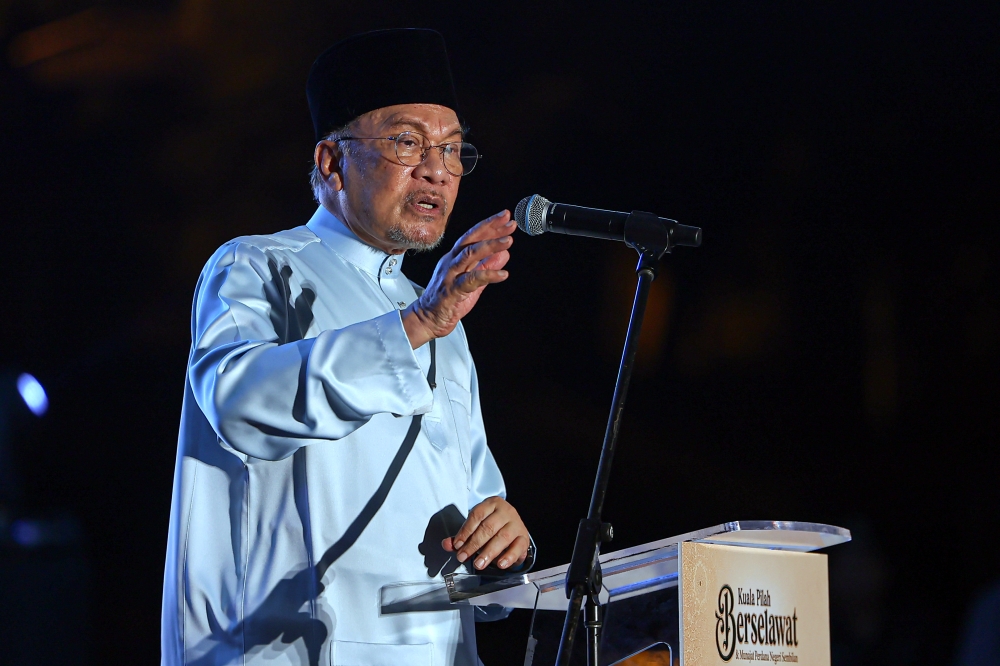
Prime Minister Datuk Seri Anwar Ibrahim has declared an unequivocal commitment to transparency and accountability in the ongoing Tabung Haji Royal Commission of Inquiry, signalling a shift towards greater institutional openness following years of public frustration over delays and perceived concealment. Speaking at Kuala Pilah on July 31, Anwar acknowledged the prolonged waiting period endured by stakeholders and the broader public, framing the administration's resolve to complete the inquiry as both a moral obligation and a governance imperative that reflects his government's stated values of reform and institutional integrity.
The Prime Minister's statement carries particular significance given the historical context of the Tabung Haji scandal, which has festered as a source of public discontent and financial loss for hundreds of thousands of Malaysian pilgrims who entrusted their savings to the institution. The Pilgrims Savings Management and Tabung Haji Act governs this uniquely Malaysian savings scheme designed to help Muslims accumulate funds for the hajj pilgrimage, yet the fund's mismanagement and subsequent financial deterioration shocked beneficiaries and exposed systemic weaknesses in corporate governance and regulatory oversight. Anwar's public guarantee effectively positions his government as corrective force, attempting to redress what many Malaysians view as a betrayal of public trust by previous administrations and institutional leadership.
The Royal Commission of Inquiry mechanism itself represents a formal investigative apparatus mandated to examine the circumstances, decisions, and individuals responsible for Tabung Haji's financial difficulties. Such commissions carry constitutional weight in Malaysia's governance framework and typically culminate in detailed findings that inform policy adjustments and potential legal proceedings. However, the extended timeline of this particular RCI has generated criticism from affected parties who contend that prolonged inquiries serve to dilute accountability and allow potential culpability to fade from public memory. Anwar's explicit repudiation of cover-ups suggests internal pressures within government and from civil society demanding expedited closure and transparent publication of findings.
For the broader Malaysian political context, the Tabung Haji situation exemplifies recurring tensions between institutional autonomy and governmental oversight. While the fund operates as a statutory body with considerable independence, the scale of its mismanagement ultimately reflects on government supervision and regulatory frameworks. Anwar's administration inherited this problematic file and faces both political opportunity and risk in how it handles the inquiry's conclusion. A transparent, thorough process could restore public confidence and demonstrate commitment to accountability; conversely, selective disclosure or further delays would reinforce cynicism about institutional reform.
The implications for pilgrims themselves remain substantial. Thousands of Malaysians have been unable to proceed with hajj plans due to their frozen deposits, and many have suffered genuine financial hardship from the frozen funds. These individuals represent diverse constituencies across the country—schoolteachers, retirees, small traders, and labourers—whose life savings became collateral damage to institutional failure. Any RCI findings must address not only what occurred but also pathways toward restitution and structural prevention of recurrence. Anwar's pledge signals that his government recognises this human dimension beyond mere administrative process.
Regionally, Malaysia's experience with the Tabung Haji crisis offers cautionary lessons for other Islamic-majority nations operating similar pilgrimage savings schemes. Institutional safeguards, transparent governance structures, and robust regulatory mechanisms become essential when managing collective savings designated for religious purposes. The international Muslim community increasingly scrutinises how custodian institutions protect pilgrim resources, and Malaysia's willingness to conduct open inquiry may influence regional standards for transparency and accountability in Islamic finance.
The timing of Anwar's statement also reflects domestic political calculations. As Prime Minister leading a coalition government that emphasises reform credentials, demonstrating decisive action on legacy scandals strengthens his administration's differentiation from predecessors. However, this political dimension must align with genuine investigative rigour—public perception distinguishes between rhetorical commitment and substantive follow-through. The specific mechanisms through which findings will be disclosed, whether parliamentary debates will ensue, and how recommendations will be legislatively implemented remain operational questions requiring clarification.
Moving forward, several benchmarks will test Anwar's transparency pledge. First, the RCI's final report must be released to public and parliamentary scrutiny rather than confined to internal deliberation. Second, findings must include specific names, decisions, and accountabilities rather than abstract institutional observations. Third, recommendations must translate into concrete legislative or regulatory amendments that structurally prevent recurrence. Fourth, any identified criminal conduct must proceed to prosecution rather than administrative sanction alone. These measurable standards allow the public to assess whether Anwar's promise represents genuine transformation or merely rhetorical repositioning.
The statement also addresses a broader governance conversation within Malaysia about institutional trust and public accountability. Consecutive revelations regarding mismanagement at statutory bodies, from sovereign wealth funds to development authorities, have eroded confidence in bureaucratic competence and oversight mechanisms. Citizens increasingly demand that government officials explain not merely what occurred but why preventive systems failed to function. Anwar's commitment to "no more cover-ups" resonates precisely because it acknowledges this accumulated frustration and positions the government as responsive to public expectations for transparent governance.
Ultimately, the Tabung Haji RCI outcome will serve as a crucial indicator of whether Malaysia's current administration can deliver substantive reform on institutional accountability or whether established patterns of delay and selective disclosure will persist. For affected pilgrims, for taxpayers who indirectly bore losses, and for broader civil society invested in governance standards, the completion of this inquiry and transparent publication of findings represents a test case for whether institutional reform extends beyond political rhetoric into practical accountability measures.

