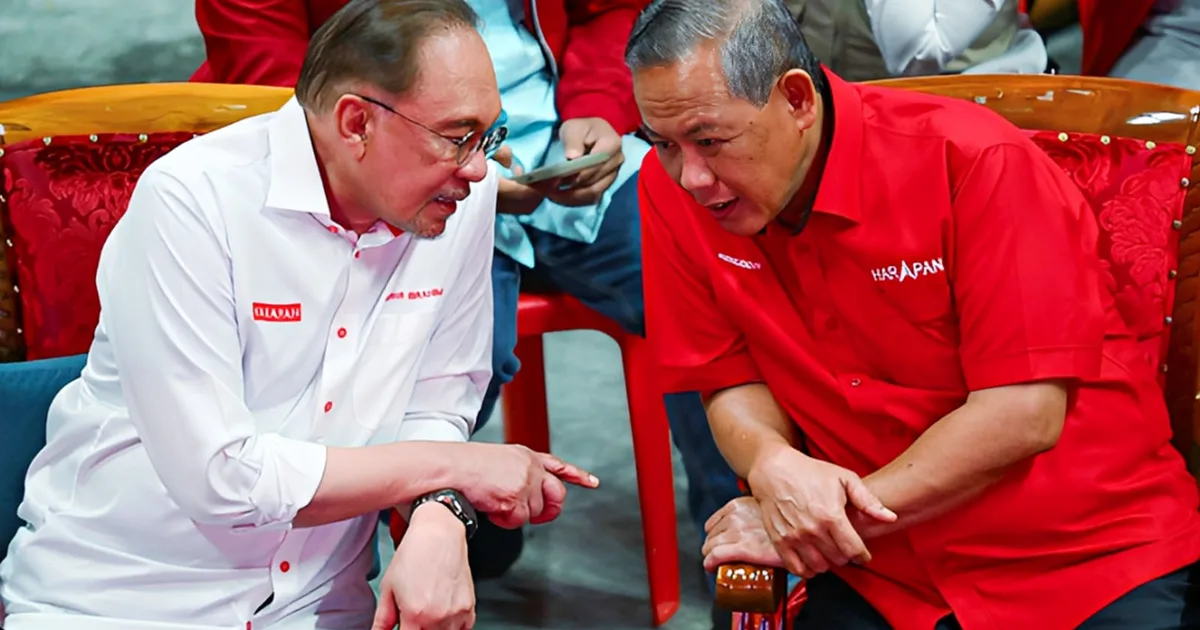
In a show of confidence in the party's elder statesman, PKR president Anwar Ibrahim has underscored the enduring value of former Negeri Sembilan menteri besar Aminuddin Harun's presence within the reform movement, positioning him as a crucial figure in developing the next tier of party leadership despite recent electoral disappointments.
Anwar's remarks reflect a broader strategy within PKR to retain institutional knowledge and experienced hands during a period of generational transition. Rather than sidelining figures who have experienced electoral reverses, the PKR president appears intent on leveraging their experience to shape emerging party figures, suggesting a more pragmatic approach to managing internal dynamics than might otherwise be expected following electoral setbacks.
The PKR leader specifically highlighted what he characterised as Aminuddin's exemplary conduct in the face of defeat. Rather than engaging in the blame-shifting or acrimony that sometimes follows electoral disappointment in Malaysian politics, Aminuddin's dignified acceptance of the outcome without pointing fingers at party structures, leadership decisions, or rival factions distinguishes him as a figure worthy of emulation within party ranks.
This emphasis on Aminuddin's composure carries particular significance for a party like PKR, which has historically grappled with internal tensions and factional disputes. By elevating his gracious response as an exemplary behaviour pattern, Anwar is essentially promoting a model of political maturity and sportsmanship that could inoculate the party against the corrosive effects of defeat-induced recriminations. In Malaysian politics, where many defeated figures tend toward conspiracy theories or bitter complaints about unfair treatment, such equanimity stands out.
Aminuddin's trajectory also carries broader implications for how ruling coalition parties manage their veteran cadre. As these parties attempt to refresh their image and appeal to younger voters, the question of how to retain valuable senior figures without creating bottlenecks for aspiring leaders becomes increasingly complex. By casting Aminuddin in a mentorship role rather than a ceremonial or diminished position, Anwar appears to have found a constructive solution to this dilemma.
The decision to spotlight Aminuddin's services also signals confidence in the sustainability of PKR's bench strength. A party truly worried about its prospects might be tempted to distance itself from recent electoral losses, but Anwar's embrace of a figure associated with such disappointment suggests confidence that PKR can absorb and learn from setbacks without existential damage. This contrasts sharply with the defensive posturing sometimes evident in Malaysian politics, where parties tend to rapidly shuffle out figures associated with poor electoral performance.
For younger PKR members and aspiring leaders, the implicit message is valuable. Aminuddin's dignified handling of defeat carries a lesson about how to conduct oneself in politics with integrity intact. In an environment where personal ambition and factional loyalty often drive behaviour, his example of accepting results without rancour or excuse-making stands as a counterpoint. This mentorship function extends beyond policy knowledge or organisational acumen to encompass fundamental principles about political conduct and resilience.
The emphasis on Aminuddin's continued relevance also reflects broader demographic shifts within Malaysian political parties. As the Baby Boomer generation gradually phases out of active leadership roles, maintaining connections between retiring figures and rising ones becomes crucial for knowledge transfer and institutional continuity. Anwar's approach suggests he recognises that electoral defeat, while disappointing, need not mark the end of a political figure's useful contributions to party development.
Within the context of Negeri Sembilan politics specifically, the retention of Aminuddin's mentoring profile may carry additional significance. The state remains competitive territory in Malaysian elections, and preserving the institutional memory and relationships built by a former menteri besar could prove valuable as PKR and its coalition partners prepare for future electoral contests. Aminuddin's understanding of local dynamics, networks, and political terrain represents a resource that would be wasteful to entirely shelve.
Anwar's public acknowledgement of Aminuddin's value also serves a practical political function in the messaging realm. It reinforces a narrative that PKR values experience and integrity over mere electoral success, positioning the party as concerned with character and principle rather than just winning votes. In a political environment sometimes characterised by opportunism and volatility, such messaging carries weight with certain voter segments who seek parties guided by deeper values.
The broader significance of these remarks lies in their reflection of how mature political organisations handle setback and transition. Rather than discarding experienced figures or treating defeat as a permanent disqualification, Anwar's approach suggests an understanding that political parties function best when they can simultaneously refresh leadership while maintaining institutional continuity. This balance remains one of the central challenges for Malaysia's ruling coalition as it attempts to revitalise itself while drawing on the wisdom of those who have navigated the country's complex political landscape for decades.

