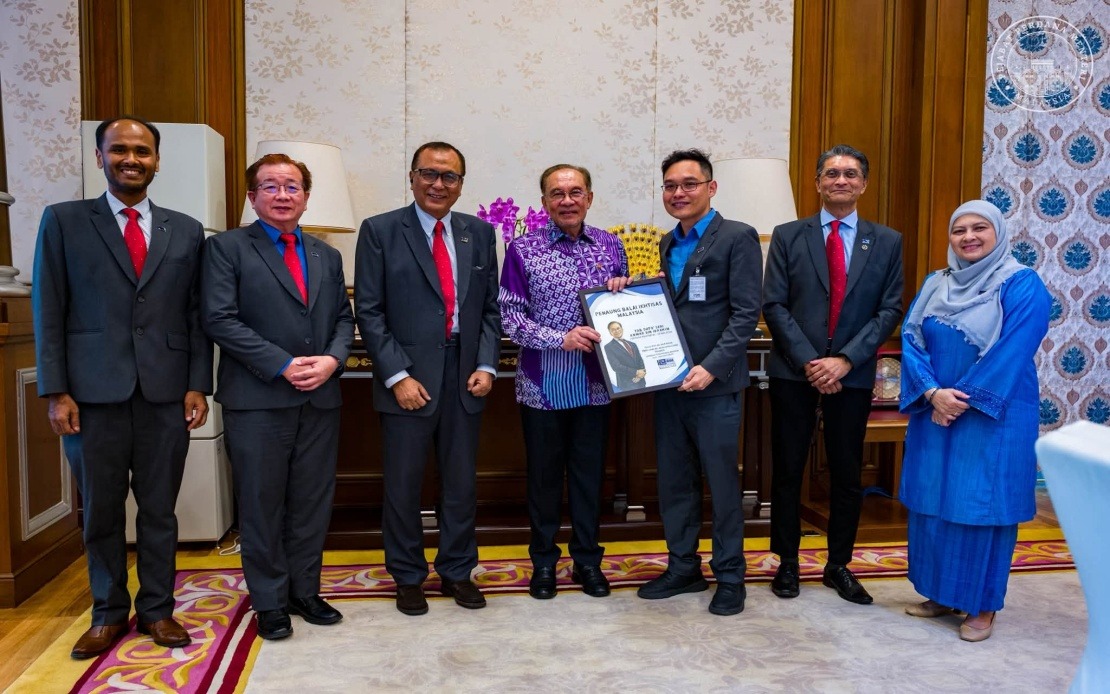
Prime Minister Datuk Seri Anwar Ibrahim has placed artificial intelligence adoption and professional talent development at the heart of Malaysia's strategy to establish itself as a Southeast Asian hub for professional expertise. Following discussions with leadership from Balai Ikhtisas Malaysia (BIM), the Malaysian Professional Centre, Anwar underscored the interconnection between these priorities and the nation's broader economic ambitions during a courtesy call on July 16.
The meeting with BIM President Prof ChM Dr Juan Joon Ching reflects a deliberate government focus on engaging professional bodies as partners in national competitiveness. Rather than treating the professional sector as passive recipients of policy, the administration is positioning them as strategic collaborators capable of influencing Malaysia's trajectory in an increasingly technology-driven global economy. This approach suggests recognition that professionals across diverse disciplines—from engineering and medicine to finance and law—will determine how successfully Malaysia integrates AI into its economic fabric.
The emphasis on AI readiness carries particular significance for Malaysia's regional positioning. Southeast Asia is witnessing rapid digital transformation across Singapore, Vietnam, Thailand and Indonesia, each competing to attract talent and investment in emerging technologies. Without deliberate upskilling of the professional workforce in AI applications, Malaysia risks falling behind competitors who are already integrating these tools into professional practice. The government's engagement with BIM signals an awareness that professional bodies can serve as conduits for disseminating AI literacy across their respective sectors.
Talent development encompasses both retention and attraction of skilled professionals. Malaysia has historically faced brain drain, with talented individuals seeking opportunities abroad where they perceive greater remuneration, resources or career progression. By framing talent development as a national priority within government dialogue, Anwar is signalling commitment to creating conditions where professionals see compelling reasons to remain and contribute locally. This includes fostering environments where professional expertise is recognised, rewarded and utilised in policy-making.
The integration of these themes with the MADANI agenda—the government's socioeconomic framework—illustrates how professional excellence is conceived as instrumental to delivering improved wellbeing for Malaysians. Rather than treating professional development as a standalone issue, the government frames it as contributing to broader national objectives of inclusive growth, innovation and competitiveness. Professionals equipped with AI skills and integrity-driven leadership can then channel that expertise toward solving Malaysia's development challenges.
Anwar's acceptance of an invitation to Hari Ikhtisas Malaysia, the professional community's commemorative event, represents more than ceremonial engagement. It indicates government intent to maintain visible, consistent dialogue with professional bodies and to acknowledge their contributions to national progress. Such events can serve as platforms for announcing policies, gathering feedback and demonstrating that professional voices carry weight in government deliberations.
The framing of professionals as essential to bolstering national competitiveness reflects contemporary economic thinking that knowledge-based sectors increasingly drive prosperity. Malaysia's transition from a resource-dependent economy to one centred on innovation and services requires professionals who understand emerging technologies and can lead organisations through digital transformation. Without this transition, Malaysia's long-term growth trajectory faces constraint.
The emphasis on nurturing talent with both competitiveness and integrity suggests government recognition that technical skill alone proves insufficient. Professionals must operate within ethical frameworks and contribute to building institutions of integrity. This dual emphasis—competence and ethics—is particularly relevant given ongoing concerns about governance standards and professional misconduct across sectors in the region.
For Malaysian professionals, these discussions signal government willingness to invest in their development and acknowledge their strategic importance. Professional associations and institutes can leverage this messaging to advocate for resources, regulatory reforms and policy environments that support continuous learning in AI and related domains. Universities and professional education providers should take note of these priorities when designing curricula and training programmes.
The regional context amplifies these discussions' significance. As ASEAN nations compete for positioning in the global knowledge economy, Malaysia's capacity to develop and retain world-class professionals increasingly determines its influence and attractiveness to multinational enterprises and knowledge-intensive investment. Professional excellence becomes a dimension of soft power and economic diplomacy.
Moving forward, the substance of these commitments will be measured through concrete policies: funding for AI education, tax incentives for professional development, reforms to professional licensing that accommodate rapidly evolving practices, and government procurement practices that reward innovation-driven firms. Words of support matter, but translation into enabling structures will determine whether these discussions catalyse meaningful change in Malaysia's professional landscape.

